Hand-painted oil on canvas in your size and frame, made to order by our artists. ( Buy Print Buy Image)





























Pick from our preset sizes that match the artwork's original proportions.

You may enter your own dimensions to fit a specific frame or space. If your selected size does not match the original image's proportions, we will either crop the artwork or extend the painting with additional hand-painted elements. A digital mockup will be sent for your approval before production begins.
Please note that the on-screen preview does not reflect the actual cropping or extension. Only the mockup will accurately show the final composition.
While custom sizes are available, we recommend selecting a dimension from the predefined list to preserve the original proportions.
Worldwide Delivery () in 3/4 weeks instead of standard 5 weeks. (21 August). No compromise on quality.


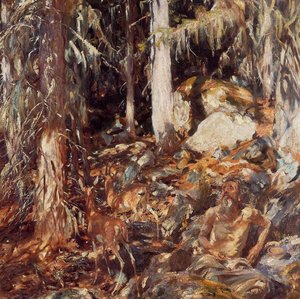
Fountain at Bologna
Reproduction Size
John Singer Sargent’s “Fountain at Bologna,” painted in 1906, is more than just a depiction of an Italian fountain; it’s a carefully constructed tableau of timeless beauty and subtle social commentary. This large-scale oil on canvas captures the heart of Bologna – a city steeped in history and architectural grandeur – with a precision that speaks to Sargent's mastery of light and form. The scene unfolds with a quiet dignity, dominated by a central statue of a woman seated upon the fountain’s basin, her pose radiating an almost serene composure. This isn’t merely a record of a physical location; it’s a distillation of the spirit of Bologna itself – a city that has witnessed centuries of artistic and intellectual flourishing.
Sargent's technique in “Fountain at Bologna” is characterized by his characteristic blending of realism with impressionistic sensibilities. He employs loose, visible brushstrokes to capture the play of light on the stone surfaces – particularly evident in the statue’s drapery and the reflections shimmering across the water. This approach avoids a photographic rendering, instead prioritizing an emotional response to the scene. The artist's use of color is restrained yet effective, relying on subtle gradations and tonal variations to create depth and atmosphere. Notice how he skillfully uses atmospheric perspective – receding forms appear lighter and less defined in the distance – enhancing the illusion of space and contributing to the painting’s overall sense of tranquility.
The statue itself is a key element, representing not just beauty but also classical ideals of feminine grace and composure. The fountain, as a public gathering place, symbolizes community and social interaction – themes frequently explored in Sargent's work. Painted during the height of the Gilded Age, “Fountain at Bologna” reflects the era’s fascination with leisure, elegance, and the pursuit of refined experiences. The inclusion of figures in the background, engaged in seemingly mundane activities, subtly suggests a commentary on social life and the rhythms of daily existence within this vibrant Italian city.
"Fountain at Bologna" possesses an enduring appeal due to its ability to evoke a sense of peace and contemplation. The composition’s balance, combined with Sargent's masterful handling of light and shadow, creates a visually harmonious experience. This painting exemplifies Sargent’s talent for capturing not just appearances but also the underlying mood and atmosphere of a scene. A hand-painted reproduction offers an opportunity to bring this exquisite work into your home or office, allowing you to appreciate its beauty and historical significance daily.

1856 - 1925 , Italy

Discover BuyPopArt.com's premium poster prints. Featuring 12-color pigment technology and museum-grade substrates, our versatile, high-fidelity prints offer vivid colors and archival quality for sophisticated modern decor. Elevate your space with professional art solutions.


Stay updated with the latest art news, exclusive offers, and decoration ideas.
Tell us about your project and our art experts will provide you with 3 personalized art suggestions.
Let Us Curate 3 Options Just for You - Free!


 Preview
 Send
Send Share
Share
 Details

 Download
 Similars
 X-Ray
X-Ray Diaporama

 Read More







 Glass option is only available in size under 110 CM