


 LithographOtherNeoclassical Architecture
 60.0 x 94.0 cm
 Kupferstichkabinett
Hand-painted oil on canvas in your size and frame, made to order by our artists.
Pick from our preset sizes that match the artwork's original proportions.

You may enter your own dimensions to fit a specific frame or space. If your selected size does not match the original image's proportions, we will either crop the artwork or extend the painting with additional hand-painted elements. A digital mockup will be sent for your approval before production begins.
Please note that the on-screen preview does not reflect the actual cropping or extension. Only the mockup will accurately show the final composition.
While custom sizes are available, we recommend selecting a dimension from the predefined list to preserve the original proportions.
Worldwide Delivery () in 3/4 weeks instead of standard 5 weeks. (26 July). No compromise on quality.


Orianda Palace in the Crimea. Antique-style design. Cross-section and perspective view of museum
Reproduction Size
Karl Friedrich Schinkel’s “Orianda Palace in the Crimea. Antique-style design. Cross-section and perspective view of museum” is more than just a depiction of an architectural marvel; it's a meticulously crafted window into a bygone era, a testament to Neoclassical ideals, and a poignant reflection on the pursuit of order and beauty. Created around 1838, this drawing, now rendered in vibrant watercolor over graphite, captures the grandeur of the Orianda Palace as envisioned within a museum setting – a space dedicated to preserving history and celebrating artistic achievement.
Schinkel, a pivotal figure in Prussian architecture, was deeply influenced by classical antiquity. His work sought to reconcile the formality of Neoclassicism with a burgeoning interest in Gothic Revival, resulting in structures that were both imposing and elegantly refined. This particular piece exemplifies his mastery of perspective and detail, transporting the viewer into the heart of the palace’s design. The deliberate choice of a cross-section – slicing through the building vertically – allows us to appreciate not only its external façade but also the intricate organization and decorative elements within its interior spaces.
The drawing's aesthetic is firmly rooted in Neoclassicism, a style characterized by its emphasis on rationality, symmetry, and adherence to classical forms. Notice the precise arrangement of the Doric columns, their rhythmic repetition creating a sense of stability and order. The triangular pediments crowning each section further reinforce this visual harmony. The use of muted colors – primarily shades of beige, grey, and pale blue – contributes to the drawing’s restrained elegance, while subtle touches of green and brown in the landscape hint at the natural world beyond the palace walls.
Beyond mere representation, Schinkel imbues the scene with symbolic meaning. The statues within the interior spaces represent a connection to classical antiquity and the ideals of cultural refinement. The carefully rendered details – from the intricate moldings to the geometric patterns on the floor – speak to a belief in the power of reason and intellectual pursuit, qualities often associated with museums and palaces as repositories of knowledge and artistic legacy.
The drawing’s remarkable detail is achieved through a combination of meticulous observation and skillful execution. The medium appears to be lithography or a similar printmaking technique, evidenced by the fine lines and tonal gradations that define architectural elements and create a sense of depth. The texture is remarkably smooth, suggesting a hand-drawn process—a deliberate choice that lends the artwork an intimate quality, as if Schinkel himself were guiding our gaze through the palace’s interior.
The diffused lighting creates soft shadows that subtly define form without resorting to harsh contrasts. Perspective is expertly employed, with receding columns and diminishing objects in the distance contributing to a convincing sense of spatial recession. This masterful use of technique elevates the drawing beyond a simple architectural rendering; it becomes a captivating visual experience.
“Orianda Palace in the Crimea” stands as a powerful testament to Karl Friedrich Schinkel's genius and his profound impact on 19th-century architecture. His work continues to inspire architects and designers today, reminding us of the enduring appeal of classical forms and the importance of creating spaces that are both beautiful and intellectually stimulating. Reproductions of this remarkable drawing offer a unique opportunity to experience firsthand the vision of one of history’s most influential figures.

1781 - 1841 , Germany

Explore the rich history of architecture's influence on art! Discover Renaissance perspective techniques, symbolism, & iconic masterpieces. Enhance your understanding with our expert analysis.

Elevate your interior design with our expert guide to harmonizing art styles & architecture. Discover timeless pieces, color palettes, & custom artwork solutions for balanced, luxury spaces. Expert advice included!
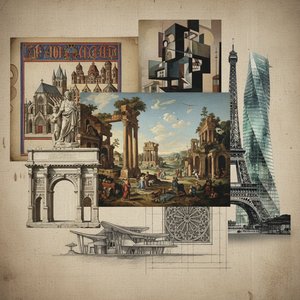
Explore the rich history of architecture in art, from Renaissance theory to 19th-century reconstructions. Discover key artists & movements shaping visual representation – a guide for discerning collectors.

Discover how to integrate Cubist art into modern villa design with expert guidance from BuyPopArt. Explore color palettes, curation tips & museum-quality reproductions for a sophisticated space.

Explore the revival of classical art with our deep dive into Neoclassicism! Discover key artists like Jacques-Louis David, Enlightenment influences & lasting impact on art history. High-quality reproductions at BuyPopArt.


Stay updated with the latest art news, exclusive offers, and decoration ideas.
Tell us about your project and our art experts will provide you with 3 personalized art suggestions.
Let Us Curate 3 Options Just for You - Free!


 Preview
 Buy print
 Send
Send Share
Share
 Details

 Download
 Similars
 X-Ray
X-Ray Diaporama
 Read More




































 Glass option is only available in size under 110 CM


