Ръчно рисувана маслена картина върху платно във вашия размер и рамка, изработена по поръчка от нашите художници. ( Превключване към печат Превключване към изображение)





























Изберете от предварително зададените размери, които съответстват на оригиналните пропорции на произведението.

Можете да въведете свои собствени размери, за да пасне на конкретна рамка или пространство. Ако избраният от вас размер не съответства на пропорциите на оригиналното изображение, ние ще изрежем произведението или ще удължим картината с допълнителни ръчно рисувани елементи. Дигитален макет ще бъде изпратен за ваше одобрение преди започване на производството.
Моля, обърнете внимание, че прегледът на екрана не отразява действителното изрязване или разширяване. Само макетът ще покаже точно финалния състав.
Въпреки че са налични персонализирани размери, препоръчваме да изберете размер от предварително дефинирания списък, за да запазите оригиналните пропорции.
Доставка по целия свят () в рамките на 3/4 седмици вместо стандартните 5 седмици. (11 Август). Без компромис с качеството.


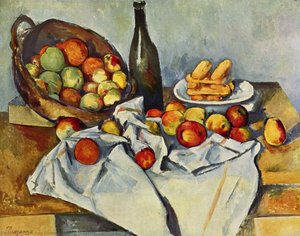
Still Life Plate and Fruit
Размер на репродукцията
Paul Cézanne's "Still Life Plate and Fruit" isn't merely a depiction of apples and pears; it’s a profound statement about the nature of perception, a quiet revolution in how we see and represent the world. Painted in 1887 during a pivotal period in his artistic development, this oil on canvas transcends the traditional constraints of still life, pushing towards the nascent principles of Cubism while retaining an intimate, almost meditative quality. The painting invites us to linger, not just observing objects, but contemplating their essence – their weight, texture, and the very act of seeing.
Cézanne’s genius lies in his deliberate rejection of conventional perspective. He abandons the illusion of depth through linear recession, instead constructing space through a complex interplay of geometric forms: cubes, cylinders, and spheres dominate the composition, each rendered with meticulous attention to detail. This isn't simply about accurately portraying an arrangement; it’s about distilling the fundamental building blocks of reality itself. The table, the plate, the fruit – all are reduced to their essential shapes, presented in a way that feels both familiar and utterly new.
The color palette is remarkably restrained yet intensely vibrant. Cézanne employs muted tones—ochres, browns, and greens—creating a sense of atmospheric depth and solidity. However, within this subdued base, flashes of brilliant color – the crimson of an apple, the golden hue of a pear – punctuate the scene, drawing our eye and injecting moments of intense visual pleasure. Crucially, he doesn’t simply apply color; he uses it to define form, creating a luminous effect that seems to emanate from within each object. The light itself isn't a uniform source but rather fragmented and diffused, adding to the painting’s sense of mystery and inviting multiple interpretations.
Notice how Cézanne masterfully manipulates brushstrokes – short, broken strokes layered upon one another to build up surfaces and create texture. These aren’t smooth, blended washes; they are visible marks that speak to the physicality of the paint itself. This technique not only adds a tactile quality to the image but also reinforces the idea that Cézanne is interested in the process of painting as much as the final result. The brushstrokes themselves become part of the artwork's narrative.
“Still Life Plate and Fruit” represents a crucial turning point in Cézanne’s career, marking his departure from Impressionism and paving the way for the revolutionary developments of Cubism. Artists like Picasso and Matisse were deeply influenced by his approach to form and color, recognizing in his work a radical new vision of pictorial space. The painting's emphasis on geometric abstraction and its exploration of multiple viewpoints foreshadowed the fragmentation and deconstruction that would characterize Cubist art.
Beyond its artistic significance, “Still Life Plate and Fruit” possesses a profound emotional resonance. It’s a scene of quiet contemplation – a moment captured in time, inviting us to slow down, observe, and appreciate the beauty of the everyday. The simplicity of the subject matter belies the complexity of Cézanne's vision, making this painting a timeless masterpiece that continues to captivate viewers today.
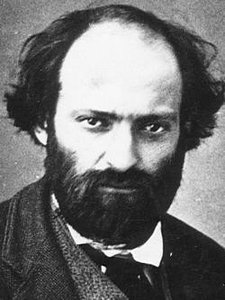
1839 - 1906 , Франция

Explore the profound evolution of art from Impressionism to Post-Impressionism. Discover how masters like Van Gogh revolutionized color and emotion, shaping modern art history through structural innovation and expressive technique.


Бъдете информирани за последните новини в света на изкуството, ексклузивни оферти и идеи за декорация.
Разкажете ни за вашия проект и нашите експерти по изкуство ще ви предложат 3 персонализирани предложения за произведения на изкуството.
Нека подберем 3 варианта само за вас – безплатно!


 Представи си го
 Изпрати
 Сподели
 Детайли

 Изтегляне
 Подобни
 Рентгенова снимка
 Слайдшоу

 Прочетете повече







 Стъклото е налично само в размери под 110 см