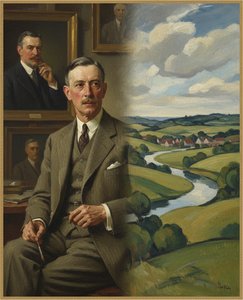
Arthur William Devis (1762–1822): The Gentle Painter of Conversation Pieces
Arthur William Devis stands as a singular figure in the landscape of eighteenth-century British art, primarily recognized for his mastery of the conversation piece genre—a format that captured intimate domestic scenes and familial portraits with remarkable delicacy. Born on August 10, 1762, in Preston, Lancashire, he descended from a lineage of artists deeply rooted in the region’s artistic traditions, inheriting a legacy that would propel him to considerable renown.
- Early Life and Training: Devis's formative years were shaped by his father, Anthony Devis—a carpenter and bookseller who fostered an appreciation for art within his household. Notably, he received instruction from Peter Tillemans, a Flemish painter whose studio in London introduced him to the stylistic innovations of Italian landscape painting. This early exposure profoundly influenced Devis’s artistic sensibilities.
- Royal Academy Years: Elected to the Royal Academy Schools in 1774, Devis honed his skills alongside fellow artists and established himself as a respected portraitist. His affiliation with Joshua Reynolds—a pivotal figure in establishing academic painting—further cemented his position within the artistic establishment of London.
- Voyages and Artistic Development: Devis embarked on significant expeditions to India and Canton, documenting his experiences through meticulous drawings and paintings that reflected the grandeur of imperial ambition. These journeys broadened his visual vocabulary and contributed to a distinctive style characterized by serene compositions and subtle tonal gradations.
- Notable Works: Among Devis’s most celebrated achievements are portraits of Sir William Jones—a testament to his ability to convey intellectual curiosity and dignified composure—and the iconic depiction of Nelson as Vice-Admiral, now housed at the British Library. His paintings of King George III on horseback exemplify a masterful blend of realism and idealized grandeur.
- Legacy: Despite stylistic divergences from later artistic trends, Devis’s work endured through the twentieth century thanks to its inherent charm and meticulous craftsmanship. He remains an exemplar of the conversation piece genre—a genre that continues to fascinate art historians and collectors alike—and his legacy is celebrated as a cornerstone of Preston's artistic heritage.
Devis’s distinctive approach to portraiture—often employing a wooden manikin—allowed him to achieve an unparalleled level of detail and expressiveness within the confines of his chosen medium. His canvases convey not merely likeness but also psychological nuance, reflecting the quiet contemplation characteristic of his subjects.