James Peale (1749 – May 24, 1831)
James Peale (1749 – May 24, 1831) was an American painter, best known for his miniature and still life paintings, and a younger brother of noted painter Charles Willson Peale. He stands as a pivotal figure in establishing an authentically American artistic identity, albeit often overshadowed by his more celebrated sibling. His legacy resides not merely in the beauty and technical skill of his artworks but also in his profound contribution to shaping the visual culture of early America.
### Early Life and Apprenticeships
James Peale was born in Chestertown, Maryland, the second child, after Charles, of Charles Peale (1709–1750) and Margaret Triggs (1709–1791). His father’s untimely demise propelled the family to Annapolis, where young James initially apprenticed in saddlery and cabinetmaking—experiences that instilled within him a meticulous attention to detail and craftsmanship, qualities which would subsequently inform his artistic approach. This formative period cultivated an appreciation for precision and skillful execution, shaping his sensibilities before he embarked on his formal artistic training.
### Artistic Training and Collaboration with Charles Willson Peale
Upon Charles’ return from London in 1769, having studied under Benjamin West, James found his true calling, becoming his brother's assistant and immersing himself in the pursuit of artistic excellence. This partnership proved invaluable, fostering a shared understanding of neoclassical ideals and establishing a collaborative environment that nurtured creativity. Together they honed their skills, experimenting with various techniques and styles—a testament to the importance of familial mentorship within early American art circles. Charles’ guidance ensured James received comprehensive instruction in painting from life, solidifying his foundation as an artist.
### Service in the Continental Army and Revolutionary Influence
The burgeoning revolutionary fervor dramatically altered the course of Peale’s life. In 1776, he traded brush for musket, accepting a commission as an ensign in William Smallwood's regiment within the Continental Army. This wasn’t merely a patriotic gesture; it was a period of intense experience that subtly informed his later work—witnessing firsthand the hardships and heroism of the American Revolution instilled within him not only courage but also a keen observational skill, a capacity to register detail under pressure. He rose quickly through the ranks to captain, participating in pivotal battles—Long Island, White Plains, Trenton, Brandywine, Germantown, Princeton, and Monmouth—capturing the spirit of the era and translating it into visual representations.
### Miniature Painting and Still Life Mastery
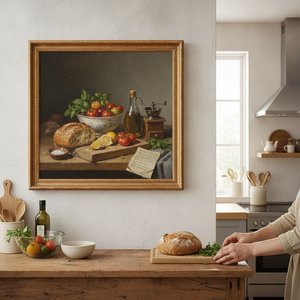
At about this time, Charles turned over his own miniature portrait practice to him, and throughout the 1790s and early 19th century Peale devoted himself to miniature painting. Much of this work was watercolor on ivory—a medium that demanded extraordinary delicacy and precision. He achieved remarkable success in capturing likenesses with astonishing accuracy, conveying not just physical appearance but also subtle expressions of personality and social standing. Simultaneously, he excelled in still life compositions, particularly those featuring fruit—demonstrating an exceptional ability to render textures, light, and form with breathtaking realism. His meticulous attention to detail elevated his work to the highest standards of artistic achievement.
### Legacy and Historical Significance
James Peale’s contribution to American art history is undeniable. He captured a pivotal moment in history—the birth of a nation—through portraits that documented its citizens and still lifes that celebrated the bounty of its land. His enduring influence can be seen in subsequent generations of artists who admired his technical prowess and embraced his commitment to neoclassical aesthetics. Though often overshadowed by Charles Willson Peale’s fame, James Peale remains a significant figure in shaping the visual landscape of early America—a testament to the power of quiet dedication and artistic refinement.