Ručně malovaná olejná barva na plátně ve vašem zvoleném rozměru i s rámem, vyrobená našimi umělci na zakázku. ( Koupit tisk Koupit obrázek)





























Vyberte si z našich přednastavených velikostí, které odpovídají původním proporcím díla.

Můžete zadat vlastní rozměry pro konkrétní rám nebo prostor. Pokud se vámi vybraná velikost neshoduje s proporcemi původního obrazu, dílo buď ořízneme, nebo jej doplníme ručně malovanými prvky. Před zahájením výroby vám bude zaslán digitální náhled ke schválení.
Upozorňujeme, že náhled na obrazovce neodpovídá skutečnému ořezu ani rozšíření. Pouze digitální náhled přesně zobrazí finální kompozici.
Ačkoliv je možné zvolit vlastní velikost, pro zachování původních proporcí doporučujeme vybrat rozměr z předdefinovaného seznamu.
Celosvětová doprava () za 3–4 týdny namísto standardních 5 týdnů. (12 srpen). Bez kompromisů v kvalitě.


Viewing Mount Fuji From A Bucket Boat Going Down The River Oi
Rozměry reprodukce
Katsushika Hokusai’s *Viewing Mount Fuji From A Bucket Boat Going Down The River Oi*, created around 1836 during his prolific “Thirty-Six Views of Mount Fuji” series, transcends mere landscape depiction; it embodies the spirit of Edo Japan and stands as a cornerstone of Japanese artistic achievement. More than just capturing a picturesque scene—a humble tub descending a river alongside Mount Fuji—the print is imbued with profound symbolism reflecting Buddhist ideals of impermanence and acceptance.
This iconic woodblock print, executed in meticulous detail by Hokusai, immediately draws the eye to its dominant diagonal line – representing movement against the stillness of Mount Fuji. The towering mountain itself serves as a powerful emblem of eternity and spiritual enlightenment—a central motif within Buddhist cosmology—while the small boat symbolizes human vulnerability confronted by the immensity of nature.
What distinguishes *Viewing Mount Fuji* from countless other landscape prints is Hokusai’s daring utilization of Prussian blue pigment. Prior to this moment, Ukiyo-e prints predominantly relied on mineral pigments like iron oxide and manganese dioxide—resulting in muted tones that conveyed a sense of subdued beauty. The introduction of Prussian blue—imported from Europe—was revolutionary; it allowed for a dramatic shift towards richer hues and heightened visual impact.
This bold experimentation wasn’t simply stylistic; it represented Hokusai's engagement with contemporary scientific advancements and his desire to push the boundaries of artistic expression. It signaled a decisive break from established conventions, demonstrating Hokusai’s visionary understanding of how to communicate emotion through color—a crucial element in capturing the sublime.
Produced during a period of significant social and political upheaval—the Tokugawa shogunate grappling with internal tensions—*Viewing Mount Fuji* offers a poignant respite from turbulent times. The serene depiction of the riverine landscape reflects the Edo shogunate’s patronage of art as a means of cultivating inner peace and contemplation—values deeply rooted in Japanese culture.
More than just a beautiful image, it speaks to a broader philosophical stance: an acknowledgement that all things are transient, urging viewers to appreciate each moment with mindfulness and acceptance. This contemplative spirit aligns perfectly with the Zen Buddhist tradition prevalent during Hokusai’s lifetime—a testament to his artistic sensitivity and profound understanding of human experience.
The impact of *Viewing Mount Fuji* extended far beyond Japan's borders, profoundly influencing Impressionist painters like Vincent van Gogh and Claude Monet. Monet famously remarked that Hokusai had “awakened him”—capturing the essence of Japanese landscape painting with its emphasis on capturing fleeting atmospheric conditions.
The print’s dynamic compositional arrangement—the diagonal boat against the static mountain—provided a crucial impetus for Impressionists to abandon academic realism and embrace subjective perception. By rejecting traditional techniques in favor of conveying emotion through color, Hokusai paved the way for a revolutionary artistic movement that would reshape Western art history.

1760 - 1849 , Japonsko
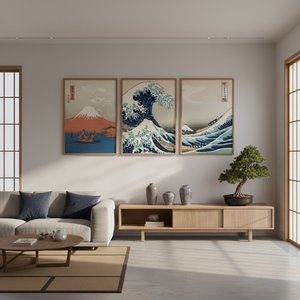
Prozkoumejte 25 ikonických děl japonského mistra Katsushiky Hokusaiho! Objevte příběhy za Velkou vlnou, 36 pohledů na horu Fuji a další ukiyo-e tisků. Kvalitní reprodukce obrazů pro váš interiér na BuyPopArt.com.

Explore the life & art of Ando Hiroshige, Japan's last great ukiyo-e master. Discover his iconic landscapes, poetic style, and profound influence on Western Impressionism. Learn about The Fifty-Three Stations & more!

Explore the captivating world of Tōshūsai Sharaku, the enigmatic Edo period ukiyo-e master. Discover his iconic Kabuki actor portraits and unravel the mystery behind this fleeting artistic genius. Learn about his unique style & lasting legacy.

Journey into Japan's 'Floating World'! Explore 10 Ukiyo-e masterpieces by Hokusai, Hiroshige & more. Discover the stories behind these iconic woodblock prints and bring timeless Japanese art to your home with BuyPopArt.com. Explore the full collection online.

Explore the life & art of Katsushika Hokusai, Japan's ukiyo-e master! Discover 'The Great Wave,' landscapes, manga & his profound influence on Western art. A comprehensive guide for enthusiasts.


Buďte na tahu s nejnovějšími novinkami ze světa umění, exkluzivními nabídkami a inspirativními nápady na dekoraci.
Sdělte nám více o svém projektu a naši odborníci na umění vám připraví 3 personalizované návrhy uměleckých děl.
Nechť pro vás vybereme 3 možnosti – zdarma!


 Náhled
 Sdílet
 Sdílet
 Podrobnosti o díle

 Stáhnout
 Podobné položky
 Rentgenové snímky
 Slideshow
 Zobrazit více







 Skleněná varianta je dostupná pouze u rozměrů menších než 110 cm