Olie på lærredVægkunstImpressionisme
 1869det 19. århundrede
 60.0 x 81.0 cm
Håndmalet olie på lærred i din valgte størrelse og ramme, udført efter bestilling af vores kunstnere. ( Køb print Køb billede)





























Vælg mellem vores forudindstillede størrelser, der matcher kunstværkets originale proportioner.

Du kan indtaste dine egne mål for at passe til en bestemt ramme eller plads. Hvis den valgte størrelse ikke stemmer overens med det originale billedes proportioner, vil vi enten beskære kunstværket eller udvide maleriet med yderligere håndmalede elementer. En digital skitse sendes til din godkendelse, før produktionen påbegyndes.
Bemærk venligst, at forhåndsvisningen på skærmen ikke afspejler den faktiske beskæring eller udvidelse. Kun skitsen vil nøjagtigt vise den endelige komposition.
Selvom specialmål er mulige, anbefaler vi at vælge en dimension fra den foruddefinerede liste for at bevare de originale proportioner.
Levering i hele verden () på 3/4 uger i stedet for de standard 5 uger. (12 august). Ingen kompromiser med kvaliteten.


Luncheon on the Grass
Størrelse på reproduktion
Paul Cézanne’s “Luncheon on the Grass,” painted in 1869, isn't merely a depiction of a picnic; it’s a pivotal declaration, a bold rejection of academic tradition and an audacious step toward modern art. This oil-on-canvas masterpiece, measuring just 60 x 81 cm, resides within the Musée de l'Orangerie in Paris, yet its influence reverberates far beyond those hallowed walls. Initially met with skepticism and even ridicule, “Luncheon on the Grass,” became a cornerstone of Impressionism, demonstrating Cézanne’s revolutionary approach to capturing light, color, and the very essence of perception.
The scene unfolds in a sun-drenched Provençal landscape – a grove of trees and grasses framing a group of figures enjoying an outdoor meal. Cézanne masterfully eschews the conventional formality of portraiture, presenting his subjects not as idealized representations but as tangible presences within their environment. A dog playfully bounds near the bottom left corner, adding a touch of rustic charm to the composition, while a chair subtly suggests a momentary pause in the gathering. The arrangement isn’t about precise realism; it’s about conveying an *impression* – a fleeting moment imbued with warmth and conviviality. Notice how Cézanne deliberately avoids sharp outlines, instead employing loose brushstrokes that blend forms together, creating a sense of atmospheric depth and movement.
Cézanne’s technique is profoundly innovative. He abandons the meticulous detail favored by earlier painters, opting for a vibrant palette and an expressive use of color. The greens are not uniform; they shift and shimmer with reflected light, while the reds and yellows of the tablecloth and clothing pulse with warmth. Crucially, Cézanne doesn’t simply paint what he *sees*; he paints how he *perceives* it. He uses small, broken brushstrokes to build up layers of color, creating a sense of texture and volume that defies traditional perspective. This technique anticipates Cubism, as Cézanne begins to deconstruct objects into their fundamental geometric forms – the table, the chairs, even the figures themselves – laying the groundwork for future generations of avant-garde artists.
The genesis of “Luncheon on the Grass” lies in Cézanne’s deep admiration for the works of Nicolas Poussin, particularly his mythological scenes. He spent considerable time studying Poussin's paintings at the Louvre, absorbing the artist’s masterful use of light, composition, and classical forms. However, Cézanne wasn’t simply imitating Poussin; he was transforming these influences into something uniquely his own. The painting also draws upon Cézanne’s childhood memories of the countryside of Aix-en-Provence, evoking a sense of nostalgia and connection to nature. This blend of artistic inspiration and personal experience is characteristic of Cézanne's oeuvre – a constant striving to capture not just the external world but also the emotional resonance of his subjects.
“Luncheon on the Grass,” represents more than just a beautiful painting; it’s a declaration of artistic independence. It signaled a shift away from academic conventions and toward a new, more subjective approach to artmaking. Cézanne's exploration of color, form, and perspective profoundly influenced artists like Van Gogh, Gauguin, Matisse, and Picasso, shaping the course of modern art. Today, this painting continues to captivate viewers with its vibrant colors, dynamic composition, and profound sense of atmosphere – a testament to Cézanne’s genius and his enduring legacy as one of the most important figures in art history. For those seeking to experience the beauty and innovation of this masterpiece firsthand, BuyPopArt offers meticulously crafted hand-painted reproductions that faithfully capture the essence of Cézanne’s revolutionary vision.
Photo Description: The painting is a depiction of people gathered around a table outdoors. There are several individuals in the scene, with some standing and others sitting at the table. The group appears to be enjoying a meal together, as there are multiple bowls on the table. In addition to the people and bowls, there is also a dog present in the painting, located near the bottom left corner of the image. A chair can be seen placed next to the table, likely for someone who is not currently sitting at the table. The overall atmosphere of the painting suggests a warm and friendly gathering among friends or family members.
Size: 60 x 81 cm
Date: 1869
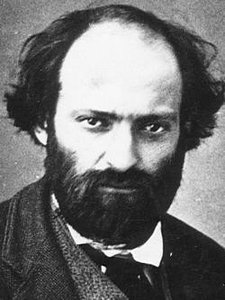
1839 - 1906 , Frankrig
Oplev Paul Cézannes 25 mest ikoniske malerier – fra stilleben til landskaber. Lær om impressionismen, hans unikke stil og køb eksklusive kunsttryk på BuyPopArt.dk. Find inspiration til din indretning!
Oplev impressionismens magi! Dyk ned i top 10 landskabsmalerier af Monet, Renoir & Van Gogh. Lær historien bag mesterværkerne og find inspiration til din indretning med BuyPopArt.dk – køb kunst online.
Oplev de 10 mest ikoniske landskabsmalerier fra Monet, Van Gogh og Caspar David Friedrich. Lær historien bag disse mesterværker & find inspiration til dit hjem med BuyPopArt.coms kuraterede kunstsamling. Udforsk nu!
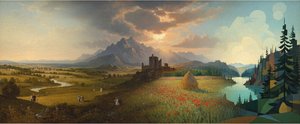
Explore the rich history of landscape art with BuyPopArt. Discover renowned artists, movements like Impressionism & Romanticism, and expert guidance for collecting timeless pieces. Find your perfect serene escape today!

Explore the rich history of landscape art with BuyPopArt. Discover renowned artists, movements like Impressionism & tonalism, and expert guidance for collecting timeless pieces. Find your perfect serene escape today!


Hold dig opdateret med de seneste kunstnyheder, eksklusive tilbud og indretningsideer.
Fortæl os om dit projekt, og vores kunsteksperter vil give dig 3 personlige kunstforslag.
Vi kuraterer 3 valgmuligheder kun til dig – Gratis!


 Se i fuld skala
 Del
Del Del
Del
 Detaljer

 Download
 Lignende værker
 Røntgenundersøgelse
 Diasshow
 Se mere







 Glasmulighed er kun tilgængelig i størrelser under 110 cm