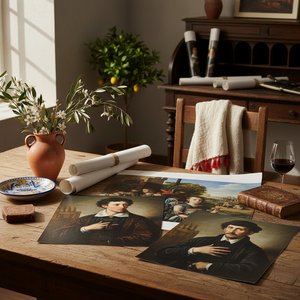
Raffaellino del Garbo: Graceful Precision in Florentine Renaissance Painting
Raffaellino del Garbo (1470-1527), a Florentine painter born Raffaello di Bartolomeo dei Carli, stands as a testament to the refined aesthetic sensibilities of the Italian Renaissance. His nickname, “del garbo,” derived from the Via del Garbo in Florence—where his workshop resided—captures the essence of his artistic approach: understated elegance and meticulous attention to detail. Early Life and Training
Raffaellino’s formative years were spent under the tutelage of Filippino Lippi, a pivotal figure in Florentine art who instilled in him a profound understanding of perspective and disegno – the foundational principles of Renaissance painting. Their collaboration lasted until 1490, shaping Raffaellino's initial artistic style and establishing a connection to Lippi’s humanist ideals. This influential mentorship propelled him to Rome, where he joined Lippi’s studio and undertook the monumental task of decorating the chapel of St. Thomas Aquinas (Caraffa Chapel) in Santa Maria sopra Minerva. This commission demanded masterful execution and cemented Raffaellino's reputation for blending classical influences with Florentine tradition. Artistic Style and Works
Raffaellino’s oeuvre is characterized by a remarkable blend of tempera and oil paint, reflecting the artistic innovations of his time. He achieved renown for his serene depictions of religious subjects—particularly the Resurrection, originally intended for Monte Oliveto Monastery, now housed in the Galleria dell'Accademia – showcasing a masterful command of color and form. Similarly impressive is “The Miracle of the Loaves,” adorning the refectory of Cesto Convent, demonstrating his ability to convey spiritual emotion through precise observation and skillful technique. Notable masterpieces include "The Coronation of the Virgin," currently residing in the Louvre Museum, and “Madonna and Child with Saints and Donors,” previously displayed at Berlin Museum—each reflecting Raffaellino’s dedication to capturing idealized beauty and conveying profound theological themes. Influences and Legacy
Raffaellino del Garbo's artistic vision was undeniably shaped by the humanist spirit of his era, mirroring the broader trends in Florentine art during the High Renaissance. He absorbed lessons from Leonardo da Vinci and Michelangelo, integrating their groundbreaking discoveries into his own practice. Furthermore, Raffaellino mentored Bronzino, fostering a continuation of stylistic excellence within Florence’s artistic milieu. His legacy extends beyond individual artworks; he embodies the enduring pursuit of grace and precision—qualities that define the very essence of Renaissance painting and continue to inspire artists today.
Silvano Lodi Collection at Museo Silvano Lodi
The Silvano Lodi Collection, housed in Museo Silvano Lodi in Campione, Italy, offers a captivating glimpse into Raffaellino del Garbo’s artistic output. Featuring numerous paintings executed with tempera on wood—a technique favored by the artist—the collection underscores his commitment to textural richness and luminous color palettes. These works exemplify Raffaellino's signature style: understated elegance combined with meticulous attention to detail, mirroring the aesthetic sensibilities of his contemporaries.
Concluding Remarks
Raffaellino del Garbo’s contribution to Florentine Renaissance art is undeniable. He skillfully blended classical ideals with humanist observation, producing images that resonate with timeless beauty and spiritual depth. His enduring influence can be discerned in the works of subsequent generations of artists—a testament to his mastery of technique and his unwavering dedication to capturing the sublime qualities of human experience.