A Tapestry of Intimacy: The World of Zahra Imani
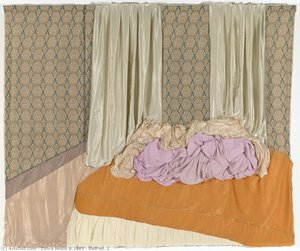
Zahra Imani, born in Tehran, Iran, in 1985, is a contemporary textile artist whose work offers a profoundly moving exploration of femininity, everyday life, and the subtle power dynamics within Iranian society. Her large-scale wall hangings are not merely decorative objects; they are narratives woven with fabric, imbued with humor, vulnerability, and a keen awareness of cultural context. Imani’s artistic journey began with formal training as an oil painter at the Tehran University of Fine Arts, but her path diverged as she became increasingly fascinated by the inherent qualities of textiles—their connection to domesticity, their historical association with women's labor, and their potential for conveying deeply personal stories. This fascination led her to experiment with appliqué techniques, transforming affordable fabrics sourced from local bazaars into expansive compositions that depict intimate moments between women.Early Influences and Artistic Development
Imani’s artistic development is rooted in a rich tapestry of influences. While initially grounded in painting, she drew inspiration from Persian miniature painting—its meticulous detail, narrative focus, and symbolic language—and European Renaissance traditions, particularly their grand scale and dramatic compositions. However, Imani consciously subverts these historical precedents, reinterpreting them through the lens of contemporary Iranian life and employing a distinctly feminine aesthetic. Her early work also reflects her experiences as a children’s book illustrator and public mural painter, skills that honed her ability to communicate complex ideas with clarity and visual impact. The choice of materials is central to Imani's artistic vision. By utilizing fabrics commonly used for garments, curtains, or bedding—items deeply embedded in the domestic sphere—she grounds her work in the tangible realities of everyday life. This deliberate selection challenges conventional notions of “high art” and elevates the often-overlooked labor of women within the home.Themes and Techniques: A Language of Fabric
The core themes explored in Imani’s work revolve around intimate exchanges between women, fleeting moments of private encounters, and the complexities of female relationships. Her compositions are characterized by a sense of quiet observation, capturing subtle gestures, shared glances, and unspoken emotions. These scenes, often set within domestic interiors, offer a glimpse into the hidden lives of Iranian women, challenging stereotypical representations and celebrating their agency and resilience. Technically, Imani’s work is distinguished by her masterful use of appliqué—a technique involving layering and stitching together pieces of fabric to create larger compositions. The uneven stitches and imprecise folds are not flaws but rather deliberate choices that acknowledge the labor-intensive process of creation and imbue the works with a sense of vulnerability and authenticity. The unfinished edges, suggesting the possibility of unraveling, further emphasize the ephemeral nature of life and the fragility of human connection.Recognition and Historical Significance
Zahra Imani’s work has garnered increasing recognition in recent years, culminating in her inclusion in the 9th Asia Pacific Triennial of Contemporary Art (APT9) at the Queensland Art Gallery | Gallery of Modern Art in Brisbane, Australia. This exhibition marked a significant turning point in her career, bringing her unique artistic vision to an international audience. Her work is now held in prominent collections and continues to be exhibited globally. Imani’s historical significance lies in her ability to challenge conventional representations of Iranian women and offer a nuanced perspective on their lives. By employing textiles as a medium—a traditionally feminine art form—she reclaims and elevates the labor of women, transforming it into a powerful tool for social commentary and artistic expression. Her work resonates with audiences worldwide, prompting reflection on themes of intimacy, vulnerability, and the complexities of cultural identity.- Born: 1985, Tehran, Iran
- Education: Tehran University of Fine Arts
- Key Themes: Intimacy, Femininity, Everyday Life, Iranian Society
- Technique: Appliqué with locally sourced fabrics
- Notable Exhibition: The 9th Asia Pacific Triennial of Contemporary Art (APT9), Queensland Art Gallery | Gallery of Modern Art, Brisbane, Australia.