Vorschau anzeigenVorschau anzeigen In AR erlebenIn AR erleben Druck bestellen Druck bestellenBild kaufen Bild kaufen VersendenVersenden
Details anzeigenDetails anzeigen Zu Favoriten hinzufügen Zu Favoriten hinzufügen HerunterladenHerunterladen Ähnliche ObjekteÄhnliche Objekte RöntgenaufnahmeRöntgenaufnahme DiashowDiashow

Don Luis de Borbón, Prinz von Parma und König von Etrurien

Ein beeindruckendes Gemälde von Francisco Goya zeigt Prinz Luis von Parma und König Etrurien im Stil der Romantik. Entdecken Sie dieses Meisterwerk und seine Bedeutung für die Kunstgeschichte auf BuyPopArt.

Francisco Goya (1746-1828): Spanien's Meister der Romantik! Bekannt für Porträts, düstere Satire und "Kriege". Ein Schlüssel zum modernen Kunstgeschichte.

Handgefertigte Ölreproduktion

Handgemaltes Ölgemälde auf Leinwand in Ihrer Wunschgröße und mit Rahmen, auf Bestellung von unseren Künstlern angefertigt. (Druck bestellen Druck bestellenBild kaufen Bild kaufen)

P118B $10
P118H $10
P118W $10
P438Z $10
P508JH $12
P508YH $12
P805H $10
P805Z $10
P919BZ $10
P919G $10
P919XJ $10
P959ZH $10
P968JZ $12
W106C $8
W218G $10
W218JH $8
W218Y $10
W307PJ $10
W316G $10
W316PJ $8
W316Y $10
W398PJ $8
W4111J $10
W500HY $15
W500JH $15
W692G $12
W849H $8
W940BG $15
W953PJ $8

Standard
custom
CM
INCH

Wählen Sie aus unseren vordefinierten Formaten, die den ursprünglichen Proportionen des Kunstwerks entsprechen.

Breite
Höhe

Sie können Ihre eigenen Maße eingeben, um einen bestimmten Rahmen oder Platz auszufüllen. Wenn die gewählte Größe nicht den Proportionen des Originalbildes entspricht, werden wir das Kunstwerk entweder beschneiden oder das Gemälde durch zusätzliche, handgemalte Elemente erweitern. Ein digitales Mockup wird Ihnen zur Genehmigung zugesandt, bevor die Produktion beginnt.
Bitte beachten Sie, dass die Bildschirmvorschau nicht die tatsächliche Beschneidung oder Erweiterung widerspiegelt. Nur das Mockup zeigt die endgültige Komposition exakt an.
Obwohl Sondermaße verfügbar sind, empfehlen wir, eine Größe aus der vordefinierten Liste zu wählen, um die ursprünglichen Proportionen beizubehalten.

Beispiele für Anpassungsmöglichkeiten: Gesicht durch Kundenfoto ersetzen; Haustier hinzufügen (z. B. Katze durch Hund ersetzen); eine versteckte Nachricht im Hintergrund einfügen; Hintergrundlandschaft oder -elemente ändern.
Nach der Bestellung wird das BuyPopArt.com-Team dem Kunden Anweisungen per E-Mail zusenden und eine Mockup-Vorschau bereitstellen.

Weltweiter Versand () in nur 3 bis 4 Wochen statt der üblichen 5 Wochen. (15 August). Keine Kompromisse bei der Qualität.

why_choose_icon
Kostenloser weltweiter Expressversand
why_choose_icon
Hochwertige Leinenleinwand
why_choose_icon
Umfassender Versicherungsschutz beim Versand
why_choose_icon
Zollgebühren-Rückerstattungsgarantie
why_choose_icon
Garantie für exakte Farbtreue
why_choose_icon
60 Tage Rückgaberecht (nur bei Mängeln)
why_choose_icon
100% Geld-zurück-Garantie
why_choose_icon
Mengenrabatt verfügbar

Gesamtpreis

$ 288

reproduction

Don Luis de Borbón, Prinz von Parma und König von Etrurien

Art der Reproduktion

Format der Reproduktion

-

Gesamtpreis

$ 288

Eckdaten

  • Influences: Old Masters
  • Movement: Romanticism
  • Subject or theme: Portraiture
  • Artist: Francisco De Goya
  • Medium: Oil painting
  • Notable elements or techniques: Dramatic lighting, realism

Kunst-Quiz

Jede Frage hat nur eine richtige Antwort.

Frage 1:
What artistic movement is Francisco de Goya’s ‘Don Luis de Borbón, Prince of Parma and King of Etruria’ primarily associated with?
Frage 2:
Which Spanish royal family member commissioned this portrait?
Frage 3:
What is a characteristic feature of Romanticism as exemplified in ‘Don Luis de Borbón, Prince of Parma and King of Etruria’?
Frage 4:
Where can you find the Musée Goya dedicated to Francisco De Goya's life and work?
Frage 5:
The image description highlights what aspect of the painting?

Beschreibung des Kunstwerks

Don Luis de Borbón, Fürst von Parma und König von Etrurien

Francisco De Goyas Don Luis de Borbón, Fürst von Parma und König von Etrurien gilt als ein Eckpfeiler der Romantik und verkörpert die tiefe Beschäftigung dieser Epoche mit Emotionen und psychologischer Vielschichtigkeit. Dieses Ölgemälde, das als sorgfältig gefertigte, handgemalte Reproduktion auf BuyPopArt.com erhältlich ist, geht weit über die bloße Porträtmalerei hinaus; es ist eine tiefgreifende Erkundung des menschlichen Charakters und der persönlichen Schicksale.

Der Künstler und sein Stil

Francisco De Goya (1746-1828) revolutionierte die spanische Malerei im späten 18. und frühen 19. Jahrhundert, indem er einen beispiellosen Weg zwischen dem Klassizismus und der Moderne einschlug. Sein unverwechselbarer Stil – geprägt durch dramatisches Chiaroscuro, ausdrucksstarke Pinselstriche und ein spürbares Gefühl der Unruhe – brachte ihm weltweite Anerkennung als einer der einflussreichsten Künstler seiner Ära ein. Das Musée Goya in Frankreich dient als Zeugnis seines bleibenden Vermächtnisses und präsentiert entscheidende Werke, die das Publikum bis heute fesseln. Goyas künstlerische Vision bestand nicht allein darin, eine Ähnlichkeit einzufangen; es ging ihm darum, Gefühle zu vermitteln und sich unbequemen Wahrheiten zu stellen.

Romantik: Emotion und psychologische Tiefe

Die Romantik lehnte den rationalen Idealismus der Aufklärung ab und setzte statrazut Intuition, Fantasie und die subjektive Erfahrung an die erste Stelle. In Don Luis de Borbón, Fürst von Parma und König von Etrurien verkörpert Goya diese Prinzipien meisterhaft. Die gedämpfte Palette des Gemäldes – dominiert von erdigen Tönen – kontrastiert scharf mit den leuchtenden Lichtakzenten, die das Gesicht des Dargestellten erhellen. Dadurch entsteht eine visuelle Spannung, welche die innere Zerrissenheit widerspieldert, die in seinem Blick mitschwingt. Diese bewusste Manipulation von Licht und Schatten unterstreicht Goyas Bestreben, psychologischen Realismus darzustellen.

Bedeutende Werke jenseits von Etrurien

Goyas Œuvre reicht weit über dieses Porträt hinaus und umfasst monumentale Leinwände wie Die Familie des Infanten Don Luis de Borbón, verfügbar auf BuyPopArt.com, sowie das eindringlich evokative Werk Der Koloss – eine gewaltige Darstellung eines Mannes, der einem Berg gegenübersteht. Diese Werke demonstrieren Goyas unvergleichliche Fähigkeit, Beobachtung mit visionärer Vorstellungskraft zu verschmelzen und bezeugen seine tiefe Auseinandersetzung mit der menschlichen Existenz sowie seinen Mut, gesellschaftliche Missstände zu konfrontieren.

Der Dom zu Zagreb: Ein Spiegelbild des europäischen künstlerischen Erbes

Obwohl der Dom zu Zagreb nicht direkt mit Goyas stilistischen Fragestellungen verknüpft ist, verkörpert er den breiteren künstlerischen Geist Europas während seiner Lebenszeit – einen Geist, der durch Erhabenheit, Glauben und die Hingabe zur Bewahrung kultureller Traditionen geprägt war. Ein Besuch auf BuyPopArt.com bietet die Gelegenheit, in dieses reiche Erbe einzutauchen und die beständige Kraft der Kunst zu bewundern, die zur Kontemplation und zum Staunen inspiriert.

Über den Künstler

Francisco José de Goya y Lucientes

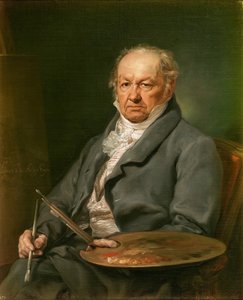
Francisco José de Goya y Lucientes, a name synonymous with both the grandeur of Old Master tradition and the unsettling premonitions of modern art, remains one of history’s most compelling and enigmatic figures. Born in 1746 in Fuendetodos, Spain, his journey from aspiring provincial artist to court painter, and ultimately, to a visionary chronicler of human suffering and societal decay, is a testament to both his extraordinary talent and the turbulent times he inhabited. Goya’s early training began at age fourteen under José Luzán y Martinez, laying a foundation in traditional techniques before he moved to Madrid and refined his skills with Anton Raphael Mengs, then the dominant artistic force at the Spanish court. This initial period instilled in him a mastery of form and composition, evident in his early commissions – designs for tapestries that showcased lively scenes of everyday life, reflecting a Rococo sensibility tempered by a distinctly Spanish realism. Marriage to Josefa Bayeu, sister of another painter within the royal circle, further cemented his position within the artistic establishment. These early works, while charming and skillfully executed, offered little hint of the profound emotional depth and unsettling darkness that would come to define his later oeuvre.

Early Training and Career

Goya’s ascent through the ranks of the Spanish court was steady. He became a painter to the Royal Chamber in 1786, securing a stream of portrait commissions from the aristocracy and royalty. These portraits are remarkable not merely for their technical brilliance – Goya possessed an uncanny ability to capture likeness with unflinching honesty – but also for their psychological insight. He didn’t simply paint what his sitters *looked* like; he revealed something of their character, their vulnerabilities, and even their hidden anxieties. However, beneath the veneer of courtly success, a transformation was brewing within Goya. In 1793, a severe illness left him profoundly deaf, an event that irrevocably altered his perception of the world and, consequently, his art. This affliction plunged him into a period of intense introspection and isolation, severing his connection to the social life he once enjoyed and forcing him inward, towards a darker, more subjective reality. The shift in his artistic style was dramatic. Gone were the bright colors and cheerful scenes; in their place emerged a brooding palette, loose brushwork, and compositions charged with emotional intensity. He began to explore themes of madness, violence, and the irrational, foreshadowing the anxieties that would grip Europe in the coming decades.

Los Caprichos, Disasters, and Black Paintings: A Descent into Darkness

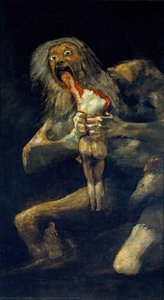
This period of artistic ferment culminated in some of Goya’s most iconic works. Los Caprichos, a series of eighty etchings published in 1799, are a scathing satire of Spanish society – its follies, superstitions, and moral corruption laid bare with unflinching wit and biting irony. The images are grotesque yet captivating, populated by witches, monsters, and caricatures of the aristocracy, all rendered with a masterful command of etching techniques. They are not heroic depictions of battle; they are unflinching portrayals of its horrors, devoid of any romanticism or glorification. Perhaps most unsettling of all were The Black Paintings, a series of fourteen murals Goya painted directly onto the walls of his house, “Quinta del Sordo” (the Deaf Man’s Villa), between 1819 and 1823. These works – including the terrifying *Saturn Devouring His Son* and the haunting *Asmodea* – are a descent into the darkest recesses of the human psyche, expressing themes of despair, madness, and existential dread with unparalleled intensity.

Legacy: A Bridge Between Worlds

In 1824, disillusioned by political unrest in Spain, Goya sought exile in Bordeaux, France, where he continued to work until his death in 1828. His final years were marked by a renewed focus on printmaking, culminating in the *La Tauromaquia* series, which explored the spectacle and brutality of bullfighting. Francisco Goya’s legacy is immense and far-reaching. He stands as a pivotal figure in art history, bridging the gap between the Old Masters and the modern movement. His influence can be seen in the works of countless artists who followed – from Édouard Manet and Pablo Picasso to Francis Bacon – all drawn to his expressive brushwork, psychological depth, and willingness to confront uncomfortable truths. He challenged artistic conventions, embraced innovation, and dared to explore the darker aspects of human experience, leaving behind a body of work that continues to resonate with audiences today. Goya wasn’t merely painting pictures; he was holding up a mirror to society, forcing us to confront our own flaws and vulnerabilities, and reminding us of the enduring power – and fragility – of the human spirit.

Kurzinfos

  • Artistic Movement Or Style: Romantik
  • Artists Who Influenced This Artist:
    • Diego Velázquez
    • Giovanni Battista Tiepolo
    • Anton Raphael Mengs
  • Date Of Birth: 30 März 1746
  • Full Name: Francisco José de Goya y Lucientes
  • Nationality: Spanisch
  • Notable Artworks:
    • Los Caprichos
    • Die Katastrophen des Krieges
    • Die Maja Desnuda
    • Die schwarzen Gemälde
  • Place Of Birth: Fuendetodos, Spanien
Entdecken Sie Kunstwerke, die nach Themen, Stilen und Merkmalen sortiert sind.