

Handgemaltes Ölgemälde auf Leinwand in Ihrer Wunschgröße und mit Rahmen, auf Bestellung von unseren Künstlern angefertigt. ( Zum Druck wechseln Zum Bild wechseln)





























Wählen Sie aus unseren vordefinierten Formaten, die den ursprünglichen Proportionen des Kunstwerks entsprechen.

Sie können Ihre eigenen Maße eingeben, um einen bestimmten Rahmen oder Platz auszufüllen. Wenn die gewählte Größe nicht den Proportionen des Originalbildes entspricht, werden wir das Kunstwerk entweder beschneiden oder das Gemälde durch zusätzliche, handgemalte Elemente erweitern. Ein digitales Mockup wird Ihnen zur Genehmigung zugesandt, bevor die Produktion beginnt.
Bitte beachten Sie, dass die Bildschirmvorschau nicht die tatsächliche Beschneidung oder Erweiterung widerspiegelt. Nur das Mockup zeigt die endgültige Komposition exakt an.
Obwohl Sondermaße verfügbar sind, empfehlen wir, eine Größe aus der vordefinierten Liste zu wählen, um die ursprünglichen Proportionen beizubehalten.
Weltweiter Versand () in nur 3 bis 4 Wochen statt der üblichen 5 Wochen. (10 August). Keine Kompromisse bei der Qualität.


Christ Presented to the People - oblong plate, - (165)
Format der Reproduktion
Rembrandt Harmensz. van Rijn's "Christ Presented to the People" – a monumental drypoint print from 1655 – isn’t merely a depiction of a biblical scene; it’s a profound meditation on power, judgment, and the agonizing choices faced by humanity. This extraordinary work transcends its historical context, resonating with viewers centuries later through its masterful use of light, shadow, and deeply humanized figures. The print, one of the largest ever produced by Rembrandt, stands as a testament to his unparalleled ability to capture not just outward appearances but also the complex emotions simmering beneath the surface.
The scene unfolds within a meticulously rendered Roman courtyard, dominated by a raised platform where Pontius Pilate, clad in an Oriental turban and wielding a long staff, presents Jesus to the assembled crowd. The composition is strikingly dynamic – a carefully orchestrated interplay of figures, gestures, and architectural details that draws the eye into the heart of the drama. Pilate’s deliberate pointing, coupled with the expectant faces of the onlookers, creates a palpable sense of tension and uncertainty. Rembrandt brilliantly contrasts the authority of the Roman governor with the bewildered expressions of the populace, highlighting the moral dilemma at the core of the narrative.
Rembrandt’s choice of drypoint as his medium is crucial to understanding the print's unique character. Unlike etching, which relies on acid to bite into a metal plate, drypoint involves scratching an image directly into the copper using a needle. This process creates a burr – tiny raised ridges along the lines – that imparts a velvety texture and rich tonal range to the printed image. The resulting print is characterized by its deep blacks, subtle gradations of tone, and luminous highlights, all achieved through careful manipulation of ink distribution. The burr also contributes to the print’s remarkable durability; drypoint prints tend to withstand age and handling far better than etchings.
Rembrandt's skill in exploiting this technique is breathtaking. He masterfully uses the burr to create a sense of depth, volume, and movement within the composition. The folds of Pilate’s robes, the rough texture of the crowd’s clothing, and even the subtle sheen on Jesus’s face are all rendered with astonishing realism – achieved not through meticulous detail but through the strategic application of pressure and ink.
“Christ Presented to the People” is deeply rooted in the historical context of 17th-century Holland. The scene draws a parallel to the judicial practices of the time, where magistrates would publicly present accused criminals to the populace for judgment. Pilate’s gesture – offering Jesus and Barabbas as alternatives – reflects the difficult decision faced by Roman authorities when confronted with dissent and rebellion. The inclusion of figures like the scribe and the young servant adds a layer of social commentary, suggesting that even within the heart of power, ordinary citizens were implicated in this momentous event.
Furthermore, the architectural setting—a newly constructed Town Hall in Amsterdam—references contemporary developments in Dutch urban design. Rembrandt’s decision to incorporate these elements into his biblical narrative underscores his keen awareness of his own time and place. The presence of Justice and Fortitude statues above the central doorway further reinforces this connection, suggesting that the drama unfolding below is a reflection of broader societal values.
Despite its historical context, “Christ Presented to the People” remains profoundly relevant today. Rembrandt’s masterful portrayal of human emotion – the uncertainty, the doubt, the potential for both compassion and cruelty – transcends any specific religious or cultural boundaries. The print compels us to confront difficult questions about justice, responsibility, and the choices we make as individuals and as a society. The image's dramatic lighting, coupled with the carefully crafted expressions of the figures, evokes a powerful sense of pathos and invites viewers to contemplate the weight of judgment and the enduring struggle between good and evil.
Reproductions of this iconic work offer an exceptional opportunity to experience Rembrandt’s genius firsthand. BuyPopArt's hand-painted reproductions capture not only the visual details but also the emotional depth and textural richness of the original print, allowing you to bring this masterpiece into your home or office with confidence.
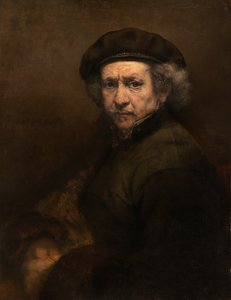
1606 - 1669 , Niederlande

Explore the brilliance of Rembrandt's chiaroscuro technique & the Dutch Golden Age. Discover iconic artworks, expert analysis, and museum-quality reproductions at BuyPopArt.com.
Entdecken Sie die 10 legendärsten Radierungen von Rembrandt, Dürer & Goya! Erfahren Sie die Geschichten hinter diesen Meisterwerken der Kunstgeschichte und lassen Sie sich für Ihre Wohnräume inspirieren. Hochwertige Kunstdrucke auf BuyPopArt.com.

Explore the captivating world of George Paul Chalmers (1833-1878), a pivotal Scottish painter. Discover his landscapes, portraits & connection to the Aesthetic Movement and Colourists. Learn about this 'Angus Rembrandt's' legacy with BuyPopArt.

Entdecken Sie Hendrick Goltzius, den niederländischen Meister des Manierismus und virtuosen Kupferstechers! Erfahren Sie mehr über sein Leben, seine Technik und seinen Einfluss auf die Kunstgeschichte. Jetzt lesen!
Entdecken Sie die 25 Meisterwerke von Francisco Goya! Tauchen Sie ein in die düstere Romantik spanischer Malerei, Porträts & Historienbilder. Hochwertige Kunstdrucke auf BuyPopArt.com – für Kunstliebhaber und stilvolles Wohnen.


Bleiben Sie über die neuesten Kunstnachrichten, exklusive Angebote und Dekorationsideen auf dem Laufenden.
Erzählen Sie uns von Ihrem Projekt, und unsere Kunstexperten erstellen für Sie drei personalisierte Kunstvorschläge.
Wir kuratieren 3 Optionen exklusiv für Sie – kostenlos!


 Vorschau anzeigen
 Versenden
 Teilen
 Details anzeigen

 Herunterladen
 Ähnliche Objekte
 Röntgenaufnahme
 Diashow

 Weiterlesen







 Die Glasoption ist nur für Größen unter 110 cm verfügbar.


![Die Anatomie Vorlesung von Dr. Nicolaes Tulp [1632]](/media/artworks/images/thumbnails/12/01/1201b3f0503f4444b89f31dad3941765.jpg)


