Johann Jakob Ulrich: A Painter of Tranquil Swiss Landscapes
Johann Jakob Ulrich (dates unknown) embodies the Romantic spirit that captivated 19th-century Switzerland, translating its breathtaking vistas into exquisitely detailed watercolor paintings. Biographical information concerning Ulrich remains elusive—a characteristic of the period’s artistic documentation practices—yet his canvases speak volumes about a singular aesthetic rooted in profound observation and heartfelt emotion.
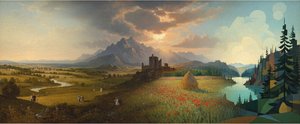
Ulrich's artistic genesis coincided with the burgeoning fascination for plein air painting, spurred by luminaries like Caspar David Friedrich who championed nature as a pathway to spiritual contemplation. Embracing this influential movement, Ulrich’s compositions prioritize atmospheric perspective and tonal gradation—methods honed by German Romantic painters—to convey the majesty and serenity of Alpine valleys and lakeside panoramas. Unlike many artists preoccupied with dramatic narratives or heroic portrayals, Ulrich dedicated himself to capturing ephemeral moments of natural beauty, prioritizing accuracy alongside expressive color harmonies.
His artistic output comprises a substantial collection of landscapes centered on the Zürichsee region and Sestri Levante, demonstrating unparalleled mastery over watercolor pigments and sophisticated layering techniques. These artworks transcend mere visual representations; they emanate an unmistakable stillness—a palpable invitation to immerse oneself within the very essence of Swiss countryside. Ulrich skillfully utilizes subtle washes of color to depict hazy skies, shimmering water surfaces, and lush meadows—creating images that linger in the viewer’s mind as emblems of tranquility. The artist's meticulous attention to detail—evident in depictions of foliage, rocks, and distant mountains—underscores his unwavering commitment to capturing the soul of his subjects with uncompromising fidelity.
Ulrich’s artistic legacy rests principally upon his pivotal role within the Romantic landscape tradition. He exemplifies the movement’s core conviction that art should elevate the spirit through communion with the natural world. His paintings continue to inspire admiration today, serving as enduring reminders of a time when artists sought solace and inspiration amidst unspoiled wilderness—a sentiment that retains profound resonance in our increasingly urbanized society. Ulrich's oeuvre stands as a testament to Switzerland’s artistic heritage, illustrating how careful observation combined with emotive color palettes could yield images of unparalleled beauty.
- Notable Paintings: Landgut am Zürichsee, 1826; Sestri Levante bei Sonnenuntergang, 1836
- Technique: Watercolor Painting – Employing meticulous layering and tonal gradation for atmospheric perspective.
- Influences: Caspar David Friedrich and the Romantic Landscape Movement
Historical Context & Artistic Influences
Ulrich’s artistic endeavors unfolded against a backdrop of significant cultural shifts—namely, the ascendancy of Romanticism in Europe. This movement prioritized emotion over reason, valuing subjective experience alongside reverence for nature's grandeur. Friedrich’s monumental landscapes served as a catalyst for Ulrich’s stylistic choices, prompting him to adopt techniques mirroring those favored by German Romantic painters: dramatic tonal ranges and meticulous depiction of geological formations. Furthermore, Ulrich’s artistic sensibilities were subtly shaped by the prevailing philosophical currents of his time—particularly Kantian idealism—which championed the notion that human understanding is fundamentally structured by innate categories of thought.
Style & Technique
Ulrich's distinctive style manifested in his unwavering devotion to watercolor painting—a medium renowned for its luminosity and ability to convey subtle nuances of light and color. He skillfully mastered layering techniques, applying thin washes of pigment upon successive layers to achieve remarkable atmospheric depth and tonal gradation. This meticulous approach allowed him to capture the ethereal quality of Alpine air and the shimmering reflections on lake surfaces with breathtaking accuracy. The artist’s palette favored muted hues—primarily blues, greens, and browns—reflecting the subdued tones characteristic of Swiss landscapes during his era.
Major Achievements & Legacy
While Ulrich's biographical details remain sparse, his artistic accomplishments are undeniable. His landscapes—particularly those depicting the Zürichsee region and Sestri Levante—are considered exemplary illustrations of Romantic landscape art. They stand as enduring symbols of Switzerland’s natural splendor and continue to captivate viewers with their serene beauty and evocative atmosphere. Ulrich’s contribution to the artistic canon solidified his place within Swiss cultural history, demonstrating how observation and emotion could converge to produce images that transcend time.
Further Exploration
To delve deeper into Johann Jakob Ulrich's artistic world, consider examining related artworks from the Romantic period—particularly those produced by Caspar David Friedrich and Albert Bierstadt—to appreciate the broader context of his stylistic innovations. Examining comparative analyses of Ulrich’s techniques alongside those employed by contemporary artists offers invaluable insights into the evolution of landscape painting during this transformative era.