James Rosenquist: A Pioneer of Pop Art and Surrealist Collage
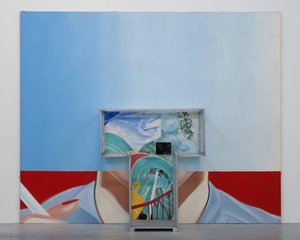
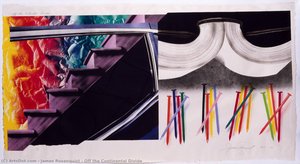
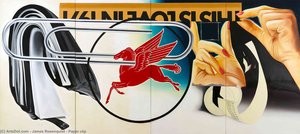
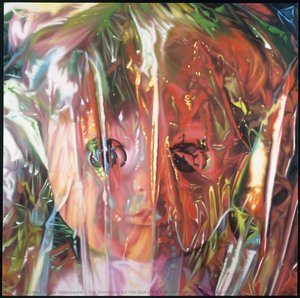
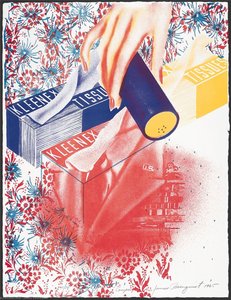
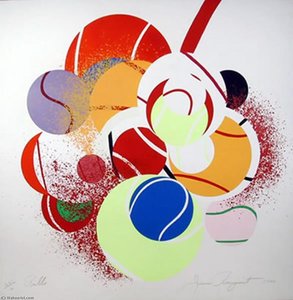
James Rosenquist (1933 – 2017) stands as a monumental figure in American art, recognized primarily for his groundbreaking contribution to the Pop Art movement. Yet, labeling him solely within this stylistic framework diminishes the breadth and depth of his artistic vision—a vision rooted in meticulous craftsmanship honed through years of experience as a billboard painter and imbued with an intellectual curiosity that interrogated the pervasive influence of consumer culture on the human psyche. Born in Grand Forks, North Dakota, Rosenquist’s early life was marked by constant relocation due to his parents' itinerant careers as amateur pilots—an upbringing that instilled within him a unique perspective on movement and fragmentation, themes that would become central to his artistic explorations.
### Early Life and Artistic Foundations
Rosenquist’s fascination with art began in childhood, nurtured by his mother who herself practiced painting. He excelled academically, securing a scholarship to the Minneapolis School of Art where he honed foundational skills in drawing and printmaking—skills that would prove invaluable as he transitioned into commercial artistry. It was during this period that Rosenquist gained crucial experience mastering large-scale mural techniques, preparing him for the monumental canvases that would define his mature style.
- His apprenticeship at Artkraft-Strauss exposed him to the visual language of advertising—a realm characterized by bold colors, fragmented imagery, and persuasive messaging.
- This formative period instilled in him a profound understanding of how images could manipulate perception and convey complex ideas.
### The Billboard Years: Technique and Conceptual Innovation
Rosenquist’s career took an unexpected turn when he secured employment at Artkraft-Strauss, where he became the lead painter for billboard productions across North Dakota and Wisconsin.
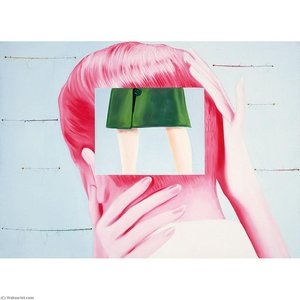
This seemingly pragmatic step proved to be instrumental in shaping his artistic sensibilities, providing him with unparalleled access to the techniques of monumental painting—skills that would later inform his ambitious studio projects. Simultaneously, Rosenquist cultivated a deep appreciation for Surrealist art, recognizing its capacity to disrupt conventional narratives and explore subconscious realms.
- He drew inspiration from artists like René Magritte and Salvador Dalí, adopting their strategies of juxtaposition and dreamlike imagery.
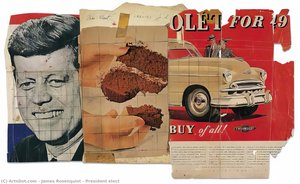
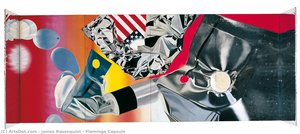
- Rosenquist’s artistic process involved meticulously assembling disparate elements—photographs, text fragments, and industrial objects—to create collages that challenged viewers to confront the contradictions inherent in modern life.
### Breakthrough Exhibitions and Recognition
Rosenquist achieved international acclaim in 1965 with his seminal painting *F-111*, a sprawling canvas featuring images of an aircraft alongside consumer products—a deliberate provocation that interrogated themes of war, technology, and the American Dream.
This artwork cemented his position as one of the foremost innovators of Pop Art, sparking critical debate about the movement’s aesthetic and conceptual ambitions. Subsequent exhibitions at Leo Castelli Gallery propelled him to prominence, establishing a lasting collaboration with the gallery and securing recognition from influential figures like Philip Johnson.
- His monumental mural commissions for the Florida Legislature underscored his commitment to public art and solidified his reputation as a visionary artist.
- Rosenquist’s work continues to resonate today as a powerful commentary on consumerism, media saturation, and the complexities of contemporary culture—a testament to his enduring artistic legacy.
### Legacy and Influence
James Rosenquist's impact extends far beyond his own oeuvre; he profoundly influenced subsequent generations of artists interested in exploring the intersection of art and commerce.
His pioneering approach to collage challenged conventional notions of representation, demonstrating that advertising imagery could serve as a legitimate subject for artistic contemplation. He remains an enduring symbol of innovation, intellectual rigor, and artistic courage—a figure whose work continues to inspire awe and provoke reflection on the role of visual culture in shaping our understanding of the world.