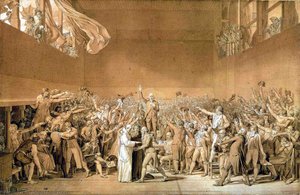
Acrylic On CanvasWallArtNeoclassical Ideals
 179419th Century
 119.0 x 156.0 cm
 Musée Calvet
Hand-painted oil on canvas in your size and frame, made to order by our artists. ( Switch to Print Switch to Image)





























Pick from our preset sizes that match the artwork's original proportions.

You may enter your own dimensions to fit a specific frame or space. If your selected size does not match the original image's proportions, we will either crop the artwork or extend the painting with additional hand-painted elements. A digital mockup will be sent for your approval before production begins.
Please note that the on-screen preview does not reflect the actual cropping or extension. Only the mockup will accurately show the final composition.
While custom sizes are available, we recommend selecting a dimension from the predefined list to preserve the original proportions.
Worldwide Delivery () in 3/4 weeks instead of standard 5 weeks. (10 August). No compromise on quality.


The Death of Bara
Reproduction Size
Jacques-Louis David’s “The Death of Bara” (1794) is more than just a painting; it's a potent distillation of the revolutionary fervor gripping France during the tumultuous years following the storming of the Bastille. This arresting image, measuring 119 x 156 cm, depicts the final moments of Joseph Bara, a thirteen-year-old drummer boy who tragically fell victim to Vendéan Royalists – a pivotal event meticulously crafted and exploited for propagandistic purposes by Maximilien Robespierre himself. The painting’s raw emotional power stems from David's masterful manipulation of Neoclassical principles, combined with a deliberate deployment of symbolism designed to galvanize support for the fledgling Republic.
Initially commissioned as a tribute to Bara’s sacrifice, the work quickly transcended its immediate purpose, becoming an enduring emblem of revolutionary virtue. David, deeply influenced by the ideals of classical antiquity and the burgeoning Neoclassical movement, sought to elevate Bara's death into a timeless narrative of patriotic devotion. The composition itself is strikingly direct: a naked young boy lies prone on the ground, his body illuminated with a stark, almost ethereal light. This deliberate nudity wasn’t merely an artistic choice; it was a calculated strategy to evoke associations with classical sculptures depicting idealized youth and innocence – figures like Bernini's Hermaphrodite – thereby imbuing Bara with an aura of heroic sanctity.
The story surrounding Bara’s death, as propagated by Robespierre, was a carefully constructed myth. It was falsely claimed that Bara, defying the Royalists' cry of “Vive le Roi,” shouted “Vive la République” before succumbing to his wounds. This narrative, amplified through David’s artistic skill, transformed a tragic loss into a rallying cry for revolutionary zeal. The painting doesn’t simply depict death; it *stages* it – presenting Bara as a martyr whose sacrifice would inspire generations of French citizens to defend the Republic.
Notice the meticulous detail in the rendering of Bara's body. David employs a technique known as “frotté,” applying thin layers of pigment with a brush, building up the form gradually. This creates a remarkable sense of texture and volume, particularly evident in the smooth skin of the boy’s chest and limbs. The muted color palette – dominated by grays, browns, and subtle blues – contributes to the painting's somber mood, emphasizing the tragedy of Bara’s fate. The surrounding landscape, rendered with a stark realism, further underscores the desolate nature of the scene.
Beyond its immediate narrative, “The Death of Bara” is rich in symbolic meaning. The boy's nakedness represents vulnerability and innocence, while his outstretched hand suggests both surrender and defiance. The red, white, and blue cockade clutched in his hand – the colors of the nascent French Republic – serves as a potent visual symbol of revolutionary allegiance. David’s deliberate choice to portray Bara without any visible injuries or signs of pain further amplifies the painting's emotional impact, suggesting an almost idealized vision of martyrdom.
Reproductions of “The Death of Bara” have circulated widely throughout French history, serving as a powerful tool for political education and propaganda. Its image was prominently displayed in schools and public spaces, solidifying its place as one of the most iconic works of the French Revolution. Today, this hand-painted reproduction offers a captivating glimpse into a pivotal moment in French history – a testament to David’s artistic genius and the enduring power of revolutionary symbolism.
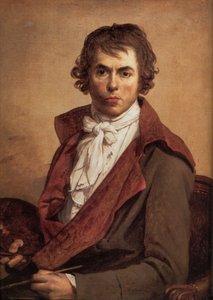
1748 - 1800 , France

Explore the life & art of Jacques-Louis David, leading Neoclassical painter of the French Revolution. Discover iconic works like 'The Death of Marat' and his lasting impact on art history. Expert analysis & high-quality reproductions at BuyPopArt.

Explore the captivating world of Neoclassical portraiture! Discover the power & ideals behind masterpieces by David, Girodet & more. Expert analysis, custom reproductions & art appraisal at BuyPopArt.

Explore 10 defining Neoclassical masterpieces by David, Ingres & Canova. Discover the history, symbolism & artistry behind these iconic paintings and sculptures. Find museum-quality art reproductions at – elevate your home with timeless beauty.

Explore the captivating world of Anne-Louis Girodet, a pivotal figure bridging Neoclassicism & Romanticism. Discover his masterpieces and unique artistic vision with BuyPopArt.

Explore the enduring legacy of Neoclassical art! Discover masterpieces by David, Girodet & Garnier. Expert analysis, custom reproductions & art appraisal at BuyPopArt.


Stay updated with the latest art news, exclusive offers, and decoration ideas.
Tell us about your project and our art experts will provide you with 3 personalized art suggestions.
Let Us Curate 3 Options Just for You - Free!


 Preview
 Send
Send Share
Share
 Details

 Download
 Similars
 X-Ray
X-Ray Diaporama
 Read More







 Glass option is only available in size under 110 CM