Hand-painted oil on canvas in your size and frame, made to order by our artists. ( Switch to Print Switch to Image)





























Pick from our preset sizes that match the artwork's original proportions.

You may enter your own dimensions to fit a specific frame or space. If your selected size does not match the original image's proportions, we will either crop the artwork or extend the painting with additional hand-painted elements. A digital mockup will be sent for your approval before production begins.
Please note that the on-screen preview does not reflect the actual cropping or extension. Only the mockup will accurately show the final composition.
While custom sizes are available, we recommend selecting a dimension from the predefined list to preserve the original proportions.
Worldwide Delivery () in 3/4 weeks instead of standard 5 weeks. (6 August). No compromise on quality.


Underwear on the fence
Reproduction Size
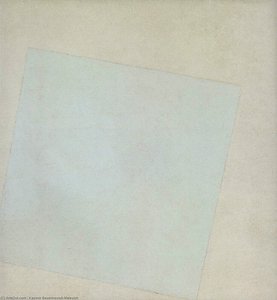
In 1903, Kazimir Malevich, a name soon synonymous with the revolutionary vanguard of abstract art, produced a work that defies easy categorization and continues to provoke contemplation: ‘Underwear on the Fence.’ This seemingly simple depiction – a field punctuated by clothes hanging from a metal fence – is far more than a snapshot of rural life; it’s a meticulously constructed exploration of form, color, and the very nature of perception. The painting's genesis lies in Malevich’s early exposure to Ukrainian folk art and his burgeoning desire to break free from representational constraints, a trajectory that would ultimately lead him to develop Suprematism, one of the most influential artistic movements of the 20th century.
The subject matter itself is deliberately banal – everyday garments suspended on a fence. However, Malevich elevates this commonplace scene through his precise composition and unwavering focus on geometric relationships. Thirteen pieces of white clothing are arranged along the fence, their forms rendered with an almost obsessive attention to detail. The varying distances of these objects create a dynamic sense of depth within the canvas, drawing the viewer’s eye across the entire field. The juxtaposition of the rough texture of the dirt and grass with the smooth, reflective surfaces of the clothes generates a compelling visual tension.
Executed in oil on canvas, ‘Underwear on the Fence’ exemplifies Malevich's early experimentation with reductive techniques. The color palette is strikingly limited to shades of white, emphasizing the purity and clarity of form. This deliberate restraint reflects a growing interest in eliminating subjective interpretation and focusing solely on the essential elements of visual experience. Malevich’s brushwork is precise and controlled, contributing to the painting's overall sense of order and intellectual rigor. The meticulous rendering suggests a desire to strip away all extraneous detail, leaving only the fundamental building blocks of composition.
While Malevich himself resisted assigning definitive symbolic meaning to ‘Underwear on the Fence,’ art historians have interpreted it as a radical rejection of traditional artistic conventions. The painting can be seen as a proto-Suprematist work, foreshadowing Malevich’s later explorations of pure geometric abstraction. The fence itself acts as a barrier, separating the viewer from the natural world and prompting a consideration of the constructed nature of reality. Produced in 1903, this piece sits at a crucial juncture in Malevich's artistic development, marking a decisive shift away from representational art towards a more conceptual approach to painting.
'Underwear on the Fence’ possesses a quiet intensity that belies its seemingly simple subject matter. It invites viewers to engage in a process of active interpretation, challenging them to reconsider their assumptions about art and representation. This work demonstrates Malevich's early commitment to exploring new ways of seeing and understanding the world, laying the groundwork for his groundbreaking contributions to abstract art. A hand-painted reproduction offers an unparalleled opportunity to experience this pivotal moment in artistic history, bringing a touch of radical innovation into any space.

1878 - 1935 , Ukraine

Explore the revolutionary Dada art movement! Discover its origins, key artists like Duchamp & Arp, and lasting impact on modern art. A deep dive into anti-art & challenging conventions.

Explore 25 iconic artworks by Kazimir Malevich, pioneer of Suprematism & abstract art. Discover the stories behind 'Black Square' and more! Find museum-quality prints & elevate your home decor with BuyPopArt.com.

Explore the revolutionary artistic transformations of early 20th-century painting – Fauvism, Cubism & more. Discover key artists and movements shaping modern art history with BuyPopArt.

Explore the evolution of geometric abstraction from Cubism to contemporary art. Discover key artists like Malevich & Mondrian, investment insights, and expert collecting advice at BuyPopArt.

Explore 10 defining masterpieces of Geometric Abstraction! Discover Kandinsky, Mondrian & Malevich’s iconic works. Find museum-quality art reproductions and curated decor ideas to elevate your home at BuyPopArt.com.


Stay updated with the latest art news, exclusive offers, and decoration ideas.
Tell us about your project and our art experts will provide you with 3 personalized art suggestions.
Let Us Curate 3 Options Just for You - Free!


 Preview
 Send
Send Share
Share
 Details

 Download
 Similars
 X-Ray
X-Ray Diaporama

 Read More







 Glass option is only available in size under 110 CM