

Hand-painted oil on canvas in your size and frame, made to order by our artists. ( Buy Print Buy Image)
Pick from our preset sizes that match the artwork's original proportions.

You may enter your own dimensions to fit a specific frame or space. If your selected size does not match the original image's proportions, we will either crop the artwork or extend the painting with additional hand-painted elements. A digital mockup will be sent for your approval before production begins.
Please note that the on-screen preview does not reflect the actual cropping or extension. Only the mockup will accurately show the final composition.
While custom sizes are available, we recommend selecting a dimension from the predefined list to preserve the original proportions.
Worldwide Delivery () in 3/4 weeks instead of standard 5 weeks. (13 August). No compromise on quality.


British Institution
Reproduction Size
In the vibrant, shifting landscape of late Georgian and early Victorian England, few artists captured the pulse of national identity as intimately as William Henry Pyne. Born in London in 1769, Pyne emerged from the intellectual ferment of the Enlightenment to become much more than a mere painter; he was a writer, an illustrator, and a meticulous observer of the social fabric. His artistic journey began with formal training at the Drawing Academy of Henry Pars, where he honed a command of classical ideals that would later serve as the foundation for his remarkably detailed and realistic style. When he made his debut at the Royal Academy in 1790, the world was introduced to an artist capable of translating the atmospheric grandeur of the English landscape into a medium of profound expressive power.
Pyne’s work is characterized by a unique duality: the ability to capture both the monumental and the minute. While his contemporaries like Turner were exploring the sublime through sweeping, turbulent strokes, Pyne found beauty in the precision of topographical vision. He possessed a rare talent for utilizing the luminous, translucent qualities of watercolor to illuminate scenes ranging from the opulent interiors of royal palaces to the quiet, dignified rhythms of everyday street life. His brushwork, often delicate and imbued with subtle tonal harmonies, allowed him to convey not just the physical reality of a scene, but its underlying emotional resonance and historical weight.
The true zenith of Pyne’s contribution to British art lies in his ambitious documentary projects, which served as a visual encyclopedia of his age. Perhaps his most enduring legacy is “The Costume of Great Britain,” published in 1805 in collaboration with the renowned publisher Rudolph Ackermann. Through this monumental undertaking, Pyne meticulously documented the diverse social strata of England, using watercolor and detailed engravings to preserve the fashions, manners, and appearances of a society in transition. This work did more than satisfy a commercial demand; it cemented his reputation as a premier visual chronicler, providing future generations with an unparalleled window into the sartorial and social nuances of the era.
Beyond the study of fashion, Pyne’s fascination with architectural splendor led to significant achievements in the realm of historical documentation. His project, “The History of the Royal Residences,” published between 1816 and 1819, offered an unprecedented look at the heart of British power. Through his art, viewers were invited into the majestic halls of Windsor Castle, St. James's Palace, Carlton House, Kensington Palace, and Hampton Court Palace. These works were not merely architectural records but were imbued with a sense of romanticism, capturing the neoclassical elegance and the atmospheric grandeur of these historic sites.
As his career progressed, Pyne’s artistic vision became increasingly intertwined with the Romantic spirit. His compositions often sought to weave narrative and emotion into the very fabric of the landscape and the human subject. Whether he was illustrating the theatrical opulence of Sadler’s Wells Theatre or the serene, Gothic atmosphere of St Margaret’s, Westminster, there was always an underlying appreciation for psychological depth and the fleeting beauty of a moment captured in time. His ability to blend the precision of topographical drawing with the evocative nature of watercolor allowed him to bridge the gap between scientific observation and artistic expression.
Though he sometimes worked under the pseudonym Ephraim Hardcastle, Pyne’s influence on British illustration and painting remains undeniable. He stood at the crossroads of history, documenting the waning years of Georgian elegance and the rise of a new, industrial middle class. His life and work represent a vital link in the evolution of English art, leaving behind a rich tapestry of imagery that continues to fascinate scholars and art lovers alike. Through his eyes, we do not merely see the past; we experience the textures, the colors, and the very soul of an era defined by profound transformation.

1769 - 1843 , United Kingdom
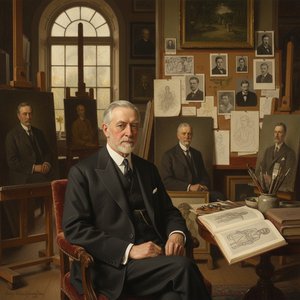
Explore the life & art of Sir William Rothenstein – a pivotal figure in British Modernism. Discover his portraits, war paintings, and influential role at the Royal College of Art. A comprehensive biography for art enthusiasts.

Explore the satirical world of William Hogarth, pioneering British painter & engraver. Discover his iconic works like *A Rake's Progress* and insightful social commentary on 18th-century London life.
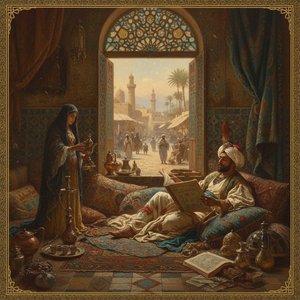
Explore the captivating Orientalist paintings of John Frederick Lewis! Discover his mastery of detail, genre scenes & influence on 19th-century British art. Learn about his life, techniques & legacy at BuyPopArt.

Explore the captivating landscapes & genre scenes of William Henry Hope, a pivotal Canadian artist. Discover his mastery of light, realism, and narrative in this insightful guide. Learn about collecting his work & its place in art history.

Explore the life & works of Daniel Maclise, a leading Victorian historical painter. Discover his captivating murals, Shakespearean scenes, and portraits at BuyPopArt.com – handmade oil paintings & museum-quality prints.


Stay updated with the latest art news, exclusive offers, and decoration ideas.
Tell us about your project and our art experts will provide you with 3 personalized art suggestions.
Let Us Curate 3 Options Just for You - Free!


 Preview
 Send
Send Share
Share
 Details

 Download
 Similars
 X-Ray
X-Ray Diaporama
 Read More




































 Glass option is only available in size under 110 CM


