

Hand-painted oil on canvas in your size and frame, made to order by our artists. ( Switch to Print Switch to Image)





























Pick from our preset sizes that match the artwork's original proportions.

You may enter your own dimensions to fit a specific frame or space. If your selected size does not match the original image's proportions, we will either crop the artwork or extend the painting with additional hand-painted elements. A digital mockup will be sent for your approval before production begins.
Please note that the on-screen preview does not reflect the actual cropping or extension. Only the mockup will accurately show the final composition.
While custom sizes are available, we recommend selecting a dimension from the predefined list to preserve the original proportions.
Worldwide Delivery () in 3/4 weeks instead of standard 5 weeks. (5 August). No compromise on quality.


George Washington (Porthole type)
Reproduction Size
Rembrandt Peale's “George Washington (Porthole type)” is more than just a portrait; it’s a carefully constructed embodiment of the nascent American republic, a visual testament to leadership and the promise of a new nation. Painted in 1795, during a pivotal moment in George Washington’s life – shortly after his farewell address and as he navigated the complexities of the young presidency – this work transcends mere likeness, offering a glimpse into the ideals that shaped early America. Peale, deeply influenced by the Neoclassical tradition championed by his father, Charles Willson Peale, a renowned naturalist and artist, masterfully blends historical accuracy with an idealized representation of Washington’s character.
The painting itself is executed in a style reminiscent of the Roman portraiture that had captivated European artists for centuries. The composition is strikingly formal, placing Washington centrally within a circular frame – a device frequently employed to elevate subjects and imbue them with a sense of timelessness and authority. His posture is dignified and resolute, his gaze direct and unwavering, projecting an image of strength and gravitas. Note the subtle but deliberate details: the meticulously rendered uniform, adorned with the insignia of military rank; the sword held firmly at his side, symbolizing both power and duty; and the carefully chosen drapery that enhances the sense of grandeur and stability.
Understanding Rembrandt Peale’s work requires acknowledging the profound influence of his father, Charles Willson Peale. Charles was a pivotal figure in the development of American art, establishing the first public museum in the United States – the Philadelphia Museum—and tirelessly advocating for the importance of artistic education and representation. He instilled in his sons not only technical skill but also a deep commitment to documenting and celebrating American life and history. Rembrandt’s portrait of Washington is, in many ways, a continuation of this family legacy, carrying forward the Peale tradition of creating images that both reflect and shape national identity.
The choice of George Washington as subject was itself significant. As the first president, he represented the culmination of the American Revolution and the establishment of a stable government. Peale’s portrait served to solidify Washington's image as a revered figure – a symbol of virtue, integrity, and selfless service. The painting wasn’t simply a record of a man; it was an active participant in constructing a national myth.
Peale’s masterful use of Neoclassical techniques is evident throughout the portrait. The smooth, polished surfaces, the carefully modeled forms, and the restrained palette – dominated by muted browns, grays, and creams – all contribute to a sense of solemnity and timelessness. The lighting, strategically placed to highlight Washington's face and figure, further emphasizes his importance and authority. Beyond the technical skill, however, lies a rich layer of symbolism. The circular frame itself represents eternity and wholeness, suggesting that Washington’s legacy will endure for generations to come.
Furthermore, the inclusion of the two figures in the background – likely representing advisors or dignitaries – subtly reinforces the idea of Washington as a leader surrounded by loyal supporters. The composition speaks volumes about the values of unity and collaboration essential to the success of the new republic.
Created in 1853, this remarkable portrait has been faithfully reproduced over the years, offering art enthusiasts a chance to experience its beauty and historical significance. BuyPopArt’s hand-painted reproductions capture the essence of Peale's original work with exceptional detail and fidelity, ensuring that this iconic image remains accessible for generations to come. Whether adorning a grand salon or adding a touch of American history to a contemporary space, “George Washington (Porthole type)” continues to resonate as a powerful symbol of leadership, integrity, and the enduring spirit of the United States.
Further Resources:

1778 - 1860 , United States of America

Journey through Rembrandt van Rijn's 25 most iconic paintings & etchings. Explore Dutch Golden Age masterpieces, dramatic chiaroscuro, and timeless portraits. Find museum-quality art reproductions to elevate your home decor on BuyPopArt.com.

Explore 25 iconic Georges Braque paintings that revolutionized Cubism & modern art. Discover the stories behind his masterpieces, from Fauvism to Analytical Cubism. Find museum-quality reproductions & elevate your home decor with BuyPopArt.com.

Explore 25 iconic Georges Seurat paintings & discover the brilliance of Pointillism. From 'La Grande Jatte' to his harbor scenes, delve into art history with BuyPopArt.com. Find museum-quality reproductions for your home decor. Explore the full collection online!
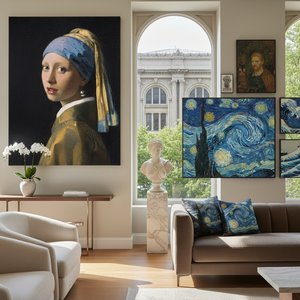
Journey through 25 iconic artworks at the Metropolitan Museum of Art! Explore Van Gogh, Monet, Rembrandt & more. Discover art history, inspiring stories, and museum-quality reproductions to elevate your home decor. Explore the full collection on BuyPopArt.com.
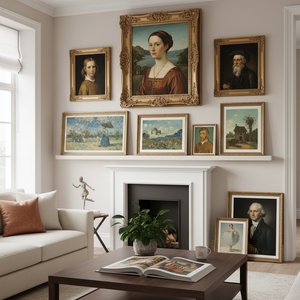
Explore 25 iconic artworks from Washington DC's National Gallery of Art! Discover masterpieces by Cézanne, Matisse & Picasso. Find museum-quality art reproductions and elevate your home decor with timeless paintings. Explore the full collection online at BuyPopArt.com.


Stay updated with the latest art news, exclusive offers, and decoration ideas.
Tell us about your project and our art experts will provide you with 3 personalized art suggestions.
Let Us Curate 3 Options Just for You - Free!


 Preview
 Send
Send Share
Share
 Details

 Download
 Similars
 X-Ray
X-Ray Diaporama


 Read More







 Glass option is only available in size under 110 CM


