

 Rococo
 72.0 x 92.0 cm
Hand-painted oil on canvas in your size and frame, made to order by our artists. ( Buy Print Buy Image)





























Pick from our preset sizes that match the artwork's original proportions.

You may enter your own dimensions to fit a specific frame or space. If your selected size does not match the original image's proportions, we will either crop the artwork or extend the painting with additional hand-painted elements. A digital mockup will be sent for your approval before production begins.
Please note that the on-screen preview does not reflect the actual cropping or extension. Only the mockup will accurately show the final composition.
While custom sizes are available, we recommend selecting a dimension from the predefined list to preserve the original proportions.
Worldwide Delivery () in 3/4 weeks instead of standard 5 weeks. (12 August). No compromise on quality.


A Wooded River Landscape with a Woman on a grey horse with animals watering A Wooded River Landscape with a shepherd resting beneath a tree by cows and goats
Reproduction Size
Born in Valenciennes, France, in 1671, Jean Baptiste Vanmour’s life was a tapestry woven across Europe, culminating in his untimely death in Constantinople (Istanbul) in 1737. Initially trained as a painter's assistant, Vanmour quickly established himself as a significant figure within the vibrant artistic circles of the late Baroque and early Rococo periods. His work is characterized by a remarkable ability to capture the luminous quality of Venetian light – a skill he honed during his extended sojourn in Italy – combined with a distinctly French sensibility and an appreciation for classical composition. While often overshadowed by more celebrated contemporaries, Vanmour’s contributions to portraiture, history painting, and landscape offer a compelling glimpse into the artistic exchange of the 18th century.
Vanmour's early career was marked by apprenticeship and travel. He began his training under the esteemed painter, Jean-Baptiste Monestier, absorbing fundamental techniques and developing an eye for detail. Following this foundation, he spent several years in Italy, a period crucial to the development of his artistic style. It was here that he immersed himself in the rich traditions of Venetian painting, studying the works of masters like Titian and Veronese. The influence of these artists is readily apparent in Vanmour’s later paintings – particularly his masterful use of color, atmospheric perspective, and the dramatic interplay of light and shadow. He wasn't merely copying; he was actively synthesizing these influences into a distinctly personal style.
Vanmour’s artistic journey took a significant turn in the late 1760s when he encountered Jacob Philipp Hackert, another prominent German landscape painter working in Italy. Hackert, known for his evocative depictions of Italian scenery, recognized Vanmour's talent and offered guidance on capturing the nuances of light and atmosphere. This encounter proved pivotal, solidifying Vanmour’s commitment to landscape painting and expanding his artistic horizons. While Vanmour primarily focused on portraiture and history paintings, he increasingly incorporated elements of landscape into his work, creating scenes that were both visually stunning and emotionally resonant.
Hackert's influence is particularly evident in Vanmour’s later landscapes – characterized by a heightened sense of realism and an attention to detail previously absent in his oeuvre. Vanmour adopted Hackert’s approach to depicting the natural world, meticulously observing and rendering the textures, colors, and forms of trees, rocks, and water. This shift towards landscape painting reflected a broader trend within 18th-century art – a growing appreciation for nature and its beauty.
Vanmour’s artistic output spanned several decades and encompassed a wide range of subjects, including portraits of royalty, nobility, and prominent figures of the era. He also produced numerous historical paintings depicting scenes from classical mythology and biblical narratives. His work was highly sought after by European courts and collectors, reflecting his reputation as one of the most skilled painters of his time.
During the period of his artistic activity, Europe was undergoing significant political and social change. The Enlightenment fostered a spirit of intellectual inquiry and challenged traditional hierarchies. Vanmour’s work reflects these changes, often depicting subjects with a degree of realism and psychological depth that was uncommon in earlier art. His paintings served as both decorative objects and visual records of the era.
Despite his considerable talent and prolific output, Jean Baptiste Vanmour’s legacy has remained somewhat understated. However, his work continues to be appreciated for its technical skill, artistic sensitivity, and evocative power. His ability to capture the essence of Venetian light and translate it onto canvas is a testament to his mastery of technique and his deep understanding of art history. Vanmour's paintings offer valuable insights into the cultural and artistic landscape of 18th-century Europe, providing a window into the lives and times of those who shaped its destiny.
His work can be found in several prominent collections, including the Royal Collection at Windsor Castle, demonstrating his enduring appeal to art connoisseurs and scholars alike. Further research continues to shed light on this fascinating artist, solidifying his place as a significant figure within the history of European painting.

1737 - 1807
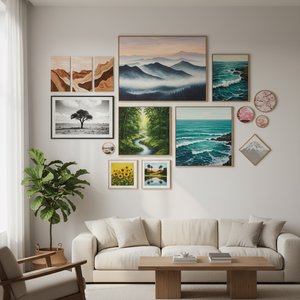
Journey through 10 breathtaking landscape paintings by Monet, Van Gogh & more! Explore iconic artworks, artistic techniques & find inspiration for your home decor. Museum-quality reproductions at BuyPopArt.com. Discover all masterpieces on BuyPopArt.com

Explore the captivating history of pastoral art from classical Arcadia to modern masterpieces. Discover key artists like Millet & Cole at BuyPopArt. Find serene landscape paintings for your home.

Explore the rich history of pastoral art from classical Arcadia to contemporary interpretations. Discover key artists, themes & collecting tips at BuyPopArt.
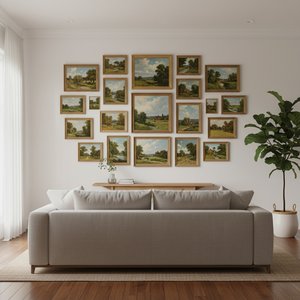
Journey through John Constable's 25 most celebrated landscapes. Explore Romanticism, Dedham Vale & his masterful use of light in iconic paintings like 'Hay Wain'. Find museum-quality art reproductions and elevate your home decor on BuyPopArt.com.

Journey through 10 Romantic landscape masterpieces by Friedrich, Turner & Cole. Explore emotional art, sublime nature scenes & iconic 19th-century paintings. Find museum-quality reproductions for your home at BuyPopArt.com – discover the full collection online!


Stay updated with the latest art news, exclusive offers, and decoration ideas.
Tell us about your project and our art experts will provide you with 3 personalized art suggestions.
Let Us Curate 3 Options Just for You - Free!


 Preview
 Send
Send Share
Share
 Details

 Download
 Similars
 X-Ray
X-Ray Diaporama
 Read More







 Glass option is only available in size under 110 CM


