

Hand-painted oil on canvas in your size and frame, made to order by our artists. ( Switch to Print Switch to Image)
Pick from our preset sizes that match the artwork's original proportions.

You may enter your own dimensions to fit a specific frame or space. If your selected size does not match the original image's proportions, we will either crop the artwork or extend the painting with additional hand-painted elements. A digital mockup will be sent for your approval before production begins.
Please note that the on-screen preview does not reflect the actual cropping or extension. Only the mockup will accurately show the final composition.
While custom sizes are available, we recommend selecting a dimension from the predefined list to preserve the original proportions.
Worldwide Delivery () in 3/4 weeks instead of standard 5 weeks. (8 August). No compromise on quality.


The Rival Waiting-women
Reproduction Size
In the grand tapestry of British art history, where many sought glory through sweeping battle scenes or monumental portraits, Robert Smirke carved a delicate and profoundly intimate niche. Born in 1753 in the quiet town of Wigton, near Carlisle, Smirke was a man whose brush was guided more by the rhythm of verse than by the drama of history. As the son of a travelling artist, his childhood was steeped in the very essence of observation, learning to see the world through a lens of movement and light long before he ever held a formal apprenticeship. This early exposure to the itinerant life instilled in him a lifelong reverence for the subtle details of the natural world, a quality that would later define his unique approach to the literary landscape.
Smir andke's artistic journey was one of steady, meticulous refinement. After honing his technical skills under a London heraldic painter, he began to emerge into the professional sphere through the Incorporated Society of Artists in 1775. While his early exhibitions were modest, they revealed a burgeoning talent for capturing the quiet elegance of a scene. He did not merely paint landscapes; he painted stories. His true mastery lay in his ability to translate the written word into visual poetry, specifically focusing on the works of English poets such as James Thomson. By choosing monochrome palettes and intricate compositions, Smirke created a sense of timelessness, allowing the viewer to step directly into the stanzas of classic literature.
The ascent of Robert Smirke within the prestigious halls of the Royal Academy serves as a testament to his technical prowess and his ability to captivate the era's most discerning critics. His election as an Associate Academician in 1791, followed by full academician status in 1793, marked his transition from a promising illustrator to a cornerstone of the British art establishment. It was during this period that his most celebrated works began to resonate with the public imagination. Pieces such as Narcissus and the Lady and Sabrina—subjects drawn from Milton’s Comus—demonstrated a profound sensitivity to the atmospheric qualities of myth and legend.
Smirke's work is characterized by several defining elements that set him apart from his contemporaries:
Even his diploma work, Don Quixote and Sancho, reflected his dedication to character and narrative depth. Though he may not have sought the fame of those who painted the epic scale of empire, Smirke’s historical significance lies in his role as a visual custodian of English literary heritage. He transformed the canvas into a page of a book, ensuring that the romanticism of the 18th-century poets would endure through the enduring power of his imagery. His life, spanning from the late 18th century to 1845, remains a beautiful chapter in the story of British art—a story told not in loud proclamations, but in the soft, evocative whispers of a master storyteller.

1753 - 1845 , United Kingdom

Explore the rich history of genre painting – art that depicts everyday life. Discover Dutch Masters, hidden symbolism & its enduring influence on art history. Learn more at BuyPopArt.

Explore the rich history of 18th & 19th-century art! Discover Romanticism, Realism, and iconic masters like Delacroix & Courbet. Expert insights & high-quality reproductions at BuyPopArt.

Explore the rich history of women in art – from iconic muses to groundbreaking artists. Discover feminist movements, global perspectives & reclaim female narratives with BuyPopArt.

Explore the art of the Enlightenment! Discover Rococo's elegance, Neoclassicism’s virtue, & David’s revolutionary masterpieces. Uncover the sociopolitical context shaping 18th-century European painting.
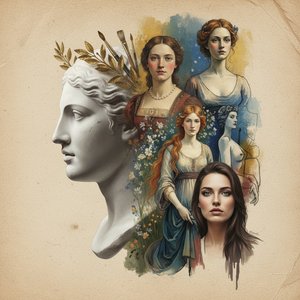
Explore the rich history of women in art – from archetypal representations to contemporary voices challenging norms. Discover iconic artists & movements, and learn about reclaiming female narratives through painting and beyond.


Stay updated with the latest art news, exclusive offers, and decoration ideas.
Tell us about your project and our art experts will provide you with 3 personalized art suggestions.
Let Us Curate 3 Options Just for You - Free!


 Preview
 Send
Send Share
Share
 Details

 Download
 Similars
 X-Ray
X-Ray Diaporama
 Read More




































 Glass option is only available in size under 110 CM


