


Introduction
Bronze sculpture—a testament to human ingenuity and artistic vision—has captivated audiences for millennia. More than just a medium, bronze embodies permanence, strength, and the enduring power of storytelling. From ancient civilizations to modern masters, artists have harnessed its unique properties to create works that transcend time, reflecting our deepest beliefs, aspirations, and fears.
The story of bronze sculpture is inextricably linked to the development of human society itself. Emerging around 3500 BC in Mesopotamia, the lost-wax casting process allowed for unprecedented detail and complexity, initially employed to create religious icons and commemorate rulers. The Greeks refined the technique, achieving a naturalism that continues to inspire awe—think of the graceful forms of their gods and heroes. Later, the Romans expanded upon these traditions, utilizing bronze on a monumental scale to celebrate empire and military prowess. Throughout the Renaissance and Baroque periods, artists like Donatello and Bernini pushed the boundaries of expressive power, imbuing their sculptures with dramatic emotion and dynamic movement.
But why do these particular works—these ten legendary masterpieces—continue to resonate so profoundly today? They are not merely beautiful objects; they are windows into different worlds, embodiments of cultural values, and powerful statements about the human condition. Each sculpture on our list represents a pivotal moment in art history, a breakthrough in technique or expression that irrevocably altered the course of artistic development.
These bronze sculptures challenge us to confront fundamental questions about life, death, beauty, and morality. They invite contemplation, spark dialogue, and remind us of the enduring power of art to connect us across generations. Prepare to embark on a journey through time and artistry as we explore ten extraordinary works that have forever changed the landscape of sculpture—and our understanding of ourselves.
Split button - claes thure oldenburg
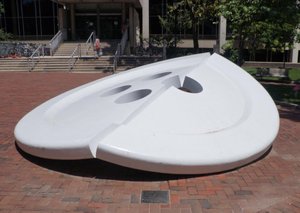 Split button - claes thure oldenburg
Consider a world where the commonplace is rendered extraordinary—where the familiar takes on monumental scale and invites fresh contemplation. This is the realm of Claes Oldenburg, and specifically, his captivating sculpture Split Button .
Created during the height of Pop Art’s influence, Split Button (date unavailable) isn't bronze, but rather a masterful exploration of form using fiberglass or reinforced aluminum. This oversized abstraction of an everyday object—a button—challenges our perceptions and elevates the mundane to the level of high art. Oldenburg’s breakthrough lay in his ability to transform these recognizable forms into playful yet thought-provoking public installations.
The sculpture's sleek, white surface reflects its surroundings, creating a dynamic interplay of light and shadow. Its smooth contours and tilted orientation invite viewers to circle the piece, experiencing it from multiple perspectives. More than just an aesthetic object, Split Button embodies themes of connection, communication, and the subtle power of design.
Oldenburg’s work—and this sculpture in particular—demonstrates a pivotal shift in artistic thinking, blurring the boundaries between art and life. It reminds us that beauty can be found in unexpected places, and that even the simplest objects can hold profound meaning. Today, Split Button continues to transform public spaces, sparking dialogue and inviting viewers to reconsider their relationship with the world around them—a testament to the enduring legacy of Pop Art and Oldenburg’s visionary approach.
Free - claes thure oldenburg
 Free - claes thure oldenburg
To encounter Free by Claes Oldenburg is to witness a playful subversion of scale and meaning—a monumental declaration rendered with disarming simplicity. While not bronze, this sculpture’s impact on the landscape of contemporary art earns its place among the world's most legendary works.
Created during the Pop Art movement, Free (date unavailable) reimagines a common symbol—the postage stamp—as an oversized beacon of hope and liberation. The bold red hue and dynamic lettering immediately capture the eye, transforming a functional object into a powerful visual statement. Oldenburg’s genius lies in his ability to elevate everyday items, challenging our perceptions and inviting us to reconsider the world around us.
The sculpture's smooth, glossy surface reflects light, creating an energetic presence that animates any space. Its playful form—leaning and slightly askew—evokes a sense of movement and vitality. More than just an aesthetic object, Free embodies themes of communication, freedom, and the enduring power of human expression.
Today, Free continues to resonate with collectors and art enthusiasts alike, adding a touch of whimsy and intellectual depth to both public spaces and refined interiors. It’s a testament to Oldenburg's visionary approach—a reminder that even the simplest objects can hold profound meaning and inspire generations.
The Virgin and Child with the Infant St John; Taddei Tondo - Michelangelo Buonarroti
 The Virgin and Child with the Infant St John; Taddei Tondo - Michelangelo Buonarroti
Imagine a quiet moment—a mother’s tender embrace, a child’s innocent gaze, and the weight of prophecy hanging in the air. This is the world Michelangelo Buonarroti invites us into with The Virgin and Child with the Infant St John; Taddei Tondo (1504-1505). Though carved from marble rather than bronze, this sculpture’s profound impact on artistic expression secures its place among the Top 10 masterpieces.
Commissioned for a private home—a rarity at the time—the Taddei Tondo transcends traditional religious iconography. Michelangelo doesn't simply depict a scene; he communicates raw emotion and humanist contemplation through masterful craftsmanship. The interplay of smooth, polished surfaces and rougher textures creates a dynamic tension, mirroring the complexities of life itself.
The sculpture’s circular form—a tondo —draws the eye inward, focusing our attention on the intimate connection between Mary, Jesus, and St. John. The goldfinch offered by young John is a symbol of Christ's future sacrifice, adding layers of meaning to this tender scene.
Michelangelo’s ability to imbue stone with such life—to make it “speak,” as he famously said—remains unparalleled. Today, the Taddei Tondo continues to inspire awe and reverence, reminding us of art's power to connect us to something larger than ourselves—a timeless expression of faith, love, and the enduring beauty of the human spirit.
Head - Amedeo Clemente Modigliani
 Head - Amedeo Clemente Modigliani
To gaze upon Head by Amedeo Modigliani is to encounter a profound meditation on form and fragility—a sculpture that transcends mere representation to become an embodiment of the human spirit. Though carved from limestone, this work’s influence on modern art secures its place among the Top 10 legendary masterpieces.
Created in 1913, at a pivotal moment in his career, Head reflects Modigliani's deliberate rejection of academic conventions. He sought inspiration from ancient artistic traditions—African masks, Egyptian statuary—infusing his work with a timeless quality and expressive power.
The sculpture’s elongated proportions and simplified forms are instantly recognizable as hallmarks of Modigliani’s style. The almond-shaped eyes and small mouth convey a sense of quiet introspection, while the smooth, polished surface contrasts beautifully with the rougher texture of the neck—a testament to the artist's deliberate engagement with materiality.
Today, Head continues to resonate with audiences, inspiring a renewed appreciation for the beauty of simplicity and the power of direct carving. Its elegant form and understated grace make it a captivating addition to any space—a reminder that true artistry lies in capturing the essence of human emotion.
Pope Urban III - Lucio Fontana
 Pope Urban III - Lucio Fontana
Imagine a silence broken—a figure emerging from darkness, not as a symbol of reverence but as a fragmented echo of power. This is the unsettling beauty of Pope Urban III by Lucio Fontana. Though cast in bronze, this sculpture transcends traditional representation to become an audacious declaration of artistic rebellion.
Created in 1963, shortly before his death, Pope Urban III embodies Fontana’s Spatialist movement—a radical questioning of art's boundaries and our perception of space. The rough texture and angular planes reject polished perfection, instead embracing a brutal honesty that speaks to decay and disruption.
Fontana wasn’t interested in depicting religious piety; he sought to interrogate authority itself. The fractured face of the pope symbolizes the crumbling edifice of established dogma—a powerful statement about loss and transformation. This unsettling effect is heightened by the sculpture's dark background, fostering a mood of introspection.
Today, Pope Urban III continues to provoke dialogue and challenge our assumptions about art and power. Its enduring legacy lies in its ability to remind us that true artistic expression often requires dismantling conventions—a testament to Fontana’s visionary approach and the transformative potential of sculpture.
Moonmad - Max Ernst
 Moonmad - Max Ernst
Imagine a moment of raw, unfiltered astonishment—a silent scream frozen in bronze. This is the unsettling power of Moonmad by Max Ernst. Though details surrounding its precise creation remain elusive, this sculpture embodies the core tenets of Surrealism and earns its place among the Top 10 legendary masterpieces.
Ernst’s work isn't about depicting reality; it’s about excavating the subconscious—revealing the anxieties and desires that lie beneath the surface. The open mouth, a gesture of shock or vulnerability, invites us to confront our own inner turmoil.
Crafted from bronze using subtractive casting methods, Moonmad prioritizes expressive form over realistic representation. Its stylized face—a fragment of a dreamscape—reflects Ernst’s fascination with psychoanalytic theories and the power of irrational juxtapositions.
Today, Moonmad continues to resonate with audiences, reminding us that true artistry lies in exploring the depths of the human psyche. Its unsettling stillness challenges our perceptions and invites contemplation—a testament to Ernst’s visionary approach and the enduring legacy of Surrealism.
Two Horses - Franz Marc
 Two Horses - Franz Marc
Imagine a silent dialogue between earth and spirit—a moment of quiet contemplation captured in bronze. This is the enduring power of Two Horses by Franz Marc, created in 1908. Though seemingly simple in form, this sculpture embodies the core tenets of Expressionism and secures its place among the Top 10 legendary masterpieces.
Marc wasn’t interested in merely depicting animals; he sought to convey their inner life—their connection to nature and the spiritual forces that govern existence. The flowing curves and organic forms mimic the contours of animal bodies, reflecting his belief that nature held keys to unlocking deeper truths.
Crafted from bronze with a rough texture and muted palette, Two Horses evokes a sense of stability and connection to the primal forces of life. Its enduring appeal lies in its ability to remind us of our own relationship with the natural world—a timeless conversation between humanity and the environment.
Today, Two Horses continues to inspire awe and reverence, inviting contemplation about our place within the larger cosmos. It’s a testament to Marc’s visionary approach and the transformative power of Expressionist art.
Spatial concept - Lucio Fontana
 Spatial concept - Lucio Fontana
Imagine a void—a silent rupture in the fabric of space itself. This is the unsettling beauty of Spatial Concept by Lucio Fontana, a sculpture that transcends mere form to become an audacious declaration of artistic rebellion. Though deceptively simple in its construction—wood and metal—this work embodies the core tenets of Spatialism and earns its place among the Top 10 legendary masterpieces.
Emerging from the postwar anxieties of Europe, Fontana’s Spatialist movement sought to liberate art from traditional constraints. He didn't aim to depict reality; he aimed to *create* space—to puncture the canvas and invite contemplation about its infinite possibilities.
The solitary wooden form pierced by a central hole is not merely an aesthetic object; it’s a gesture of disruption, challenging our perceptions and inviting us to confront the unknown. The warm tones of wood juxtaposed against the cool sheen of metal create a tactile experience that underscores this intention.
Today, Spatial Concept continues to resonate with audiences, reminding us that true artistry lies in exploring the boundaries of perception—a testament to Fontana’s visionary approach and the enduring legacy of Spatialism.
Marsyas/St Sebastian - Andrea Mantegna
 Marsyas/St Sebastian - Andrea Mantegna
Imagine a figure suspended between earthly suffering and divine grace—a testament to resilience captured in bronze. This is the haunting power of Marsyas/St Sebastian by Andrea Mantegna, an extraordinary achievement of the Early Renaissance. Though often referred to as Marsyas due to its resemblance to the satyr punished for challenging Apollo, this sculpture embodies a profound exploration of martyrdom and faith.
Mantegna’s meticulous observation of Roman antiquity—a fascination born from his scholarly pursuits—is evident in every detail. The remarkably realistic musculature and dramatic perspective create an illusion of depth that mirrors the grandeur of classical sculptures.
Crafted with unwavering devotion to form, Marsyas/St Sebastian evokes a sense of quiet contemplation—a poignant reminder of Christ’s sacrifice. Its enduring appeal lies in its ability to connect us to universal themes of suffering, resilience, and the search for meaning.
Today, this sculpture continues to inspire awe and reverence, reminding us that true artistry lies in capturing the essence of human emotion—a testament to Mantegna’s visionary approach and the lasting legacy of Renaissance art.
Profile of Time - Salvador Dalí
 Profile of Time - Salvador Dalí
Imagine time itself—not as a rigid measure, but as a fluid, dreamlike substance draped over the landscape of memory. This is the haunting beauty of Profile of Time by Salvador Dalí, a bronze sculpture that transcends mere representation to become an audacious exploration of the subconscious.
Meticulously crafted in 1984, this piece isn’t simply a reproduction of his iconic painting “The Persistence of Memory”; it's a deliberate performance—a distillation of Dalí’s artistic philosophy into tangible form. The drooping clocks, rendered with remarkable precision in bronze, evoke a sense of quiet contemplation and challenge our perceptions of reality.
The warm tones of the metal and subtle variations in texture create a nuanced visual experience that underscores this intention. Profile of Time embodies the very spirit of Surrealism—a dreamlike world where logic dissolves and imagination reigns supreme.
Today, this sculpture continues to inspire awe and reverence, reminding us that true artistry lies in exploring the depths of the human psyche—a testament to Dalí’s visionary approach and the enduring legacy of Surrealism.
Conclusion
As the light fades, casting long shadows across these enduring forms, we’re reminded that these bronze masterpieces are not merely relics of a distant past—they are living forces, still capable of stirring profound emotion and igniting our imaginations. Each sculpture—from the silent dialogue of Franz Marc’s horses to the haunting grace of Mantegna’s St Sebastian—offers a unique window into the human spirit, reflecting our deepest anxieties, aspirations, and enduring quest for meaning.
These artworks transcend stylistic boundaries and historical contexts, speaking directly to our shared humanity. They invite us to contemplate the nature of time, memory, faith, and reality itself—questions that remain as relevant today as they were centuries ago.
And so, as you step back into the world, carry with you the echoes of these bronze visions. Allow their beauty to inspire your own creativity, shape your surroundings, and remind you of the power of art to transform our perceptions and enrich our lives. To explore more exceptional works in sculpture bronze—and perhaps discover a new treasure for your own collection—we invite you to visit our full collection .





