


Early Life & Artistic Foundations: From Hungary to Atelier 17
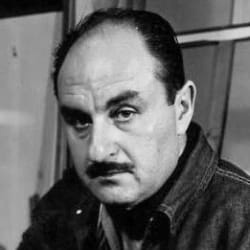 Wikipedia: Gabor Peterdi
Gabor Peterdi (1915 in Pestújhely, Hungary – 2001 in Stamford, Connecticut) was a Hungarian-American painter and printmaker who immigrated to the United States in 1939. He enlisted in the US Army and fought in Europe during World War II. He lived and...
Gabor Peterdi’s artistic trajectory began not amidst the established art capitals of Europe, but in Pestújhely, a burgeoning suburb of Budapest in 1915. Born into a family steeped in poetic expression – his parents were both poets – a sensitivity to form and narrative was almost inherent. This early environment fostered an inclination towards creative pursuits, leading him to win a prestigious Prix de Rome for painting at the remarkably young age of fifteen. While this initial success pointed toward a traditional path, Peterdi’s artistic curiosity soon led him beyond Italy, to the vibrant heart of Parisian avant-garde in the 1930s. It was there, within the walls of Stanley William Hayter’s legendary Atelier 17, that he encountered a technique that would define his career: intaglio printmaking.
Atelier 17 wasn't merely a workshop; it was an incubator for experimentation and collaboration. Under Hayter’s guidance, Peterdi immersed himself in the complexities of burin work, etching, and engraving, discovering a medium that allowed him to explore texture, depth, and nuance with unparalleled freedom. This period proved formative, exposing him to Surrealist ideas and pushing him toward a more abstract visual language. The influence of artists like André Masson and Max Ernst resonated deeply, encouraging Peterdi to embrace spontaneity and subconscious creation – elements that would become hallmarks of his mature style.
Embracing Abstraction: Peterdi's American Journey & Influences
Abstract expressionism in the United States emerged as a distinct art movement in the aftermath of World War II and gained mainstream acceptance in the 1950s, a shift from the American social realism of the 1930s influenced by the Great Depression an...
The looming shadow of World War II irrevocably altered the course of Peterdi’s life. In 1939, he emigrated to the United States, a decision born not only from artistic ambition but also from necessity. The outbreak of conflict prompted his enlistment in the US Army, and he found himself serving in Europe during the war years. This experience profoundly impacted his worldview and would later manifest in his art – though not through direct depictions of battle, but rather through an exploration of primal themes of creation, destruction, and renewal.
Following the war, Peterdi re-established himself as an artist in New York City, a burgeoning center for artistic innovation. The American art scene was undergoing a dramatic shift, moving away from social realism towards the raw emotionality of Abstract Expressionism. While not strictly adhering to any single school, Peterdi absorbed its energy and gestural freedom. Artists like Jackson Pollock, Mark Rothko, and Willem de Kooning offered new possibilities for expressing inner states through abstract forms and dynamic compositions. However, Peterdi’s work remained distinctly his own, characterized by a unique blend of expressive abstraction and symbolic content.
The Power of Intaglio: A Master Printmaker’s Technique and Innovation
Printmaking is the process of creating artworks by printing, normally on paper, but also on fabric, wood, metal, and other surfaces. "Traditional printmaking" normally covers only the process of creating prints using a hand processed technique, rathe...
Peterdi's mastery of intaglio printmaking set him apart. Unlike painting, which allows for direct manipulation of color and form, intaglio requires a complex process of incising an image onto a metal plate – copper or zinc – using tools like the burin and etching needle. The resulting lines hold ink, creating rich, velvety textures when pressed onto paper. Peterdi didn’t simply replicate existing techniques; he relentlessly pushed the boundaries of the medium.
He experimented with multiple plates, layering colors and textures to achieve remarkable depth and complexity. His innovative use of stencils allowed for nuanced tonal variations and unexpected effects. He also explored larger plate sizes than were traditionally employed, creating monumental prints that rivaled paintings in scale and impact. This dedication to technical exploration wasn’t merely an end in itself; it was a means of unlocking new expressive possibilities, allowing him to convey the weight and emotional resonance of his subjects.
Biblical Themes & Arctic Landscapes: Recurring Motifs in Peterdi’s Work
 Haiku Garden
Discover 'Haiku Garden' by Gabor Peterdi (1972). A mesmerizing black & white drawing of a dense landscape merging nature & human form. Surreal, expressive, and deeply evocative.
Despite his embrace of abstraction, Peterdi consistently returned to two central themes throughout his career: biblical narratives and Arctic landscapes. The former stemmed from a lifelong fascination with the stories of Genesis – creation, fall, redemption – which he interpreted not as literal depictions but as archetypal dramas of the human condition. His “Genesis” series, for example, is characterized by powerful imagery of Adam and Eve, rendered in stark black and white, conveying a sense of primal innocence and subsequent loss.
The Arctic landscapes emerged later in his career, following a transformative journey to Alaska in 1963. The vastness, isolation, and raw beauty of the northern wilderness profoundly affected him. These works are characterized by sweeping vistas, dramatic skies, and a sense of elemental power. They represent not merely a depiction of place but an exploration of humanity’s relationship with nature – its fragility, resilience, and enduring mystery. Haiku Garden, from 1972, exemplifies this period; a mesmerizing black & white drawing that merges the natural world with human form.
Peterdi as Educator: Shaping a Generation of Artists at Brooklyn Museum & Yale
 gabor peterdi
Gabor Peterdi (1915-2001) was a Hungarian-American painter & printmaker known for expressive intaglio techniques, biblical themes, and Arctic landscapes. Influential educator at Yale & Brooklyn Museum. Explore his powerful work!
Beyond his own artistic practice, Peterdi dedicated himself to education, profoundly influencing generations of artists. He established and directed the Graphic Workshop at the Brooklyn Museum Art School in 1948, fostering a vibrant community of printmakers. Later, he held teaching positions at Hunter College (1952-60) and Yale University (1960-87), becoming a highly respected figure within the academic art world.
His book, “Printmaking Methods Old and New”, published in 1959, remains a standard reference for both students and professionals. Peterdi’s pedagogical approach emphasized experimentation, technical mastery, and individual expression. He encouraged his students to push the boundaries of their chosen medium and to find their own unique voice. Among his notable pupils were Edmond Casarella, Robert Bero, and Chuck Close, all of whom went on to achieve significant recognition in their respective fields.
A Lasting Impression: The Enduring Legacy of Gabor Peterdi's Art
Gabor Peterdi’s work continues to resonate with audiences today. His powerful prints, paintings, and drawings stand as testaments to his artistic vision, technical skill, and unwavering commitment to exploring the fundamental questions of human existence. He bridged the gap between abstraction and figuration, seamlessly blending expressive forms with symbolic content.
His influence can be seen in the work of countless artists who followed him, particularly those drawn to printmaking as a means of expressing complex ideas and emotions. Today, his pieces are held in prestigious collections worldwide, including the Fine Arts Museum of San Francisco, the Cleveland Museum of Art, and the Smithsonian American Art Museum. For those seeking art that is both intellectually stimulating and emotionally evocative, Gabor Peterdi’s legacy offers a rich and rewarding experience. Explore the collection at BuyPopArt.com to discover the depth and beauty of his work.





