




The Provocateur: Koons’s Early Career & Challenge to Artistic Norms
 Wikipedia: Jeff Koons
Jeffrey Lynn Koons (; born January 21, 1955) is an artist recognized for his work dealing with popular culture and his sculptures depicting everyday objects, including balloon animals produced in stainless steel with mirror-finish surfaces. He lives...
Jeffrey Koons emerged not as a brooding, cloistered artist but as a figure deeply embedded within the very systems he would later scrutinize and celebrate. His trajectory, beginning in York, Pennsylvania, wasn't one of immediate artistic rebellion, but rather a gradual immersion into the worlds of commerce, display, and self-promotion – influences profoundly shaping his aesthetic vision. His father’s business, an interior decorating showroom, provided early exposure to the power of curated environments and the deliberate construction of taste. This formative experience instilled in Koons a keen awareness of how objects gain value not solely from their intrinsic qualities but through presentation and association. Moving to New York in the 1970s, his initial foray into the art world was marked by an entrepreneurial spirit; he wasn’t simply creating art, he was *selling* it – even while working at MoMA's membership desk, honing his persuasive skills. This period foreshadowed a career that would consistently blur the lines between artistic expression and market forces.
Koons’s early works, often overlooked in favor of his later, more bombastic creations, were crucial experiments with the concept of the ‘readymade,’ echoing Marcel Duchamp's challenge to traditional notions of authorship and originality. However, Koons didn’t simply present found objects; he meticulously selected them – vacuum cleaners, for example – symbols of domesticity and American aspiration, then encased them in pristine plastic boxes. This act wasn’t about negating the object’s function but elevating it through a deliberate framing, questioning its inherent value and the societal desires attached to it. He was already laying the groundwork for his signature style: an embrace of mass-produced objects, polished surfaces, and a playful engagement with consumer culture that would both captivate and confound the art establishment.
Banality, Decadence, and the Allure of the Readymade
The 1980s witnessed Koons’s ascent to prominence, coinciding with an era often characterized as one of conspicuous consumption and financial excess. His “Pre-New” and “The New” series directly addressed this cultural climate, presenting everyday objects – Hoover vacuum cleaners, inflatable toys – as sculptures imbued with a strange, unsettling power. These weren't merely copies; they were meticulously fabricated replicas, stripped of their original utility and placed within the sterile context of the gallery space. This deliberate act of removal forced viewers to confront the object’s inherent banality, but also its symbolic weight. The vacuum cleaners, in particular, became potent emblems of suburban aspiration and the relentless pursuit of cleanliness and order.
Koons's work during this period wasn’t simply a celebration of consumerism; it was a complex interrogation of desire, mortality, and the anxieties lurking beneath the veneer of American prosperity. The polished surfaces, often mirror-like, reflected not only the artwork itself but also the viewer, implicating them in the very system Koons was critiquing. This self-reflexivity became a hallmark of his practice, challenging traditional notions of artistic distance and authorship. The use of inflatable forms further emphasized this sense of ephemerality and artificiality, suggesting a world built on fleeting pleasures and manufactured desires.
Koons and Pop Art 2.0: Recontextualizing Consumerism for a New Era
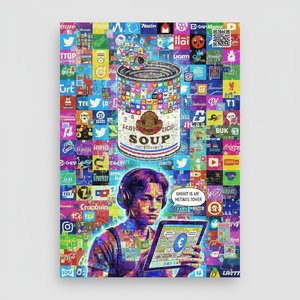 Pop Art 2.0: Recontextualizing Appropriation & Consumerism for a Digital Native Generation
Explore the evolution of Pop Art for today's digital world! Discover how appropriation & consumerism are reimagined by a new generation of artists. Expert insights & collecting tips.
While often categorized as a continuation of Pop Art, Jeff Koons’s work transcends simple categorization. Where Warhol and Lichtenstein appropriated imagery from mass media, Koons delves deeper into the *production* of desire itself. He doesn't merely represent consumer objects; he recreates them with painstaking detail, elevating them to the status of fine art. This shift reflects a broader cultural evolution – the rise of hyper-consumerism, the blurring of boundaries between high and low culture, and the increasing influence of branding and spectacle.
Koons’s engagement with appropriation isn't about passive replication but active transformation. He takes familiar objects and imbues them with new meaning through scale, material, and technique. His sculptures aren’t simply *about* consumerism; they are embodiments of it – polished, seductive, and undeniably alluring. This approach resonates particularly strongly with a digital native generation accustomed to the constant bombardment of images and the commodification of experience. The accessibility of his subject matter, coupled with the sheer technical virtuosity of his execution, makes his work both instantly recognizable and profoundly unsettling.
The Mirror Finish as Metaphor: Reflection, Spectacle & Self-Image
Perhaps the most defining characteristic of Koons’s aesthetic is his use of highly polished, mirror-like surfaces. This isn't merely a stylistic choice; it’s a deliberate metaphor for reflection, spectacle, and the construction of self-image. The smooth, stainless steel finish doesn’t simply reflect the artwork itself but also the surrounding environment – and, crucially, the viewer. This act of mirroring implicates the audience in the work, forcing them to confront their own desires, anxieties, and complicity in a consumerist culture.
Balloon Dog (Orange), for example, isn’t simply a sculpture of a balloon animal; it’s a symbol of childhood innocence transformed into an object of luxury and desire. The mirror-like surface amplifies this effect, creating a sense of endless repetition and reflecting the viewer's own image back at them. This creates a feedback loop, blurring the boundaries between art, reality, and self-perception. The spectacle surrounding Koons’s work – its scale, its price tag, its sheer visual impact – further reinforces this sense of heightened awareness and self-consciousness.
Critical Reception: Kitsch, Commerce, and the Question of Artistic Value
Jeff Koons has consistently provoked controversy throughout his career. Critics have alternately hailed him as a pioneering genius and dismissed him as a purveyor of kitsch, accusing him of cynicism and crass commercialism. The debate often centers on the question of artistic value – can mass-produced objects, meticulously fabricated replicas, truly be considered art? Detractors argue that Koons’s work lacks originality and depth, relying instead on shock value and superficial spectacle.
However, proponents contend that Koons’s embrace of kitsch is precisely what makes his work so compelling. By elevating the mundane to the level of fine art, he challenges traditional hierarchies and forces viewers to reconsider their own aesthetic prejudices. His engagement with commerce isn't seen as a betrayal of artistic integrity but rather as an honest reflection of contemporary society. The high prices commanded by his works – Rabbit, for example, sold for over $91 million in 2019 – further fuel this debate, raising questions about the role of money and status in the art world. Ultimately, Koons’s work resists easy categorization, prompting ongoing dialogue about the nature of art, value, and the complexities of contemporary culture.
Investing in Koons: Market Trends and Considerations for Collectors
Jeff Koons has consistently demonstrated strong performance in the secondary art market, establishing himself as one of the most sought-after artists of our time. His works have achieved record auction prices, attracting collectors from around the globe. However, investing in Koons requires careful consideration.
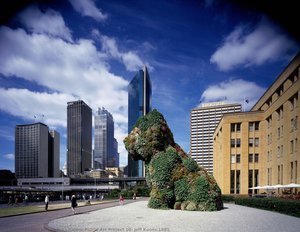
The rarity and provenance of each piece are crucial factors influencing value. Early works, particularly those from “The New” series, command significant premiums due to their historical importance. Larger-scale sculptures, such as Balloon Dog and Puppy, consistently outperform smaller pieces. Collectors should also consider the condition of the artwork, ensuring it has been properly maintained and authenticated. BuyPopArt.com offers expert art consultation services to guide collectors through the complexities of the Koons market, providing insights into current trends, appraisal assistance, and access to a curated selection of high-quality reproductions and original works. Explore our collection today and discover the enduring allure of Jeff Koons’s provocative vision.





