The Russian Avant-Garde: A Crucible for Revolution
The Russian avant-garde was a large, influential wave of avant-garde modern art that flourished in the Russian Empire and the Soviet Union, approximately from 1890 to 1930—although some have placed its beginning as early as 1850 and its end as late a...
The early decades of the 20th century witnessed a seismic shift in artistic expression, and nowhere was this more profoundly felt than within the vibrant, often tumultuous landscape of the Russian avant-garde. This wasn’t merely a stylistic evolution; it was an ideological upheaval, a rejection of traditional representation born from a desire to forge a new world – both artistically and socially. Artists weren't simply depicting reality; they were attempting to *create* a new one, unbound by the constraints of the past. Figures like Wassily Kandinsky, Vladimir Tatlin, and Kazimir Malevich coalesced around a shared ambition: to dismantle conventional forms and explore the fundamental elements of art itself. This period, fueled by utopian ideals following the 1905 revolution and later intensified by the fervor of 1917, provided the fertile ground from which Malevich’s Suprematism would emerge as one of its most radical manifestations.
From Cubism to Suprematism: Malevich's Early Influences & Artistic Evolution
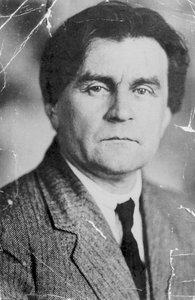 Kazimir Malevich
Kazimir Malevich (1878-1935): Ukrainian founder of Suprematism & pioneer of abstract art. Explore iconic works like Black Square, geometric forms, & pure feeling's impact on 20thC art.
Kazimir Severinovich Malevich (1878-1935), born in Kiev, Ukraine, didn’t spring forth fully formed as the architect of non-objective art. His journey was one of gradual distillation, a relentless pursuit of artistic purity that began with an absorption of prevailing styles. Initially drawn to Impressionism and Symbolism, he quickly gravitated towards the fractured forms of Cubism and Futurism – movements that offered a compelling break from representational painting. However, Malevich wasn’t content merely adopting these approaches; he sought to transcend them. He recognized in Cubism a powerful deconstruction of form, but felt it remained tethered to the objective world through its recognizable subject matter. His early works demonstrate this experimentation – paintings that blend elements of various styles, hinting at the radical simplification to come. This period was crucial, providing Malevich with the technical foundation and conceptual impetus to embark on his own unique path, a path leading towards what he would define as Suprematism.
Black Square & the Birth of Non-Objective Painting
 Suprematism (17)
Explore Kazimir Malevich’s Suprematism! Discover groundbreaking abstract art – geometric shapes, bold colors & revolutionary form. A key figure in 20th-century art.
1915 marked a watershed moment in art history. At the “Last Futurist Exhibition 0.10” in St. Petersburg, Malevich unveiled his now-iconic Black Square. This wasn’t simply a painting; it was an event, a declaration of independence from all that had come before. A black square on a white background – seemingly simple, yet profoundly disruptive. It represented the ultimate reduction of form, a complete rejection of representational imagery in favor of pure feeling. The Black Square wasn’t intended as an empty void but rather as a “zero degree” from which all artistic creation could spring forth. It was a symbol of infinity, of limitless possibility, and a challenge to the very definition of art itself. The placement of the square in the traditional ‘red corner’ – reserved for religious icons – further underscored its revolutionary intent, effectively replacing spiritual iconography with an abstract emblem of pure aesthetic experience. The initial reaction was one of shock and bewilderment, but it irrevocably altered the course of modern art.
The Core Principles of Suprematism: Geometry, Color, and Pure Feeling
Suprematism, as Malevich articulated it, wasn’t about depicting objects; it was about expressing “the supremacy of pure artistic feeling.” This meant stripping away all vestiges of the natural world – all recognizable forms, textures, and narratives – to arrive at a purely abstract language composed of basic geometric shapes: squares, circles, rectangles, lines. Color played a vital role, not as a descriptive element but as an independent force capable of evoking emotional responses. Malevich believed that these fundamental elements possessed inherent spiritual qualities, and by arranging them in specific compositions, he aimed to access a higher realm of consciousness. His paintings are characterized by their dynamic interplay of forms and colors, often floating against seemingly infinite white backgrounds. The goal wasn’t to create illusions of depth or perspective but rather to present a flat, two-dimensional plane as a space for pure aesthetic contemplation. This emphasis on non-objectivity was radical; it shifted the focus from *what* was being depicted to *how* it was being depicted – and ultimately, to the very essence of artistic expression itself.
UNOVIS & the Pursuit of a New Art Reality
 Lazar Markovich Khidekel
Lazar Markovich Khidekel (1904-1986): Pioneer of Suprematist architecture & Russian avant-garde design. A key follower of Kazimir Malevich, he translated abstract art into visionary buildings and innovative designs.
To further disseminate his ideas and foster a community of like-minded artists, Malevich founded UNOVIS (Union of New Art) in 1919. This collective served as a laboratory for exploring Suprematist principles across various disciplines – painting, sculpture, architecture, design. UNOVIS wasn’t merely an artistic group; it was a utopian project aimed at transforming all aspects of life through the application of abstract forms. Malevich envisioned a future where Suprematism would permeate every facet of society, from urban planning to everyday objects. While UNOVIS had a relatively short lifespan, its influence was significant. Artists like Lazar Khidekel translated Malevich’s abstract principles into visionary architectural designs, demonstrating the potential for applying Suprematist aesthetics beyond the canvas. The group published the journal Supremus, though only one issue ever appeared due to the political and economic turmoil of post-revolutionary Russia.
Malevich’s Legacy: Impact on Modern Art & Beyond
Despite facing increasing opposition from Soviet authorities who favored more socially realist styles, Malevich continued to refine his artistic vision until his death in 1935. His influence on modern art is immeasurable. Suprematism paved the way for numerous subsequent movements – Constructivism, Minimalism, and Conceptual Art – all of which owe a debt to Malevich’s radical simplification of form and emphasis on pure abstraction. Artists like El Lissitzky carried his ideas westward, introducing Suprematist principles to a wider audience. Today, Malevich's works are celebrated in major museums worldwide, inspiring generations of artists and thinkers. His Black Square, once met with skepticism, is now recognized as one of the most important paintings of the 20th century – a testament to his unwavering commitment to artistic innovation and his enduring quest for non-objective art. At BuyPopArt.com, we are proud to offer high-quality reproductions of Malevich’s iconic works, allowing you to experience the power and beauty of Suprematism firsthand.