Introduction
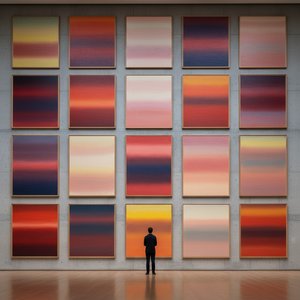
Imagine a world distilled to its purest essence – a single hue dominating the canvas, yet within that limitation, an explosion of emotion, texture, and form. This is the captivating power of monochromatic art, where artists wield the subtle nuances of one color to create works of profound depth and resonance.
Throughout history, the use of limited palettes has served diverse purposes. In early religious iconography, gold leaf symbolized divinity, while shades of ochre and umber connected cave paintings to the earth itself. Later, masters like Caravaggio employed tenebrism – dramatic contrasts of light and dark – not merely for aesthetic effect but to heighten spiritual intensity. The Japanese Rinpa school embraced elegant simplicity, often focusing on a single color scheme to evoke tranquility and refined beauty. These weren’t exercises in restriction; they were explorations of the very soul of color.
The artworks we celebrate today—those that have harnessed the power of monochromatic expression—continue to move us because they tap into something fundamental about human perception and emotion. They demonstrate how much can be communicated with so little, revealing the extraordinary potential hidden within constraint. A single shade can evoke a vast range of feelings: serenity, melancholy, passion, or even fear. These paintings aren’t just beautiful objects; they are windows into the artist's inner world, offering us a glimpse of their unique vision.
Prepare to embark on a journey through ten exceptional artworks that exemplify this mastery. From iconic masterpieces to lesser-known gems, each piece will illuminate the enduring allure and surprising complexity of monochromatic color intensity—a testament to the power of less being truly more.
Creation of Adam - Michelangelo Buonarroti
 Creation of Adam - Michelangelo Buonarroti
Before the vibrant burst of life, a stillness hangs heavy – an expectant pause before creation itself. This is the atmosphere Michelangelo Buonarroti conjures in The Creation of Adam (1510), arguably the most iconic image from the Sistine Chapel ceiling.
More than a simple depiction of a biblical scene, this fresco embodies the Renaissance’s burgeoning humanist spirit. God, surrounded by swirling drapery and celestial beings, reaches out to impart life to Adam, whose languid form suggests untapped potential. The near-touching fingers—a symbol recognized across cultures—represent not just physical creation but the transmission of intellect, faith, and the very spark of divinity.
What elevates this work within our exploration of ‘monochromatic’ color intensity is Michelangelo's masterful control over a limited palette. Earthy tones – ochres, siennas, umbers, and subtle reds – are layered with breathtaking skill to create depth, volume, and an astonishing sense of realism. The luminosity of the figures emerges not from a riot of colors but from the delicate interplay of light and shadow.
The Creation of Adam reminds us that profound beauty can be found in simplicity. It’s a testament to the power of suggestion, inviting contemplation on our origins, our potential, and the enduring connection between humanity and the divine—a timeless message capable of enriching any space with serenity and meaning.
I and the Village - Marc Chagall
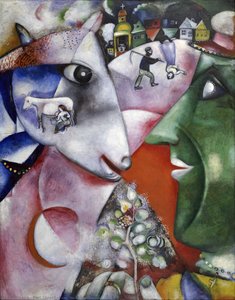 I and the Village - Marc Chagall
Close your eyes and recall a cherished memory – not as a photograph, but as a feeling, fragmented yet intensely vivid. This is the essence of Marc Chagall’s I and the Village (1911), a masterpiece that transcends representation to become a window into the artist's soul.
Within this dreamscape, figures and scenes from Chagall’s childhood in Vitebsk coalesce in a symphony of blue-greys and earthy greens. While exhibiting Cubist influences in its fractured forms, the painting is ultimately defined by its emotional resonance—a poignant exploration of belonging, identity, and the power of recollection.
What distinguishes I and the Village within our focus on ‘monochromatic’ color intensity isn't a strict adherence to a single hue but rather Chagall’s masterful orchestration of *related* tones. The limited palette creates an atmosphere of ethereal beauty, allowing forms to float and merge, mirroring the fluidity of memory itself.
This work reminds us that true artistry lies not in replicating reality but in capturing its emotional truth. Today, we see echoes of Chagall’s sensibility in contemporary interiors—layered textures, muted color schemes, and a celebration of personal narrative. I and the Village invites us to embrace imperfection, find beauty in fragmentation, and create spaces that resonate with our own unique histories.
Guernica - Pablo Picasso
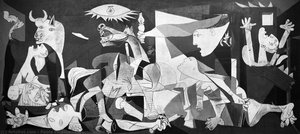 Guernica - Pablo Picasso
Imagine a world stripped bare – devoid of color, yet overflowing with anguish. This is the haunting reality captured in Pablo Picasso’s Guernica (1937), a monumental cry against the brutality of war.
Created in response to the bombing of Guernica during the Spanish Civil War, this monochromatic masterpiece transcends its historical context to become a universal symbol of suffering and resistance. The fragmented forms, distorted figures, and stark palette—a symphony of greys, blacks, and whites—evoke not just the physical devastation but also the profound emotional trauma inflicted upon innocent civilians.
Within our exploration of ‘monochromatic’ color intensity, Guernica stands as a testament to the power of restraint. The absence of color amplifies the painting's raw urgency and journalistic starkness, forcing us to confront the horrors depicted with unflinching clarity. Every brushstroke is charged with emotion, every symbol—the screaming woman, the wounded horse—a poignant lament for lost lives.
Today, Guernica reminds us of art’s capacity to bear witness and inspire change. Its presence in any space would serve as a powerful reminder of our shared humanity and the enduring need for peace—a somber yet vital call for compassion and understanding.
Arrangement in Grey and Black. Portrait of the Painter's Mother - James Abbott McNeill Whistler
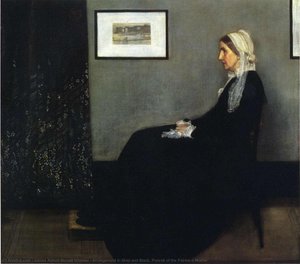 Arrangement in Grey and Black. Portrait of the Painter's Mother - James Abbott McNeill Whistler
There’s a quiet dignity that emanates from James Abbott McNeill Whistler’s “Arrangement in Grey and Black No. 1” – universally known as ‘Whistler’s Mother.’ It isn't merely a portrait of the artist’s mother; it’s an evocation of motherhood itself, rendered with breathtaking restraint and profound emotional depth.
Completed in 1871, this masterpiece embodies the Aesthetic Movement’s “art for art’s sake” philosophy. Whistler prioritized the harmonious interplay of form and color—a limited palette of greys and blacks—over narrative detail, creating a work that transcends representation to become an icon of contemplative beauty.
Within our exploration of ‘monochromatic’ color intensity, Arrangement in Grey and Black stands as a testament to the power of subtlety. The painting's subdued atmosphere invites introspection, while its carefully constructed composition—geometric harmony balanced by delicate textures—creates a sense of timeless serenity.
At , we believe that art should be accessible to all. We faithfully reproduce this iconic work, preserving not only the visual details but also the quiet dignity and emotional resonance that have captivated audiences for generations. Bring the enduring beauty of ‘Whistler’s Mother’ into your home—a timeless reminder of strength, resilience, and the power of artistic expression.
The School of Athens - Anton Raphael Mengs
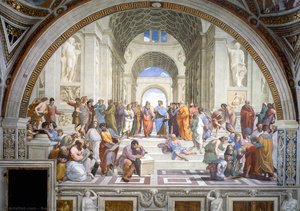 The School of Athens - Anton Raphael Mengs
Step into a world where intellect reigns supreme – a sunlit hall echoing with the voices of ancient philosophers. This is the captivating realm of Anton Raphael Mengs’ The School of Athens (1509), a cornerstone of High Renaissance art and a testament to humanity's enduring pursuit of knowledge.
More than just a depiction of classical thinkers, this fresco embodies the humanist ideals that defined an era. Plato and Aristotle—modeled after Leonardo da Vinci and Raphael himself—stand at its heart, engaged in profound discourse, their gestures representing contrasting approaches to understanding the world.
Within our exploration of ‘monochromatic’ color intensity, The School of Athens demonstrates how a limited palette – muted blues, greens, and ochres – can create an atmosphere of timeless serenity and intellectual grandeur. The subtle gradations of tone and masterful use of light enhance the sense of depth and realism, drawing viewers into this imagined world.
Today, we see echoes of its balanced composition and harmonious color scheme in sophisticated interiors—spaces designed to inspire contemplation and foster a sense of calm. At , we faithfully reproduce this iconic work, allowing you to bring the spirit of Renaissance humanism into your own home – a timeless reminder of the power of reason, curiosity, and the enduring legacy of ancient thought.
Water Lilies (or Nympheas) - Claude Monet
 Water Lilies (or Nympheas) - Claude Monet
Close your eyes and imagine floating on a tranquil pond, sunlight dappling through the leaves, the air alive with the scent of water lilies. This is the world Claude Monet invites us into with his iconic Water Lilies (or Nympheas ) series.
Painted during his extended period at Giverny, these works represent Impressionism at its zenith—a revolutionary departure from academic constraints and a profound exploration of light, color, and atmosphere. Monet wasn’t simply depicting flowers; he was capturing the *impression* of a fleeting moment, transforming a simple garden pond into a breathtaking meditation on nature's serenity.
Within our focus on ‘monochromatic’ color intensity, Water Lilies demonstrates how subtle variations within a limited palette—lavenders, greens, and shimmering pinks—can create an immersive experience. The broken brushstrokes and visible texture lend an almost abstract quality to the work, inviting close inspection and contemplation.
Today, these paintings remind us of art’s power to transport us—to offer a sanctuary from the everyday world and evoke feelings of calm and peace. At , we faithfully reproduce Monet's masterpieces, allowing you to bring this timeless beauty into your own home—a vibrant reminder of nature’s restorative power.
The Menaced Assassin - René Magritte
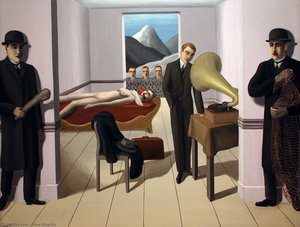 The Menaced Assassin - René Magritte
There’s a disquieting stillness within René Magritte’s The Menaced Assassin (1927) – a sense that something is profoundly wrong beneath the surface of an otherwise ordinary scene. This captivating painting isn't merely a depiction of figures in a room; it’s a haunting exploration of vulnerability, observation, and hidden menace.
Within our exploration of ‘monochromatic’ color intensity, Magritte masterfully employs a restrained palette—peach, grey, black, and red—to create an atmosphere of somber intrigue. The meticulous detail and smooth brushwork contrast sharply with the dreamlike subject matter, challenging our perception of reality.
The painting's enduring power lies in its ambiguity. Who is the assassin? Who is the menace? And what does it mean to be observed? These questions linger long after you’ve turned away, inviting contemplation on themes of privacy, control, and the unsettling nature of modern life.
At , we faithfully reproduce this iconic work, allowing you to bring its enigmatic beauty into your own space—a timeless reminder that sometimes, the most profound truths are hidden in plain sight. It’s a conversation starter, an invitation to question, and a testament to art's ability to unsettle and provoke.
Gare Saint Lazare, Pari - Claude Monet
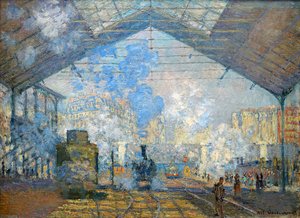 Gare Saint Lazare, Pari - Claude Monet
Close your eyes and imagine the hiss of steam, the rumble of engines, the fleeting glimpses of faces rushing by. This is the world Claude Monet captures in Gare Saint Lazare, Paris (1877), a poetic statement about modernity and the beauty found within everyday life.
More than just a depiction of a railway station, this iconic work translates the energy and atmosphere of Parisian life during a period of rapid industrialization. Monet’s signature loose brushwork creates a dynamic surface, allowing colors to blend optically in the viewer's eye—a hallmark of Impressionism.
Within our exploration of ‘monochromatic’ color intensity, Gare Saint Lazare demonstrates how subtle variations within a muted palette – cool blues, grays, and whites punctuated by warm ochres – can evoke a sense of transience and ethereal beauty. The diffused light and blurred figures create an immersive experience, inviting contemplation on the fleeting moments that define human existence.
A reproduction of this masterpiece offers more than just aesthetic appeal; it brings a touch of Parisian elegance to your space—a timeless reminder of art’s ability to transform the ordinary into something extraordinary. It's a window onto modernity and an invitation to appreciate the beauty in constant motion.
The Fog Warning - Winslow Homer
 The Fog Warning - Winslow Homer
Winslow Homer’s The Fog Warning (1885) presents a powerfully evocative scene of solitude and struggle on the open sea—a moment suspended between hope and peril. This isn't merely a depiction of a fisherman at work; it’s a profound meditation on humanity’s relationship with nature, resilience in the face of adversity, and the precariousness of life itself.
Within our exploration of ‘monochromatic’ color intensity, Homer masterfully employs a muted palette—dominated by grays, blues, browns, and ochre—to reinforce the painting’s somber mood and emphasize the raw power of the environment. The visible brushwork creates a dynamic surface, conveying the weight and movement of the waves with remarkable accuracy.
The work exemplifies Homer's shift towards depicting serious themes – humankind's enduring battle against the elemental forces of nature—and remains deeply resonant today. Its restrained color scheme and dramatic composition evoke a sense of quiet contemplation, making it an ideal piece for creating a calming yet powerful ambiance in any space.
A reproduction of The Fog Warning brings this timeless narrative into your home—a reminder of the beauty found within struggle and the enduring spirit of human perseverance. It’s a conversation starter, a source of inspiration, and an invitation to connect with the power of nature.
Portrait of Ambroise Vollard - Pablo Picasso
 Portrait of Ambroise Vollard - Pablo Picasso
Pablo Picasso’s Portrait of Ambroise Vollard (1910) is more than just a likeness; it's a revolutionary exploration of form, perception, and the very essence of portraiture. This striking artwork transcends simple representation to become an intellectual rendering of a personality—a visual deconstruction mirroring the complexities of the modern world.
Within our exploration of ‘monochromatic’ color intensity, Picasso masterfully employs a limited palette – dominated by muted browns, grays, ochres, and whites – to reinforce the focus on structure rather than vibrant color. Subtle tonal variations suggest skin tone and clothing texture, but overall, the emphasis lies in the interplay of angular lines and overlapping planes.
This work stands as a pivotal statement within the evolution of modern art, exemplifying Analytical Cubism’s radical departure from traditional artistic conventions. It remains deeply resonant today, challenging our perceptions and inviting us to actively reconstruct the image—and with it, our understanding of reality.
At , we faithfully reproduce this masterpiece, allowing you to bring its intellectual power into your home. Our reproductions preserve the emotion and texture of the original, offering a unique opportunity to connect with Picasso’s genius and experience the beauty found within deconstruction.
Conclusion
As the light fades on these ten remarkable canvases, we’re reminded that great art transcends mere history—it becomes a living presence, a conversation across centuries. Each brushstroke carries not only pigment and intention but also the echoes of human experience, resilience, and wonder.
These masterpieces aren't simply objects to be admired; they are portals into other worlds, reflections of our own souls, and catalysts for creativity within our spaces. The subtle gradations of gray in Hopper’s rooms, the somber power of Goya’s vision, the fragmented intellect of Picasso’s Vollard—these hues speak a language beyond words, resonating with something deep within us.
To live with such art is to invite a timeless dialogue into your home. It's a gentle reminder that beauty exists in stillness, power resides in subtlety, and every shade holds a story waiting to be discovered. We at are honored to play a small part in bringing these enduring visions closer to you—to offer not just reproductions, but opportunities for connection.
Explore our full collection and discover the monochromatic masterpiece that speaks to your heart. May it inspire contemplation, ignite conversation, and enrich your life with its enduring beauty.