


The Allure of Green: A Historical Overview
From the earliest cave paintings depicting lush prehistoric landscapes to the vibrant canvases of modern masters, green has held a unique and often complex position within the artistic realm. Unlike some colors – red’s immediate association with power or blue’s connection to divinity – green's journey through art history is one of gradual acceptance and evolving symbolism. For centuries, achieving a stable and lasting green pigment proved remarkably difficult, contributing to its initially limited use and sometimes even negative connotations. Early greens were often fugitive, fading quickly or shifting in tone, leading to associations with transience and decay. The very word “green” shares etymological roots with “grow,” hinting at its inherent connection to the natural world, yet this association wasn’t always positive; it could also signify immaturity or a lack of completion. The ancient Egyptians, however, were among the first to embrace green, utilizing malachite pigments to represent rebirth and vegetation in funerary art, believing it held protective powers for the deceased. This early reverence stands as a fascinating counterpoint to later periods where green was viewed with suspicion.
Green's Symbolic Evolution: From Fertility to Finance
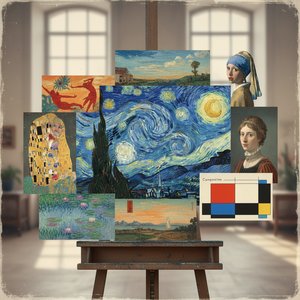 Harmonious Hues: 10 Masterpieces of Balanced Color |
Explore 10 iconic artworks – from Monet to Van Gogh – celebrated for their perfectly balanced color intensity. Discover the stories behind these masterpieces & find museum-quality reproductions to elevate your home decor on .
The medieval period saw green take on more nuanced meanings, often linked to courtly love and springtime renewal – though simultaneously, it could represent envy and deceit. Shakespeare’s infamous “green-eyed monster” solidified this darker association in the collective consciousness. The Renaissance witnessed a slow shift as artists began experimenting with new techniques for creating more stable greens, allowing for its broader incorporation into compositions. However, it wasn't until the 19th century that green truly blossomed, fueled by advancements in chemistry and a growing fascination with capturing the subtleties of nature. The invention of synthetic pigments like emerald green (copper acetoarsenite) revolutionized painting, offering artists unprecedented vibrancy – though tragically, its toxicity would later become apparent. This period coincided with the rise of Impressionism and Post-Impressionism, where artists like Monet and Van Gogh used green to explore light, atmosphere, and emotional states. Interestingly, the 20th century saw a further evolution, with green becoming increasingly associated with prosperity and environmental consciousness – perhaps a reflection of our growing awareness of the natural world’s fragility. The association with money, stemming from the color of banknotes, added another layer to its symbolic complexity.
Mastering the Hue: Techniques & Pigments in Green Painting
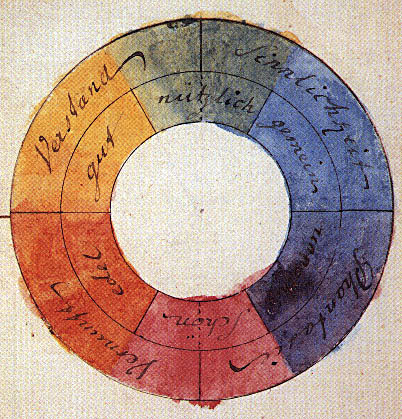 Wikipedia: Color theory
Color theory, or more specifically traditional color theory, is a historical body of knowledge describing the behavior of colors, namely in color mixing, color contrast effects, color harmony, color schemes and color symbolism. Modern color theory is...
The challenges inherent in creating lasting green pigments profoundly influenced how artists employed the color throughout history. Early greens were often derived from copper compounds, requiring meticulous preparation and frequently resulting in unstable hues. Verdigris, a blue-green pigment created by exposing copper to acetic acid, was prized for its luminosity but prone to darkening over time. Malachite, while beautiful, lacked intensity and could be difficult to grind consistently. The advent of synthetic pigments in the 19th century dramatically altered this landscape. Emerald green, despite its toxicity, offered an unparalleled brilliance that captivated artists like Monet in his depictions of water lilies and landscapes. Cadmium green, another significant innovation, provided a more stable and versatile option. Beyond the pigment itself, the *technique* employed played a crucial role. Impressionists often layered greens using complementary colors – reds and yellows – to create optical mixtures that captured the fleeting effects of light. Post-Impressionists like Van Gogh utilized impasto techniques, applying thick layers of green paint to convey texture and emotional intensity. The skillful manipulation of brushstrokes and layering allowed artists to overcome limitations in pigment stability and achieve remarkable depth and vibrancy.
Iconic Green Masterpieces and Their Emotional Resonance
 Emerald Visions: Top 10 Paintings Dominated by Cadmium Green |
Explore 10 iconic paintings where cadmium green reigns supreme! From Monet to Van Gogh, discover the stories behind these masterpieces & the power of color. Find museum-quality art reproductions and elevate your home decor on .
Consider Claude Monet’s Impression, Sunrise, where subtle washes of green evoke the misty atmosphere of Le Havre harbor. The color isn't dominant, but it provides a crucial foundation for the painting’s overall mood – a sense of tranquility and fleeting beauty. Vincent van Gogh’s landscapes are replete with expressive greens, from the vibrant fields in Summer Landscape to the darker, more turbulent hues in his depictions of cypress trees. These aren't merely representations of nature; they are emotional responses translated onto canvas. Paul Cézanne’s still lifes often feature carefully rendered greens in foliage and fabrics, demonstrating his mastery of color harmony and spatial relationships. Kazimir Malevich’s Summer Landscape, a prime example of Suprematism, utilizes layered brushstrokes of green to create a dreamlike atmosphere, stripping away representational elements to focus on pure form and color. Georges Seurat's Lucerne exemplifies Pointillism, where tiny dots of green (and other colors) blend optically to create a shimmering effect that captures the essence of sunlight filtering through wheatfields. These works demonstrate how artists harnessed the power of green to evoke specific emotions – from serenity and joy to melancholy and introspection.
Beyond Landscape: Unexpected Uses of Green in Art History
While often associated with landscapes, green’s presence extends far beyond depictions of nature. In portraiture, green clothing could signify wealth or status, as seen in Leonardo da Vinci's Mona Lisa. Religious art sometimes employed green to represent hope and renewal, though its use was less common than other colors due to historical associations with instability. More surprisingly, green appears in abstract compositions where it serves purely aesthetic purposes – a testament to its inherent visual appeal. Artists like Paul Klee explored the expressive potential of green in his vibrant abstract landscapes, blending Expressionism and Cubism to create rhythmic designs. Adolph Jentsch’s watercolors beautifully capture the subtle greens of the Namibian landscape, showcasing the color's ability to convey atmosphere and light. Raymond Emmanuel Woog utilized green in portraits and wartime sketches, adding a layer of emotional depth to his compositions. Even Holly Stein incorporates bold shades of green into her abstract works, demonstrating its versatility across different styles and periods.
Invoking Verdant Harmony: Bringing Green into Your Space
The enduring appeal of green extends beyond the canvas and into our everyday lives. Incorporating green hues into your home can evoke a sense of tranquility, balance, and connection to nature. Softer shades like sage or moss are ideal for bedrooms and workspaces, promoting relaxation and concentration. Brighter greens, such as lime or chartreuse, can invigorate creative spaces or home gyms. Consider the psychological impact of different tones – darker greens suggest stability and sophistication, while lighter greens feel fresh and airy. At BuyPopArt.com, we offer a stunning collection of museum-quality reproductions featuring iconic green masterpieces, allowing you to bring these verdant visions into your own home. Whether you’re seeking a calming landscape or an abstract exploration of color, our skilled artists can recreate your favorite artwork with authentic brushstrokes and gallery-quality materials. Explore our extensive library today and discover the transformative power of green – a color that continues to captivate and inspire.





