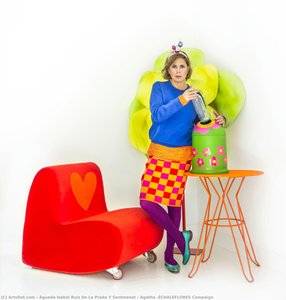
A Kaleidoscope of Joy: The World of Ágatha Ruiz de la Prada
Águeda Isabel Ruiz de la Prada y Sentmenat, known to the world as Ágatha Ruiz de la Prada, is more than a fashion designer; she’s an architect of happiness. Born in Madrid in 1960 into a family steeped in both aristocracy and artistic appreciation, her journey has been one of vibrant rebellion against convention, transforming the landscape of Spanish design with a playful spirit that continues to captivate globally. Growing up surrounded by art – her father was a collector boasting works by luminaries like Andy Warhol and Miró – instilled within young Ágatha an innate understanding of color, form, and the power of visual expression. This early exposure wasn’t about replicating masters but absorbing their audacity, their willingness to challenge norms, a seed that would blossom into her signature aesthetic. Initially aspiring to be a painter herself, she ultimately found her canvas in clothing, recognizing its potential for wearable art, for broadcasting joy directly onto the human form.
From Madrid’s Movida to International Acclaim
Ágatha's entry into the fashion world was remarkably swift and impactful. In 1981, she launched her first women’s collection, a burst of color and whimsical designs that immediately resonated with a Spain undergoing its own cultural explosion – *La Movida Madrileña*. This post-Franco era saw a surge in artistic freedom and experimentation, and Ágatha became one of its most visible and exuberant proponents. Her early work wasn't about sleek sophistication; it was deliberately childlike, adorned with hearts, flowers, stars, and bold, unapologetic hues. A pivotal partnership with El Corte Inglés, the Spanish department store chain, catapulted her designs into mainstream consciousness, making them accessible to a wider audience and solidifying her position as a rising star. This wasn’t merely commercial success; it was a cultural moment, injecting a much-needed dose of optimism and playfulness into a society emerging from decades of restraint. Her expansion beyond clothing in 1991 – licensing her brand for everything from ceramics and toys to linens and makeup – demonstrated an astute business sense alongside her artistic vision, transforming “Ágatha Ruiz de la Prada” into a lifestyle empire spanning over 140 countries.
Aristocratic Roots & Artistic Influences
The title of Marchioness of Castelldosríus and Baroness of Santa Pau, bestowed upon her in 2010 after a protracted legal battle with an uncle, adds another layer to the fascinating narrative of Ágatha’s life. While she embraces her aristocratic heritage, it has never defined her artistic output. Instead, it provides a unique perspective – a playful subversion of tradition. Her designs are often described as surrealist, and indeed, there's a clear lineage connecting her work to the dreamlike imagery of artists like Salvador Dalí and René Magritte. However, she also draws heavily from Pop Art, particularly the bold colors and graphic simplicity of Andy Warhol, whose influence is evident in her recurring motifs and playful appropriation of everyday objects. Beyond visual art, Ágatha cites a deep appreciation for music and performance, elements that contribute to the theatricality and energy of her fashion shows. She doesn’t simply present clothes; she creates experiences, immersive worlds where joy and imagination reign supreme.
A Legacy of Color & Celebration
Ágatha Ruiz de la Prada's influence extends far beyond the realm of high fashion. She has dressed numerous celebrities, most notably Miley Cyrus, who embraced her designs with an enthusiasm that perfectly captured their spirit of playful rebellion. Her work is a celebration of individuality, encouraging people to embrace color and express themselves without reservation. The Agatha Ruiz de la Prada Foundation, established in Madrid, serves as a testament to her commitment to art and culture, showcasing her own creations alongside works by other artists who share her vision. She has collaborated with major brands like Mattel (designing a dress for Barbie) and Vorwerk (creating vibrant rug collections), demonstrating the versatility of her aesthetic and its appeal across diverse platforms. More than just a designer, Ágatha is a cultural icon, a symbol of optimism, creativity, and the enduring power of joy. Her designs aren’t simply garments; they are statements – declarations of individuality, celebrations of life, and reminders that fashion can be, above all else, *fun*.