Air Marshal Mahmoud Shaker Abdel-Monem: A Pioneer of Geometric Abstraction
Mahmoud Shaker (1926 – 1980) stands as a singular figure in Egyptian art history—a military officer who simultaneously cultivated a distinctive artistic vision rooted in geometric abstraction. Born in Al Bidaa, Dakahlia Governorate, Egypt, his life was shaped by unwavering discipline instilled during his formative years at the Egyptian Military Academy and subsequently honed at the Egyptian Air Academy, where he mastered flight training and defense strategies. This dual dedication profoundly impacted his creative output, resulting in artworks that embody both technical precision and expressive dynamism.
Early Life & Education: Shaping a Disciplined Mind
Shaker’s academic pursuits extended beyond military science; he earned a Master's degree in Air Sciences with specialization in air defense from the Indian Defence Services Staff College at Wellington Cantonment. These experiences fostered an analytical approach that would permeate his artistic endeavors, informing his meticulous attention to detail and his masterful manipulation of visual elements. His fascination with aviation wasn’t merely professional—it served as a constant source of inspiration for translating movement and perspective onto canvas.
The Artistic Journey: Geometric Abstraction Takes Flight
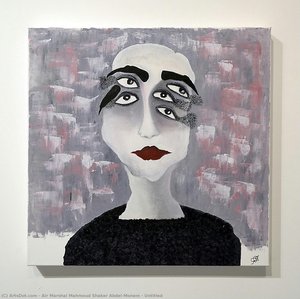
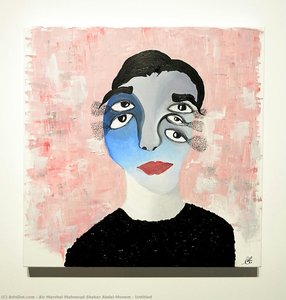
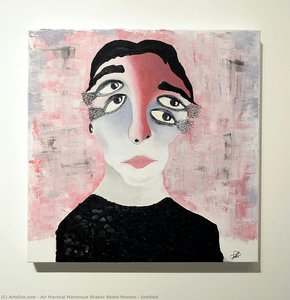
Shaker's artistic career blossomed during his tenure in the Egyptian Air Force, where he skillfully blended military expertise with an evolving aesthetic sensibility. Characterized by bold colors and geometric shapes—primarily squares, rectangles, and triangles—his paintings capture a sense of controlled energy reminiscent of aircraft maneuvers. Unlike representational art prevalent at the time, Shaker deliberately eschewed realistic depictions, prioritizing instead the exploration of fundamental visual principles. This stylistic choice reflects a broader trend in abstract expressionism during the mid-20th century, albeit imbued with an Egyptian perspective.
Technique & Influences: Mastering Color and Form
Shaker’s technique involved layering pigments to achieve rich textures and luminous hues—a deliberate departure from traditional Egyptian painting methods. He drew inspiration from Bauhaus principles of design and utilized geometric abstraction as a tool for conveying emotion and capturing the essence of movement. Although Shaker remained relatively private about his artistic influences, scholars suggest connections to European modernist artists like Piet Mondrian and Kazimir Malevich, whose explorations of pure form and color paved the way for Shaker’s groundbreaking style.
Legacy & Recognition: An Egyptian Voice in Abstract Art
Mahmoud Shaker's contribution to Egyptian art is notable not only for its stylistic innovation but also for its embodiment of national pride. His artwork gained recognition through exhibitions at institutions like the Museums of Serbia and BuyPopArt.com, showcasing his distinctive vision alongside prominent international artists. The Barjeel Art Foundation further solidified his reputation as a significant figure in contemporary Egyptian art, ensuring that Shaker’s legacy would endure beyond his lifetime—a testament to the transformative power of combining military service with artistic creativity.