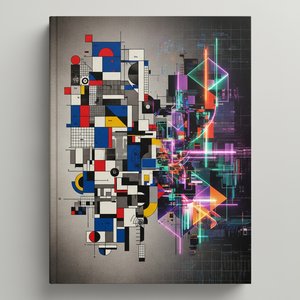
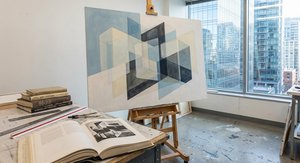
Anwar Jalal Shemza: Life and Legacy
Early Life and Education
- Born: Anwar Jalal Butt on July 14, 1928, in Shimla, India.
- His family had Kashmiri roots; his grandfather owned a carpet business in Lahore, and his father was a civil servant.
- He received education in Shimla, Ludhiana, and Lahore.
- Initially studied Persian, Arabic, and Philosophy at Punjab University in 1943 before switching to art in 1944.
- Earned a diploma from the Mayo School of Art in 1947.
Pakistani Artist and Writer (1947-1950s)
- In 1947, Shemza opened an art studio in Lahore.
- Dual Talent: He was not only a visual artist but also a prolific writer, publishing several Urdu novels and poetry books during the 1950s. His plays were performed on Radio Pakistan.
- His early artistic style was heavily influenced by Modernism, particularly the work of Paul Klee.
Artistic Development and Style
- Early Influences: Shemza’s initial works demonstrated a strong modernist aesthetic, characterized by abstraction and experimentation with form.
- Evolving Style: Over time, his work began to incorporate elements of traditional Islamic art, including calligraphy and geometric patterns. This fusion created a unique visual language.
- Printmaking Skills: He was an accomplished printmaker, with his work exhibited at the International Print Biennial in Tokyo.
- His paintings often feature vibrant colors and intricate designs, reflecting both his modernist training and his cultural heritage.
Later Life and Career (UK)
- Shemza moved to the United Kingdom in the 1960s, continuing his artistic practice there.
- He became a significant figure within the British Pakistani art scene, bridging cultural divides through his work.
- Themes: His artwork frequently explored themes of displacement, identity, and the intersection of Eastern and Western cultures.
Major Achievements and Historical Significance
- Shemza’s work is recognized for its pioneering blend of Islamic artistic traditions with modernist techniques.
- Legacy: He played a crucial role in establishing a dialogue between Pakistani art and the international art world.
- His contributions as both an artist and a writer have left a lasting impact on South Asian literature and visual arts.
- He died on January 18, 1985, leaving behind a rich artistic legacy that continues to inspire artists today.