The Quiet Intensity of Eduardo Martínez Vázquez
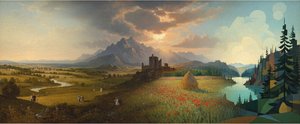
Eduardo Martínez Vázquez stands as a singular figure in the pantheon of Spanish landscape painting, a master whose brush captured the very soul of the rural Andalusian scenery with meticulous observation and a profound, quiet intensity. Born in 1886 in the serene village of Fresneda de Cuéscar, within the Castile and León region, his early life was shaped by a unique blend of discipline and artistic heritage. The son of Eduardo Martínez Gelaber, a man rooted in the precision of medical practice, the young artist inherited a structured approach to life that would later manifest as a rigorous devotion to the technical demands of his craft. As he moved through the landscapes of Mirandilla in Badajoz and eventually established himself in the vibrant intellectual heart of Madrid, his vision began to expand, absorbing the light and atmosphere of the Spanish countryside.
His artistic journey was profoundly shaped by his formative years at the Escuela de Bellas and de San Fernando in Madrid. Enrolling at the age of fifteen, he came under the influential tutelage of Antonio Muñoz Degrain, a mentor who championed the practice of plein air painting. This instruction encouraged Martínez Vázquez to forge a deep, visceral connection with nature, moving beyond mere representation to capture the ephemeral qualities of light and air. During this era, he found himself part of a prestigious cohort of artists—including Solana, Zuloaga, and Vázquez Díaz—who were all united by a shared commitment to realism and an expressive, observational approach to the world around them. This period of intense study provided him with the foundational skills necessary to translate the rugged beauty of the Spanish terrain into works of enduring emotional resonance.
A Global Vision and Artistic Recognition
The reach of Martínez Vázquez’s talent extended far beyond the borders of Spain, as his canvases traversed continents to find acclaim in the great art capitals of the world. His exhibitions were not merely local events but international dialogues, with his work gracing galleries in London, Paris, Berlin, and Venice, as well as reaching across the Atlantic to cities like Philadelphia, Pittsburgh, Panama, and Buenos Aires. This global presence underscored the universal appeal of his landscapes, which spoke to a shared human appreciation for the dignity of the natural world. His ability to communicate the specific character of Spanish landscapes through a sophisticated, international lens secured him a lasting place in the broader narrative of 20-century European art.
The excellence of his execution was frequently recognized by the most prestigious institutions of his time. His career was punctuated by significant accolades that affirmed his standing among the elite painters of his generation:
- 1915: He was awarded the second medal at the Exposición Nacional de Bellas Artes for his evocative work, “La Plaza del Feudo.”
- 1924: He achieved the highest honor of a first medal at the same prestigious exhibition for his masterpiece, “Las Nieves del Cirbunal.”
These achievements were not merely personal triumphs but milestones that validated his dedication to an art form rooted in truth and atmospheric precision. Through these works, he demonstrated an ability to balance the structural integrity of the landscape with a poetic sensitivity to the changing seasons and the subtle shifts in light.
Legacy of the Spanish Landscape
The historical significance of Eduardo Martínez Vázquez lies in his ability to elevate the rural scene into a subject of profound contemplative power. While many of his contemporaries sought to experiment with more radical abstractions, Martínez Vázquez remained steadfast in his devotion to a refined realism that celebrated the textures, colors, and quiet rhythms of life in the Spanish countryside. His work serves as a vital historical record of an era, capturing the essence of landscapes that have since been transformed by time. By blending the disciplined observation learned from his academic training with a deep-seated passion for the natural world, he created a body of work that continues to resonate with viewers seeking beauty in the stillness and strength found within the earth.