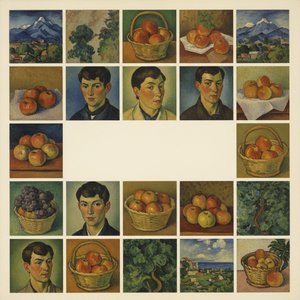
Emile Noirot: A Painter of the Loire’s Soul
Emile Noirot (1853-1924) wasn't a name that echoed through the grand halls of Parisian art circles during his lifetime, yet his canvases hold a quiet power—a profound connection to the landscapes and light of the Loire Valley. Born in Roanne, a city nestled within this region of France, Noirot’s artistic journey was deeply rooted in the very earth he depicted, transforming humble rural scenes into evocative expressions of atmosphere and memory. He wasn't striving for grand narratives or revolutionary styles; instead, he meticulously captured the subtle shifts of light on water, the weathered textures of stone, and the enduring spirit of a region intimately tied to French history.
Early Influences and Artistic Training
Noirot’s artistic foundation began within his family. His father, Louis Noirot, was himself a respected landscape painter and lithographer, establishing a workshop in Roanne that instilled in Emile an early appreciation for the craft of printmaking and the observation of nature. This familial connection proved invaluable, providing him with both practical skills and a deep understanding of the region’s artistic heritage. While Louis focused on detailed depictions of local life and architecture, Emile's initial training leaned towards the Barbizon School—a movement emphasizing direct observation in plein air and a rejection of academic conventions. He spent time studying under artists who valued capturing the essence of nature rather than meticulously recreating it, absorbing their techniques for rendering light and shadow.
The Loire Valley: A Lifelong Subject
The Loire Valley became the central focus of Noirot’s artistic life. He returned to Roanne in 1881, a decision that marked a turning point in his career. It was here that he truly began to develop his unique style—one characterized by a remarkable sensitivity to light and atmosphere. He wasn't simply painting landscapes; he was attempting to convey the *feeling* of being within them. His subjects ranged from dramatic river scenes, particularly the gorges of the Loire, to intimate glimpses of rural life – shepherds tending their flocks, weathered farmhouses bathed in golden sunlight, and quiet moments by the water’s edge. His works often feature a muted palette—primarily blues, greens, and browns—that perfectly complements the subdued tones of the landscape. The artist's meticulous attention to detail, particularly in rendering reflections on water and the textures of stone, is truly remarkable.
Key Works and Recognition
Noirot’s dedication to his subject matter resulted in a substantial body of work. Several paintings stand out as particularly significant examples of his artistic vision. “On the Loire, Winter” (1893), for instance, captures the stark beauty of the river during its frozen months—a scene imbued with both melancholy and serenity. His painting "Le Saut du Perron" (1893) was selected to represent France at the Universal Exposition in Chicago, a testament to his growing reputation within the art world. He also received an honorable mention for “Printemps à Villerest” (1909) at the 1909 Salon in Paris. These accolades, while perhaps not as widely celebrated as those of his contemporaries, nonetheless acknowledged the depth and sincerity of his artistic vision.
Legacy and Continuing Influence
Emile Noirot’s legacy lies not in grand pronouncements or revolutionary techniques, but in his quiet mastery of capturing the soul of the Loire Valley. His paintings offer a poignant reminder of the beauty that can be found in the everyday—in the simple rhythms of rural life and the ever-changing light of nature. His work continues to resonate with viewers today, inviting us to slow down, observe, and appreciate the subtle wonders of the world around us. The influence of Noirot’s dedication to capturing atmosphere and detail can be seen in later generations of landscape painters who sought to emulate his ability to evoke a sense of place and time.