Frank Grant Faed: Jersey’s Painter of Light and Atmosphere
Sir Francis Grant Faed (1897 – 1964) was a British landscape artist born in Jersey, Channel Islands, whose distinctive style captivated audiences with its luminous depictions of the island's coastal scenery and rural landscapes. He achieved considerable renown during his lifetime and continues to be appreciated for his contribution to Jersey’s artistic heritage.
Early Life and Artistic Training
Born in Saint Helier, Faed’s formative years were steeped in the traditions of Victorian art education. His father, William Grant Faed, was a solicitor and instilled in him a love for meticulous observation and detailed rendering—skills that would prove invaluable to his artistic endeavors. He studied at Slade School of Fine Art in London from 1915 to 1918, absorbing the Impressionistic techniques championed by artists like Claude Monet and Pierre-Auguste Renoir. This exposure profoundly shaped his approach to painting, prioritizing capturing fleeting moments of light and color rather than striving for photographic accuracy.
The Jersey Landscape Tradition
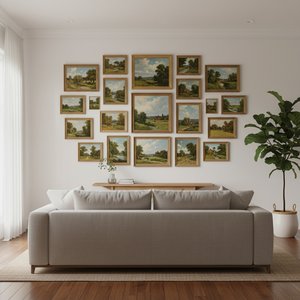
Faed’s artistic focus quickly settled upon Jersey, where he established himself as a prolific painter. He meticulously documented the island's dramatic coastline – jagged cliffs plunging into turquoise waters – and serene meadows dotted with wildflowers. Unlike many artists of his era who sought grand vistas or idealized representations, Faed embraced a more intimate perspective, favoring smaller canvases that allowed for nuanced tonal gradations and subtle brushstrokes. His palette leaned heavily towards muted greens, blues, and yellows, reflecting the atmospheric conditions prevalent in Jersey’s climate.
Technique and Style
Faed's artistic style can be characterized as Impressionistic realism. He skillfully blended Impressionist principles—such as capturing the effects of light and color—with a commitment to accurate topographical detail. His brushwork was loose yet purposeful, conveying texture and movement without sacrificing clarity. Faed’s meticulous layering of paint created depth and luminosity, mirroring the way sunlight illuminates the Jersey landscape. Influenced by artists like Frederic Church and Albert Bierstadt, he sought to convey not just what he saw but also how it *felt*.
Notable Works and Recognition
Among Faed's most celebrated paintings are “Garden Space,” “Trees and Rocky Headland,” and “A Jersey Farmhouse.” These works exemplify his mastery of capturing the essence of Jersey’s environment. They reside in prominent collections across Britain, including the National Portrait Gallery and Tate Britain, testament to their enduring artistic merit. Faed's dedication to portraying the beauty of his homeland cemented his place as a pivotal figure in Jersey’s art history. He was awarded an MBE for services to the arts in 1963, recognizing his contribution to promoting Jersey’s cultural identity.
Legacy and Influence
Frank Grant Faed’s legacy extends beyond his individual paintings; he helped establish Jersey's reputation as a haven for landscape artists. His meticulous observation and expressive brushwork continue to inspire contemporary painters who strive to convey similar atmospheric qualities. He remains an important figure in understanding the visual culture of Britain during the interwar period, demonstrating how art could simultaneously celebrate natural beauty and engage with broader artistic trends.