A Life Rooted in Dobrogea, a Soul Captured on Canvas
Gheorghe Anghel’s story is inextricably linked to the landscapes and people of Romania, particularly the region of Dobrogea. Born in , Romania, his early life was profoundly shaped by this historical crossroads – a territory with layers of Byzantine, Ottoman, and Romanian influence. This rich tapestry of cultures subtly informs his artistic vision, manifesting as a deep appreciation for both the rugged beauty of the countryside and the nuanced expressions of human character. His family’s connection to archaeology, fostered through collaborations with prominent historians like Radu Florescu and Alexandru Suceveanu, instilled in him a meticulous attention to detail and an understanding of history's imprint on the land – qualities that would later become hallmarks of his distinctive style.
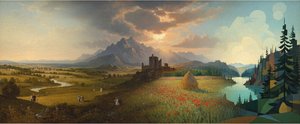
Anghel’s artistic journey began formally at the National University of Arts in Bucharest, where he honed his skills. However, it was through independent study and a relentless pursuit of capturing the essence of his surroundings that he truly blossomed. He wasn't merely replicating what he saw; he sought to translate the spirit of Dobrogea – its sun-drenched fields, ancient forests, and the faces of its inhabitants – onto canvas with an almost palpable sense of authenticity.
The Evolution of a Distinctive Style
Initially influenced by traditional Romanian landscape painting, Anghel gradually developed a unique style characterized by a remarkable blend of realism and expressive abstraction. He wasn’t afraid to experiment with texture, layering paint in thick impasto strokes that seemed to capture the very feel of the earth beneath his fingertips. His portraits, equally compelling, are not simply representations of likeness; they delve into the inner lives of his subjects, conveying a sense of vulnerability, strength, and quiet dignity. The use of muted color palettes – predominantly earthy tones punctuated by flashes of vibrant hue – creates an atmosphere of contemplative serenity.
A pivotal moment in Anghel’s artistic development occurred during his collaboration with the renowned historian, Radu Florescu, a connection that deepened his understanding of Dobrogean archaeology and its profound impact on the region's identity. This experience informed his approach to composition, encouraging him to incorporate elements of historical narrative into his landscapes – subtle echoes of past events woven into the fabric of the present.
Notable Works and Recognition
Among Anghel’s most celebrated works is “Tudor Vladimirescu,” a portrait that exemplifies his ability to capture not just physical appearance but also the very soul of his subject. The painting's power lies in its intimate portrayal of emotion, achieved through masterful use of light and shadow. Another significant piece, "Abstract Composition," showcases his willingness to push boundaries, experimenting with mixed media and collage techniques to create a dynamic interplay between form and texture. This work demonstrates a shift towards abstraction while retaining the core elements of his artistic vision – a deep connection to the land and a profound understanding of human experience.
Anghel’s dedication to his craft has been widely recognized throughout Romania. He was awarded the cultural order in the rank of high officer, a testament to his contribution to the nation's artistic heritage. His work is featured in prominent collections and galleries both within Romania and internationally, solidifying his position as one of the country’s most respected contemporary artists.
A Legacy of Romanian Vision
Gheorghe Anghel’s legacy extends beyond individual artworks; it represents a vital link to the cultural memory of Dobrogea. His paintings serve as windows into a region steeped in history and tradition, offering viewers a glimpse into the lives and landscapes of its people. He is an artist who has not simply documented his surroundings but has imbued them with emotion, creating works that resonate deeply with the human spirit. As he continues to create, Anghel remains a powerful voice for Romanian art, ensuring that the beauty and complexity of his homeland are preserved for generations to come.