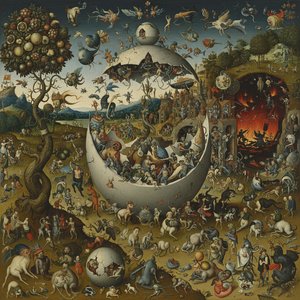
The Flourishing World of Hieronymus Galle the Elder
Hieronymus Galle the Elder, a name perhaps less immediately recognizable than some of his Flemish contemporaries, nevertheless occupies a significant and beautiful niche within the history of 17th-century painting. Born in Antwerp – though precise dates remain elusive – Galle dedicated himself to the captivating genre of still life, specializing in lush floral arrangements, bountiful fruit displays, and the poignant symbolism of *vanitas* compositions. His work embodies the burgeoning prosperity and refined tastes of the Dutch Golden Age, even as it subtly reminds viewers of the transience of earthly pleasures. While biographical details are scarce, the sheer quality and distinctive character of his paintings allow us to reconstruct a portrait of an artist deeply attuned to both the aesthetic demands and philosophical currents of his time. Galle’s career unfolded during a period of remarkable artistic innovation in Flanders and the Dutch Republic, where still life painting was evolving from its earlier, often decorative forms into a sophisticated exploration of light, texture, and meaning.
A Master of Floral Abundance
Galle's paintings are immediately striking for their sheer opulence. He possessed an extraordinary ability to render the delicate textures and vibrant colors of flowers – roses in full bloom, tulips unfurling, carnations radiating warmth. His arrangements weren’t simply realistic depictions; they were carefully constructed celebrations of beauty, often overflowing from vases, spilling onto ledges, or woven into elaborate garlands. This mastery wasn't merely technical prowess; it reflected a deep understanding of botany and the symbolic language associated with different blooms. Roses, for example, frequently represented love and passion, while lilies symbolized purity and innocence. The artist’s skill extended beyond flowers to include fruits – grapes laden with dew, peaches glowing with ripeness, plums hinting at sweetness – each meticulously painted to convey a sense of tactile reality.
His compositions often feature a dramatic interplay of light and shadow, enhancing the three-dimensional quality of the objects and drawing the viewer into their world. Galle’s work frequently appears in *festoon* arrangements, draped across architectural elements or forming decorative borders around other subjects, demonstrating his versatility and adaptability to various commissions.
Influences and Artistic Development
The artistic landscape of Antwerp profoundly shaped Galle's development. He was undoubtedly influenced by the earlier Flemish flower painters like Jan Brueghel the Elder, whose detailed botanical studies and dynamic compositions set a precedent for the genre. However, Galle moved beyond mere imitation, developing his own distinctive style characterized by a greater emphasis on volume and a more refined handling of light. The influence of Dutch still life masters such as Ambrosius Bosschaert the Elder is also apparent in his early works, particularly in their meticulous detail and symmetrical arrangements. Over time, Galle’s compositions became looser and more naturalistic, reflecting the evolving tastes of the market. He increasingly incorporated elements of *vanitas* symbolism – skulls, decaying fruit, extinguished candles – into his paintings, adding a layer of philosophical depth to his celebrations of beauty.
This shift suggests an awareness of the broader intellectual climate of the time, where themes of mortality and the fleeting nature of life were gaining prominence.
Vanitas and the Transience of Beauty
The inclusion of *vanitas* motifs in Galle’s later works marks a significant development in his artistic practice. These symbolic elements served as reminders of the impermanence of earthly possessions and pleasures, urging viewers to contemplate their own mortality and focus on spiritual values. A skull resting amongst a bouquet of flowers, a half-peeled lemon symbolizing decay, or an hourglass measuring the passage of time – these were not merely decorative additions but powerful visual statements about the fragility of life.
- Galle’s *vanitas* paintings are particularly notable for their subtle and nuanced approach.
- He avoided overly didactic imagery,
- Instead, he integrated symbolic elements seamlessly into his compositions,
creating works that were both beautiful and thought-provoking. This delicate balance between aesthetic pleasure and moral reflection is a hallmark of his mature style. The artist’s ability to evoke a sense of melancholy and contemplation within the context of such lavish displays speaks to his profound understanding of human psychology.
Legacy and Historical Significance
While Galle did not achieve the same level of widespread fame as some of his contemporaries, his work remains highly valued by collectors and art historians alike. His paintings provide valuable insights into the tastes and sensibilities of the 17th-century elite, reflecting their appreciation for beauty, luxury, and intellectual sophistication.
Galle’s influence can be seen in the works of later Flemish and Dutch still life painters, who continued to explore the themes and techniques he pioneered. His exquisite floral arrangements, bountiful fruit displays, and poignant *vanitas* compositions continue to captivate viewers today, offering a glimpse into a world where beauty and mortality were inextricably intertwined. The enduring appeal of his paintings lies in their ability to evoke both pleasure and contemplation, reminding us of the fleeting nature of life and the importance of cherishing the present moment.