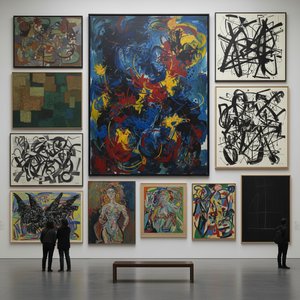
Luigi Veronesi: Pioneer of Abstract Photograms and Concrete Art
Luigi Veronesi (1908-1998) was a multifaceted Italian artist – photographer, painter, scenographer & film director. Born in Milan on May 28th, he embarked on an artistic journey that would redefine the boundaries of visual expression, establishing him as one of the foremost figures in the development of abstract art and particularly photograms—a technique he championed with unwavering dedication. His legacy continues to inspire artists today, demonstrating the transformative power of experimentation and intellectual curiosity.
Early Life and Artistic Beginnings
Veronesi’s formative years were steeped in the vibrant cultural landscape of Milanese Italy during the interwar period. Surrounded by burgeoning avant-garde movements like Futurism and Cubism, he absorbed influences that would profoundly shape his artistic sensibilities. While formal training was limited, Veronesi possessed an innate aptitude for visual arts, nurtured by a passion for music—a connection that would become central to his creative process. He studied at the Milanese Accademia di Belle Arti, focusing on painting and scenography, honing skills crucial for his later endeavors in filmmaking.
The Birth of Photograms: A Revolutionary Approach
Veronesi’s breakthrough came with the invention of photograms—a technique he pioneered alongside Margherita Vassalini. Unlike traditional photography relying on chemical processes, photograms utilized light-sensitive paper placed directly onto a surface, creating images through exposure to ultraviolet radiation. This method represented a radical departure from conventional artistic practices, prioritizing intuition and chance over meticulous control. Veronesi famously described it as “music for the eye,” emphasizing the importance of aligning visual composition with harmonic principles derived from music theory—a concept that would become synonymous with his artistic philosophy.
Musical Influence and Color Theory
The influence of music on Veronesi’s art extended far beyond mere aesthetic preference; it served as a conceptual framework guiding his explorations into color theory. He meticulously analyzed musical scales and harmonies, translating these principles into chromatic palettes designed to evoke specific emotional responses. This approach mirrored the Bauhaus movement's emphasis on uniting art and craft—a testament to Veronesi’s belief that artistic expression should be informed by scientific understanding. His canvases often featured geometric shapes arranged in patterns mirroring musical progressions, demonstrating a deliberate effort to communicate complex ideas through visual language.
Film Direction and Scenography: Expanding Artistic Horizons
Beyond photography and painting, Veronesi ventured into filmmaking, directing several experimental films that further solidified his reputation as an innovator. These productions showcased his mastery of scenography—creating immersive environments that complemented the narrative themes explored in his films. He collaborated with prominent directors like Federico Fellini and Luchino Visconti, contributing to iconic cinematic masterpieces that captured the spirit of Italian cinema during its golden age. His work consistently prioritized visual storytelling, utilizing innovative techniques to convey emotion and provoke contemplation.
Legacy and Historical Significance
Luigi Veronesi’s contribution to art history is undeniable. He stands as a pivotal figure in the genesis of abstract photograms and concrete art—a movement that challenged established artistic conventions and paved the way for new forms of visual expression. His unwavering commitment to experimentation, coupled with his profound understanding of music and color theory, cemented his place among the most influential artists of the 20th century. Veronesi’s pioneering spirit continues to inspire contemporary artists striving to push boundaries and redefine what is possible in artistic creation—a testament to the enduring power of imagination and intellectual rigor.