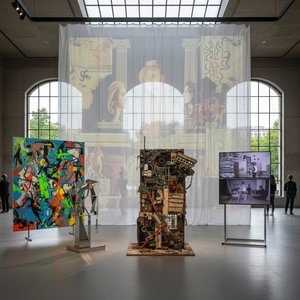
Lynn Courtlandt Hastings: A Quiet Resonance of Surrealism and Pop Art
Lynn Courtlandt Hastings (born Denver, CO 1942) is an American artist whose work distinguishes itself through a masterful blend of Surrealist exploration and Pop Art’s vibrant energy. While her biographical details remain relatively sparse—primarily documented by institutions like the Smithsonian American Art Museum and The Art Institute of Chicago—her artistic output speaks volumes about her vision and enduring influence on contemporary art.
Hastings' formative years were marked by exposure to diverse artistic currents, including Abstract Expressionism and Minimalism, which undoubtedly shaped her aesthetic sensibilities. However, she swiftly embraced a distinctive style characterized by intricate collage techniques and bold color palettes. Her signature pieces, such as “Dick’s Shoes” and “Peacemaker,” exemplify this approach—complex compositions featuring meticulously layered imagery that simultaneously references recognizable symbols and invites contemplation of subconscious narratives.
The artist's technique is particularly noteworthy. Hastings employs screenprinting extensively, utilizing a process known for its precision and ability to achieve remarkable tonal gradations. This method allows her to create textures and patterns that are both visually arresting and subtly suggestive, mirroring the layering of ideas inherent in her artistic vision. Furthermore, she incorporates elements of Op Art—optical illusions designed to stimulate visual perception—adding another dimension to her explorations of form and color.
Her work gained considerable recognition during the 1970s, coinciding with a period of significant experimentation within American art. Collaborations with Clifton Karhu on projects like “Shimabara Snow” solidified Hastings’ reputation as a visionary artist committed to pushing boundaries and challenging conventional artistic conventions. These collaborations underscore her willingness to engage in dialogue with fellow creatives and explore shared thematic concerns—often centered around human connection and fleeting moments of beauty.
Hastings continues to produce artwork today, demonstrating an unwavering dedication to her craft and maintaining a consistent stylistic trajectory. Her enduring legacy lies not only in the individual pieces she has created but also in their contribution to the broader artistic landscape of the latter half of the 20th century—a testament to her ability to synthesize disparate influences into a singular, unforgettable aesthetic voice.