The Florentine Chronicler: Neri di Bicci and the Art of Devotional Painting
Neri di Bicci, born in Florence around 1414, emerged from a lineage steeped in artistic tradition. His father, Bicci di Lorenzo, was already an established painter when Neri entered his workshop, laying the foundation for a career that would span decades and leave an indelible mark on Florentine religious art. Unlike many of his contemporaries who sought innovation and groundbreaking stylistic shifts, Neri largely continued the traditions inherited from his father, focusing instead on refining existing techniques and producing works of profound devotional power. He wasn’t driven by a desire to revolutionize painting but rather to perfect it as a vehicle for expressing faith and reinforcing societal values. This dedication made him one of the most sought-after artists in Florence during the mid-15th century, particularly among monastic orders and wealthy patrons seeking altarpieces and frescoes for their chapels and churches.
A Workshop Legacy: Style and Production
Neri di Bicci’s style is characterized by a clarity of form, balanced compositions, and a restrained use of color. He favored elegant figures with graceful poses, often arranged in narrative scenes that were easily accessible to the viewer. While influenced by masters like Masaccio and Fra Angelico – whose works he undoubtedly studied – Neri developed a distinctive approach marked by a gentle lyricism and a meticulous attention to detail. His paintings aren’t known for dramatic perspective or intense emotionality; instead, they convey a sense of serene piety and dignified solemnity.
- Emphasis on Narrative: Neri excelled at telling stories through his art, often depicting complex theological themes with clarity and precision.
- Balanced Composition: His altarpieces are typically organized in a symmetrical manner, creating a sense of harmony and order.
- Refined Technique: Neri’s mastery of tempera painting allowed him to achieve subtle gradations of color and delicate modeling of forms.
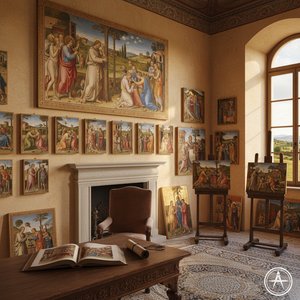
The workshop system was central to Neri's production. He maintained a large studio employing numerous assistants who contributed to the execution of his commissions. This collaborative approach enabled him to fulfill a substantial volume of work, but it also raises questions about the degree of his personal involvement in each painting. While he undoubtedly oversaw all aspects of design and composition, many details were likely executed by his apprentices. Nevertheless, the consistent quality and stylistic coherence across his oeuvre suggest a strong artistic vision guiding the workshop’s output.
Patronage and Major Works: Serving the Religious Orders
Neri di Bicci's clientele was overwhelmingly religious. He received numerous commissions from Florentine monasteries, including San Marco, Santissima Annunziata, and Badia. These orders valued his ability to create works that were both aesthetically pleasing and spiritually uplifting. One of his most significant achievements is the large fresco cycle in the refectory of the monastery of San Marco, depicting scenes from the life of Saint Benedict. This work exemplifies Neri’s narrative skill and his talent for creating a sense of spaciousness and tranquility.
The Coronation of the Virgin, painted for the chapel of the Strozzi family in Santa Maria Novella, is another masterpiece showcasing his refined technique and elegant style. The altarpiece features a majestic depiction of the Virgin Mary being crowned by Christ, surrounded by a host of saints and angels. His work at the Badia, including numerous panels for the choir stalls, further cemented his reputation as a leading devotional painter in Florence. These commissions weren’t merely artistic endeavors; they were acts of piety, intended to enhance the spiritual life of the monastic communities and glorify God.
Historical Significance: A Bridge Between Generations
Neri di Bicci occupies a unique position in the history of Florentine art. He wasn't a radical innovator like Masaccio or Donatello, but he was a highly skilled craftsman who played a crucial role in disseminating the artistic principles of the Early Renaissance. His work represents a bridge between the stylistic innovations of the 15th century and the more classical aesthetic that would emerge later in the period. He successfully synthesized elements from various sources – Masaccio’s realism, Fra Angelico’s lyricism, and Gentile da Fabriano’s decorative elegance – into a cohesive and distinctive style.
His enduring legacy lies not in groundbreaking originality but in his ability to create works of profound beauty and spiritual resonance that continue to inspire awe and devotion. While later generations may have favored more dramatic or experimental styles, Neri di Bicci’s paintings remain a testament to the power of art as a vehicle for expressing faith and reinforcing the values of Renaissance society. He died in Florence in 1492, leaving behind a substantial body of work that continues to be studied and admired today.