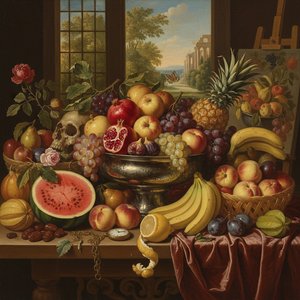
Orazio de Ferrari (1606 – 1657): Genoese Baroque Painter and the Legacy of Ansaldo
Orazio de Ferrari (1606–1657) was an Italian artist, active in the baroque period, born in Voltri, a suburb of Genoa. He stands as one of the most prominent figures within the vibrant artistic landscape of Genoa during the seventeenth century—a city that championed innovation and embraced international influences. His formative years were shaped by the tutelage of Giovanni Andrea Ansaldo (1584–1638), whose stylistic vision profoundly impacted Orazio’s oeuvre, establishing a crucial connection between Genoese art and Flemish artistic trends prevalent at the time. This relationship extended beyond mere imitation; it fostered a dialogue that resulted in a distinctive synthesis—one characterized by luminous color palettes and expressive handling of drapery—a hallmark of Orazio's artistic style.
- Early Life & Training: Born into a wealthy Genoese family, Orazio’s initial artistic education took place under the guidance of Ansaldo, who instilled in him a meticulous approach to observation and a dedication to mastering classical techniques. This formative period solidified his understanding of humanist ideals and established a foundation for his subsequent explorations of religious iconography.
- Influence of Giovanni Andrea Ansaldo: Ansaldo’s influence on Orazio is undeniable. Their collaboration produced works that embody the Flemish Baroque aesthetic—characterized by dramatic chiaroscuro, rich color harmonies, and an emphasis on capturing fleeting moments of emotion. The artist's meticulous attention to detail and his masterful rendering of fabrics exemplify Ansaldo’s stylistic legacy.
- Notable Works: Orazio’s artistic output spanned a remarkable range of subjects—primarily religious commissions—that showcased his versatility and technical prowess. Among his most celebrated achievements are monumental murals adorning the chapel and numerous state rooms within Monaco’s Royal Palace, reflecting the patronage of Louis XIV and cementing Genoa's reputation as a center for artistic excellence. His paintings include *The Immaculate Conception with St Anthony of Padua and St Francis*, which exemplifies the luminous color palettes and expressive handling of drapery characteristic of his style.
Stylistic Characteristics & Artistic Techniques
Orazio’s distinctive artistic style distinguished him from many of his contemporaries, marking him as a pivotal figure in Genoese Baroque painting. He embraced the principles of naturalism championed by Ansaldo and other Flemish masters—a stylistic approach that prioritized accurate representation and emotional intensity. His technique involved layering thin glazes of pigment onto prepared canvases—a method that allowed for subtle gradations of color and enhanced luminosity. Furthermore, Orazio skillfully employed *sfumato*, a technique perfected by Leonardo da Vinci—characterized by hazy outlines and soft transitions between tones—to create atmospheric depth and imbue his figures with an ethereal quality. The artist’s meticulous attention to detail—particularly in the rendering of drapery—demonstrated his mastery of perspective and anatomical accuracy.
- Color Palette: Orazio favored luminous color palettes reminiscent of Rubens, utilizing vibrant hues and harmonious combinations to convey emotion and heighten visual impact.
- Glazing Technique: He employed thin glazes of pigment to achieve subtle tonal variations and enhance the luminosity of his paintings—a technique that contributed significantly to their atmospheric depth.
- Sfumato: Orazio skillfully utilized *sfumato*, mirroring Leonardo’s approach, to create hazy outlines and soft transitions between tones—resulting in an ethereal quality and conveying a sense of psychological realism.
Historical Significance & Legacy
Orazio de Ferrari's contribution to Genoese Baroque art is undeniable, shaping the artistic landscape of his time and influencing subsequent generations of painters. His murals within Monaco’s Royal Palace stand as testament to Genoa’s cultural prestige during Louis XIV’s reign—a period marked by opulent patronage and ambitious architectural projects. Moreover, Orazio’s paintings exemplify the humanist ideals prevalent in seventeenth-century Europe—emphasizing human dignity and portraying biblical narratives with profound emotional resonance. His artistic legacy continues to inspire artists today—serving as a reminder of the enduring power of observation, technique, and expressive artistry. He is remembered as one of the most important Genoese painters of his era, whose work embodies the spirit of baroque innovation and humanist conviction.