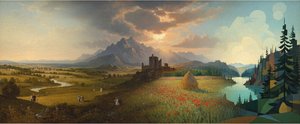
Otto J. Schneider (1875–1946): Bridging Realism and Impressionistic Vision
Otto J. Schneider (1875-1946) was a Hungarian painter who emerged as a prominent figure in the burgeoning landscape movement of the early 20th century, skillfully blending realism with elements of Impressionism to capture the essence of the American West and Hungarian countryside alike. Born in Budapest, Schneider’s artistic journey began amidst the Austro-Hungarian Empire's cultural dynamism, fostering an appreciation for both classical traditions and innovative stylistic explorations.
- Early Influences: Schneider’s formative years were marked by exposure to European art trends—particularly Impressionism—which profoundly shaped his aesthetic sensibilities. Artists like Claude Monet and Camille Pissarro served as crucial inspirations, encouraging him to prioritize capturing fleeting moments of light and color in his canvases.
- American Landscape Painting: Recognizing the allure of the American frontier, Schneider embarked on expeditions to Wyoming and Montana during the 1920s and 30s. These travels fueled his dedication to portraying expansive vistas with meticulous detail—often utilizing techniques reminiscent of Impressionistic brushwork—resulting in iconic depictions of mountains, prairies, and sunsets.
Schneider’s Artistic Style: A Synthesis of Observation and Emotion
Schneider's distinctive style distinguished itself through a careful balance between objective observation and subjective emotional expression. He meticulously studied geological formations and atmospheric conditions to accurately represent the landscapes he encountered, yet simultaneously infused his paintings with palpable feelings—a testament to his ability to convey both visual precision and psychological depth. His masterful use of color palettes—often favoring muted hues—created an atmosphere that mirrored the grandeur and serenity of the natural world.
- Technique: Schneider favored a technique characterized by loose brushstrokes layered upon one another, allowing for subtle gradations of tone and hue. This approach effectively simulated the effects of sunlight filtering through clouds or reflecting off water surfaces—a hallmark of Impressionistic painting.
- Composition: Schneider’s compositions prioritized capturing panoramic views, emphasizing horizontal lines to convey a sense of openness and expanse. He skillfully positioned figures within these landscapes—often small in scale—to heighten their vulnerability against the immensity of nature.
Notable Works and Recognition
Schneider’s artistic legacy rests upon several celebrated paintings, including “Viseu, Portugal” (1947), a stunning portrayal of Portugal's Ribeira region—a testament to his ability to capture the beauty of European landscapes. Furthermore, he produced evocative portraits of Jacob M. Loeb – demonstrating remarkable attention to detail and capturing the subject’s gaze with dramatic lighting techniques. His dedication to documenting Native American culture through James Otto Lewis’s work cemented his place as a pioneer in portraying regional identity.
- "Viseu, Portugal": This masterpiece exemplifies Schneider's Impressionistic style—characterized by vibrant color and textured brushwork—effectively conveying the atmosphere of Ribeira.
- "Jacob M. Loeb": Schneider’s portrait showcases masterful lighting and hatching techniques—reflecting his commitment to realism while simultaneously capturing the subject’s psychological presence.
Legacy and Influence
Otto J. Schneider's contribution to Hungarian art history remains significant, inspiring subsequent generations of painters who embraced Impressionistic principles. His unwavering pursuit of artistic excellence—coupled with his profound connection to the landscapes he depicted—solidified his reputation as a visionary artist whose work continues to resonate with audiences today.