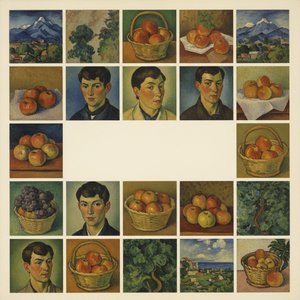
Paul Bellanger-Adhémar: A Painter of Tranquil French Landscapes
Born in Fontainebleau, France, in 1868, Paul Bellanger-Adhémar dedicated his life to capturing the serene beauty of the French countryside. His artistic journey began under the tutelage of esteemed artists like Jules Lefebvre and Cormon, absorbing their techniques and philosophies while forging a distinct style that would soon find recognition within the prestigious Salon des Artistes Français. From 1894 onwards, Bellanger-Adhémar’s work steadily appeared in this influential exhibition, culminating in his membership until 1925 – a testament to his consistent quality and dedication. His landscapes weren't merely depictions of scenery; they were imbued with a quiet contemplation, reflecting the changing light and atmosphere of rural France with remarkable sensitivity.
Early Influences and Artistic Development
Bellanger-Adhémar’s artistic development was deeply rooted in the Impressionist movement, though he never fully embraced its radical departures. He shared with his contemporaries a fascination with capturing fleeting moments of light and color, evident in his loose brushwork and emphasis on atmospheric perspective. However, unlike some of his more overtly experimental colleagues, Bellanger-Adhémar maintained a greater degree of realism in his compositions. The influence of the Barbizon School, particularly its focus on depicting nature with meticulous detail and a sense of quiet observation, is also discernible in his work. His early training under Lefebvre, known for his academic approach to painting, provided a solid foundation in drawing and composition, which he skillfully blended with the Impressionistic techniques he admired.
A Palette of Light and Shadow
Bellanger-Adhémar’s paintings are characterized by a masterful handling of light and shadow. He possessed an exceptional ability to render the subtle shifts in illumination across fields, forests, and waterways. His color palette was generally restrained, favoring muted tones – greens, blues, browns, and ochres – that evoked the natural hues of the French landscape. He avoided dramatic contrasts, instead opting for a delicate balance that created a sense of tranquility and harmony. The use of broken brushstrokes allowed light to penetrate through the paint, creating an almost luminous effect, particularly in his depictions of water. His compositions often feature expansive vistas, drawing the viewer’s eye into the distance and conveying a feeling of openness and freedom.
Notable Works and Recurring Themes
Among Bellanger-Adhémar's most celebrated works is “Le Quai d’Orléans,” a captivating scene depicting a bustling riverside promenade bathed in the golden light of late afternoon. This painting exemplifies his ability to capture both the grandeur of the landscape and the subtle details of human activity within it. Other notable pieces include numerous depictions of fields, forests, and small villages, each imbued with a sense of timelessness and serenity. Recurring themes in his work include the beauty of rural life, the changing seasons, and the quiet contemplation of nature. His paintings offer a glimpse into a France that was slowly transforming at the turn of the 20th century, preserving a connection to its agricultural roots while embracing the modern era.
Legacy and Historical Significance
Paul Bellanger-Adhémar’s contribution to French landscape painting lies in his ability to synthesize Impressionistic techniques with a more traditional approach to realism. He wasn't a revolutionary, but rather a skilled interpreter of the natural world, capturing its beauty with grace and subtlety. His work reflects a period of transition in art history, bridging the gap between academic tradition and modern experimentation. While he may not be as widely recognized as some of his contemporaries, Bellanger-Adhémar’s paintings continue to resonate with viewers today, offering a peaceful escape into the heart of the French countryside. His works are now held in private collections and displayed through platforms like BuyPopArt.com, ensuring that his evocative landscapes will continue to inspire appreciation for the beauty of nature and the artistry of a dedicated painter.