Pier Giuseppe Ferrari – A Tuscan Landscape Painter
Pier Giuseppe Ferrari (1852 – 1887) was an Italian landscape painter born in Parma, a city renowned for its rich artistic heritage and patronage of the arts. Though overshadowed by his contemporary Giuseppe Ferrarini—a fellow artist with whom he shared stylistic similarities—Ferrari carved out a distinctive niche within the burgeoning Tuscan landscape movement of the late nineteenth century. His canvases capture the serene beauty of Umbria’s lakes and hills, reflecting the Romantic ideals prevalent at the time – an appreciation for sublime vistas and an exploration of emotion through natural forms.
Early Life and Artistic Training
Ferrari's formative years were spent in Parma, where he received a solid grounding in classical art education. Details about his family background remain scarce, but records indicate that he belonged to a respectable bourgeois household. His artistic inclinations blossomed early on, fueled by exposure to the works of Eugène Delacroix and Gustave Courbet—artists who championed expressive painting and challenged academic conventions. These influences profoundly shaped Ferrari’s approach to composition and color palette, prioritizing atmospheric perspective and conveying mood rather than mere topographical accuracy.
Style and Technique – Embracing Romantic Vision
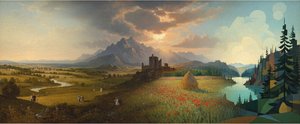
Ferrari's artistic style is characterized by elongated formats that effectively convey the grandeur of Italian landscapes. He meticulously observed the interplay of light and shadow, striving to capture fleeting moments of beauty—often depicting fishermen returning from their labors or shepherds tending flocks amidst rolling hills. Ferrari’s brushstrokes are loose yet controlled, blending seamlessly into tonal gradations that imbue his paintings with a palpable sense of tranquility. His palette favored muted hues – ochres, greens, blues – reflecting the Tuscan countryside and aligning him closely with the Romantic aesthetic. He skillfully utilized glazing techniques to achieve luminous effects, enhancing the depth and realism of his scenes.
Notable Works and Recognition
Ferrari’s oeuvre comprises approximately 50 paintings, predominantly landscapes featuring Umbrian lakes and hillsides. Among his most celebrated works is “Lake Piediluco in Umbria,” a breathtaking depiction of Piediluco Lake bathed in golden afternoon light. The painting exemplifies Ferrari's mastery of tonal harmony and atmospheric perspective, transporting the viewer to the heart of Umbria’s picturesque landscape. While Ferrari’s fame didn’t reach international acclaim during his lifetime—he tragically died young at the age of 35—his paintings are now housed in several museums across Italy, testament to their enduring artistic merit.
Legacy and Influence
Ferrari's contribution to Italian landscape painting is significant, particularly within the context of the Romantic movement. He championed a humanist vision rooted in observation and emotion, rejecting the rigid formalism of academic art. His work served as an inspiration for subsequent generations of Tuscan artists who continued to explore the expressive potential of landscape imagery. Ferrari’s legacy resides not only in his individual paintings but also in his embodiment of the Romantic spirit—a celebration of nature's sublime beauty and a profound engagement with human experience. He remains a compelling figure within Parma’s artistic history, representing a pivotal moment in Italian art’s evolution toward greater emotional depth and visual dynamism.