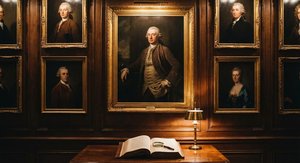
Robert Dunkarton: A Mezzotint Master of Regency Portraiture
Born in London in 1744, Robert Dunkarton emerged as a significant figure within the bustling artistic landscape of 18th-century England, primarily recognized for his skill as a mezzotint engraver. His career, spanning nearly half a century until his death in 1811, was marked by a dedication to capturing the elegance and social standing of his era through meticulously rendered portraits. Dunkarton’s work wasn't simply about replicating likeness; he possessed an innate ability to imbue his subjects with personality and a sense of timelessness, solidifying his place as a respected artist within the London art scene.
Early Influences and Artistic Development
Dunkarton’s artistic journey was undoubtedly shaped by the prevailing trends of the time, particularly the influence of Sir Thomas Lawrence, whose portrait style became immensely popular during the Regency period. Lawrence's emphasis on capturing a naturalistic yet refined appearance – a blend of formality and relaxed charm – resonated deeply with Dunkarton. However, Dunkarton’s talent wasn’t merely imitation; he developed his own distinct approach, refining the mezzotint technique to achieve remarkable tonal depth and subtle gradations in shading. Mezzotint, a process involving roughening a metal plate with ink, allowed for incredibly rich blacks and velvety textures – qualities that Dunkarton expertly exploited to create portraits of exceptional realism and atmosphere. His early works demonstrate a clear apprenticeship to Lawrence’s style, but quickly evolved into something uniquely his own.
Notable Works and Techniques
Dunkarton's most celebrated commissions often involved recreating existing paintings, notably Sir Thomas Lawrence’s portrait of Mary Horneck. This undertaking showcased Dunkarton’s technical prowess and his ability to translate the spirit of a painting into a new medium. The resulting mezzotints were not mere copies; they possessed a captivating immediacy, capturing the subject's character with remarkable fidelity. Beyond recreations, Dunkarton produced numerous original portraits, often depicting members of the aristocracy and gentry. His meticulous attention to detail extended beyond the likeness itself, encompassing elaborate costumes, carefully arranged accessories, and subtle expressions that revealed the inner lives of his subjects. A particularly compelling example is “The Son of Countess Meerveldt,” a 1819 pencil drawing demonstrating his mastery of classical portraiture and an appreciation for understated elegance.
Historical Context and Artistic Significance
Robert Dunkarton’s work provides a valuable window into the social and cultural dynamics of Regency England. His portraits document the fashion, customs, and aspirations of the upper classes during a period of significant change and artistic innovation. The popularity of portraiture itself reflected a growing emphasis on individual identity and social status – a trend fueled by the rise of the middle class and the increasing importance of visual representation in shaping public perception. Dunkarton’s mezzotints are not simply beautiful artworks; they are historical documents, offering insights into the lives and times of those who commissioned them.
Legacy and Continuing Appreciation
Though perhaps less widely celebrated than some of his contemporaries, Robert Dunkarton's contribution to British art is undeniable. His skillful use of mezzotint, combined with a keen eye for detail and an understanding of human character, produced portraits that continue to be admired today. BuyPopArt’s reproductions offer viewers the opportunity to experience the beauty and sophistication of Dunkarton’s work firsthand, preserving his legacy as a master portrait engraver of the Regency era. His ability to capture both the outward appearance and inner essence of his subjects ensures that his art remains relevant and engaging for audiences across generations.