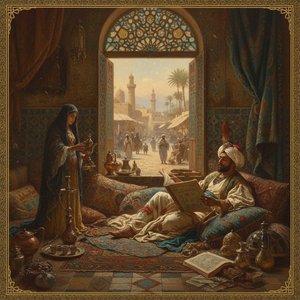
William Clarke Wontner: The Painter of Exotic Grace
William Clarke Wontner (1857 – 1930) was a British neo-classical painter whose distinctive style captivated audiences in the late Victorian and Edwardian eras. Known for his mesmerizing depictions of women draped in luxurious fabrics against opulent marble backgrounds, Wontner achieved considerable acclaim during his lifetime and remains an intriguing figure within European art history. His artistic journey began under the tutelage of John William Godward, a fellow artist who profoundly shaped his aesthetic sensibilities and instilled in him a passion for Greco-Roman grandeur.
- Early Influences: Wontner’s formative years were marked by exposure to classical sculpture and literature, fostering an appreciation for idealized beauty and formal precision. His father encouraged artistic pursuits from a young age, recognizing the potential for creative expression.
- Collaboration with Godward: The partnership between Wontner and Godward proved pivotal in establishing his signature style. Together they honed their skills at St John’s Wood Art School, absorbing the principles of Greco-Roman art championed by Alma-Tadema – a movement dedicated to recreating classical ideals through meticulous realism.
- Royal Patronage & Exhibitions: Wontner's talent gained recognition early on thanks to his association with influential figures and institutions. He exhibited regularly at prestigious venues like the Royal Academy and the Society of British Artists, securing commissions from prominent patrons and cementing his reputation as a respected artist.
Wontner’s artistic vision centered around portraying women in idealized poses—often nude or semi-nude—against backgrounds reminiscent of ancient Rome or Persia. These canvases weren't merely aesthetically pleasing; they deliberately evoked the grandeur and sophistication of classical civilization, subtly conveying themes of beauty, virtue, and timeless elegance. His meticulous attention to detail – particularly in rendering fabrics and textures – elevated his paintings beyond mere representation, transforming them into immersive experiences for the viewer. The artist’s penchant for orientalism—incorporating elements of Eastern culture into European settings—was a deliberate stylistic choice that reflected broader artistic trends of the period.
- Notable Works: Among Wontner's most celebrated paintings are “Lady Baghdad,” “The Dancing Girl,” and “More…” These pieces exemplify his mastery of technique and his ability to capture the elusive qualities of beauty and grace.
- Alma-Tadema’s Influence: Alma-Tadema, a leading proponent of Greco-Roman style, served as an inspiration for Wontner. Like Tadema, Wontner sought to recreate classical ideals through meticulous realism, prioritizing accuracy and elegance above all else.
Wontner's legacy extends beyond his individual artworks; he represents a significant contribution to the neo-classical movement in Britain. His paintings continue to fascinate art historians and collectors alike, offering insights into Victorian sensibilities and artistic aspirations. The Sterling and Francine Clark Art Institute houses several of Wontner’s masterpieces, allowing visitors to experience firsthand the captivating allure of his distinctive style—a testament to his enduring influence on European art history.