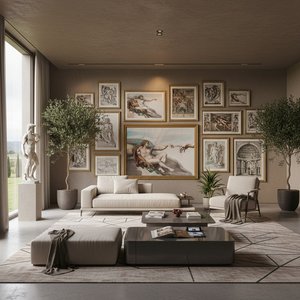
A Sacred Citadel: Unveiling the Apostolic Palace
Nestled within the heart of Vatican City, the Apostolic Palace isn’t merely a building; it's a living chronicle of faith, power, and artistic brilliance spanning millennia. More than just a residence for the Pope, this sprawling complex represents the very evolution of the Catholic Church itself – a tangible journey through shifting beliefs, architectural styles, and the boundless ambition of its leaders. Its story begins not with grand Renaissance frescoes but in the 5th century, when Pope Symmachus sought refuge from the tumultuous world outside the walls of Old St. Peter’s Basilica, establishing a humble base that would eventually blossom into the monumental structure we know today. Walking through its halls is akin to traversing time, witnessing firsthand the transformations and enduring spirit of Christendom. The Palace stands as a potent symbol – a fortress of faith, a testament to papal authority, and a breathtaking showcase for some of humanity’s most profound artistic achievements.
The sheer scale of the Apostolic Palace immediately commands attention. Constructed over centuries by successive Popes, each eager to leave their mark on the city's skyline and the seat of their office, it reflects a fascinating blend of architectural styles. The initial structures were modest refuges – fortified dwellings designed for defense and spiritual contemplation. However, under figures like Nicholas V in the 15th century, a sweeping redesign began, laying the groundwork for the Palace’s grandeur. This ambitious undertaking was driven by a desire to elevate papal prestige and solidify Christendom's influence—a pivotal moment in architectural history. He envisioned a palace worthy of the papacy’s renewed power, initiating plans that would dramatically reshape the landscape of Vatican City. Later, Pope Sixtus V, in the 16th century, oversaw the most significant transformations, shaping the Palace into its iconic form. His meticulous renovations cemented its reputation as one of Europe’s finest palaces and established it as a symbol of papal authority. The vast courtyard, the Scala Regia (Regal Staircase), and the Sala Regia – all testaments to Sixtus V's vision – transformed the palace into a truly imposing statement of power.
The Heart of Christendom: Masterpieces Within
At the core of the Apostolic Palace lies its breathtaking collection of art, a testament to the Papacy’s enduring commitment to preserving and celebrating human creativity. Undoubtedly, the Sistine Chapel stands as its most iconic treasure. Commissioned by Pope Sixtus IV and brought to life by Michelangelo, Sandro Botticelli, Pietro Perugino, and others, this chapel transcends mere decoration; it's an immersive experience – a celestial panorama unfolding across the vaulted ceiling and walls. The frescoes are not simply decorative but profound theological narratives, depicting scenes from Genesis, the Last Judgment, and the lives of Moses and Christ with unparalleled dynamism and emotional depth. Each brushstroke is laden with meaning, inviting contemplation and spiritual reflection. The sheer scale and ambition of Michelangelo’s work remain awe-inspiring centuries later.
Equally captivating are the Raphael Rooms, originally intended as private apartments for Pope Julius II. These rooms showcase the genius of Raphael and his studio, a vibrant hub of artistic creation. “The School of Athens,” perhaps the most celebrated work within these chambers, embodies the Renaissance ideals of humanism and intellectual pursuit – a gathering of philosophical giants contemplating the nature of knowledge and truth. Botticelli’s “Birth of Venus” and “Primavera,” housed in the Raphael Rooms, are equally renowned for their exquisite beauty and allegorical complexity. The meticulous detail and harmonious composition of these paintings exemplify the High Renaissance at its finest. Beyond these renowned spaces, the Palace houses a wealth of other treasures that offer glimpses into the lives of popes and the evolution of papal power.
A Tapestry of History: Spaces Beyond the Icons
Beyond the Sistine Chapel and Raphael Rooms, the Palace is a treasure trove of historical artifacts and architectural wonders. The Borgia Apartments, steeped in history and intrigue, offer a stark contrast to the idealized beauty of the frescoes – revealing the opulent lifestyle and sometimes scandalous affairs of Pope Alexander VI and his family. These apartments are furnished with original pieces from the period, providing a tangible connection to the past. The Vatican Museums, encompassing an unparalleled collection of classical sculpture, Egyptian artifacts, and Renaissance paintings, are accessible through the palace’s grand entrances, showcasing the breadth of papal patronage throughout history.
Several key spaces within the Palace offer unique insights into its function and significance. The Scala Regia (Regal Staircase), a magnificent entryway adorned with intricate marble carvings, serves as a dramatic entrance to the Sala Regia – a space traditionally used for papal audiences. The Sala Regia itself is a testament to papal power, featuring elaborate frescoes depicting scenes from the life of St. Peter and the history of the papacy. The Borgia Apartment offers an intimate look into the lives of the controversial Borgia family, while the Vatican Library houses one of the world’s most important collections of manuscripts and historical documents. The Palace continues to serve as the seat of the Catholic Church, a dynamic center of faith, culture, and diplomacy – a testament to its enduring significance throughout history.
Additional Resources & Notable Exhibitions
Current Exhibitions: The Apostolic Palace regularly hosts temporary exhibitions focusing on various aspects of papal history, art, and religious heritage. Check the Vatican Museums website for details on current and upcoming events.
Key Architectural Features to Note: Pay attention to the interplay of styles – Romanesque foundations, Renaissance embellishments, Baroque grandeur—reflecting centuries of additions and transformations.
Resources:
- Apostolic Palace - Wikipedia: https://en.wikipedia.org/wiki/Apostolic_Palace
- Vatican Palace | Definition, Catholicism, History, Architecture, Art ... : https://www.britannica.com/topic/Vatican-palace
- Stanze Vaticane - View of the Stanza della Segnatura: https://www.voxmundi.eu/blog/the-apostolic-palace-in-the-vatican
Further Exploration: Consider a guided tour to delve deeper into the Palace’s history and art, or explore the Vatican Museums for a comprehensive overview of papal collections.