

A Tapestry of Time: Where Victorian Splendor Meets Roman Echoes
In the beating heart of London’s historic City district, the Guildhall Art Gallery offers far more than a mere viewing of canvases; it provides a profound sensory journey through the layers of human civilization. To step inside is to enter a space where the refined elegance of the Victorian era breathes alongside the rugged, enduring stones of Roman Britain. This singular institution achieves a rare feat in the museum world, seamlessly weaving together the delicate brushstrokes of nineteenth-century masters with the tangible, subterranean echoes of an ancient empire. For the art lover, it is a sanctuary of aesthetic beauty; for the historian, it is a portal to the foundations of London itself.
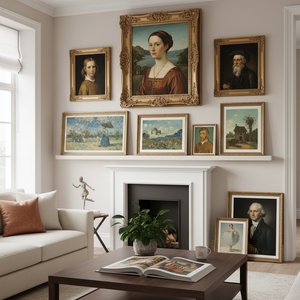
The gallery’s soul resides in its magnificent collection of Victorian paintings, a curated assemblage that captures the very essence of a burgeoning empire's spirit and societal aspirations. The walls are adorned with works that reflect the meticulous detail and romanticism characteristic of the age. One cannot help but be moved by the domestic intimacy found in the works of Sir Lawrence Alma-Tadema, whose canvases transport the viewer to sun-drenched, classical scenes rendered with an almost tactile precision. In stark contrast, the monumental scale of John Singleton Copley’s “The Defeat of the Floating Batteries at Gibraltar” commands the room, its dramatic depiction of naval warfare serving as a powerful testament to the era's courage and geopolitical shifts. These works do not merely hang in silence; they narrate the triumphs, the piety, and the quiet domesticities of a bygone London.
Beyond the gilded frames, the architecture of the gallery itself tells a story of resilience and rebirth. Designed by the esteemed British architect Richard Gilbert Scott, the building is a masterclass in postmodern harmony, intentionally crafted to engage in a silent dialogue with the adjacent historic Guildhall. The space is defined by an intentional use of natural light and an airy, open spatiality that invites contemplative wandering. Yet, beneath this modern lightness lies a profound historical weight. The gallery stands as a symbol of reconstruction; having suffered devastating losses during the Blitz in 1941, its 1999 rebirth ensured that the cultural continuity of London remained unbroken. This architectural duality—the light-filled contemporary gallery resting above the shadows of history—creates an atmosphere of immense intellectual depth.
What truly distinguishes the Guildhall Art Gallery from any other institution in the United Kingdom is its unparalleled fusion of artistic contemplation and archaeological discovery. It is a place where one might find themselves lost in the serene, pastoral beauty of Sir John Everett Millais’ “My First Sermon” only to descend into the museum's basement and encounter the breathtaking remains of London's Roman amphitheatre. This juxtaposition of the delicate and the monumental—the ephemeral beauty of oil paint and the enduring strength of ancient masonry—stimulus a unique curiosity. For collectors and designers seeking inspiration, the gallery offers a masterclass in how history, texture, and light can be layered to create a narrative that is both timeless and deeply rooted in the earth.