Óleo sobre lienzo pintado a mano en el tamaño y marco de su elección, realizado por encargo por nuestros artistas. ( Comprar impresión Comprar imagen)





























Elija entre nuestros tamaños predefinidos que respetan las proporciones originales de la obra.

Puede ingresar sus propias dimensiones para adaptarse a un marco o espacio específico. Si el tamaño seleccionado no coincide con las proporciones de la imagen original, recortaremos la obra o extenderemos la pintura con elementos adicionales pintados a mano. Se le enviará una maqueta digital para su aprobación antes de comenzar la producción.
Tenga en cuenta que la vista previa en pantalla no refleja el recorte o la extensión reales. Solo la maqueta mostrará con precisión la composición final.
Si bien existen tamaños personalizados, recomendamos seleccionar una dimensión de la lista predefinida para preservar las proporciones originales.
Envío a todo el mundo () en 3-4 semanas en lugar de las 5 semanas estándar. (12 agosto). Sin comprometer la calidad.


Nave Nave Moe (Sacro Giro)
Tamaño de la reproducción
Paul Gauguin, a French Post-Impressionist artist, is renowned for his experimental use of color and synthetist style. His painting Nave Nave Moe (1896) translates to 'Sacred Spring' in Tahitian, reflecting the artist’s fascination with Polynesian culture.
He sought refuge from the Western civilization during his time in Tahiti and the Marquesas Islands. Gauguin’s art became popular after his death, partially from the efforts of dealer Ambroise Vollard, who organized exhibitions of his work late in his career and assisted in organizing two important posthumous exhibitions in Paris.
His paintings from that period, characterized by vivid colors and Symbolist themes, would prove highly successful among the European viewers for their exploration of the relationships between people, nature, and the spiritual world. Gauguin's influence on modern artists is undeniable.
Gauguin painted Nave Nave Moe using oil on canvas, a popular medium during the Post-Impressionist era. The painting showcases his signature style of simplified forms, bold outlines, and vivid colors, which he developed to convey emotion and symbolism more effectively than naturalistic representation.
This distinctive approach departed from Impressionism’s focus on capturing fleeting moments of light and atmosphere, opting instead for a deliberate simplification of visual elements. Gauguin aimed to express inner feelings and spiritual ideas through his artwork.
Nave Nave Moe features two Tahitian women in a lush tropical setting, surrounded by exotic flowers and fruit. The background includes a waterfall, palm trees, and a distant mountain range, all painted with vibrant colors and bold brushstrokes.
Gauguin’s use of color is symbolic; the blue and green hues represent calmness and serenity, while the red and yellow tones evoke passion and energy. These colours are not merely decorative but serve as conduits for conveying specific emotions and ideas—a hallmark of Symbolist art.
The artist employed a technique known as Cloisonnism, where he applied paint in distinct blocks of color separated by thin lines of white or other contrasting hues. This method created an illusion of depth and luminosity, enhancing the visual impact of the painting.
Painted in 1896, Nave Nave Moe emerged from Gauguin’s profound engagement with Polynesian culture and spirituality.
Inspired by his experiences in Tahiti, he sought to depict the primal beauty of nature and the harmonious relationship between humanity and its environment. This painting reflects Gauguin's desire to escape the constraints of European society and embrace a more authentic way of life—a sentiment shared by many artists of his time.
The painting’s expressive colors and simplified forms invite contemplation and evoke feelings of tranquility, wonder, and reverence. Gauguin succeeded in capturing not just what he saw but also what he felt—a testament to the power of art to transcend mere representation and communicate profound emotional truths.
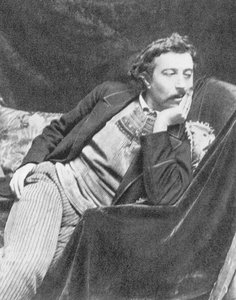
1848 - 1903 , Francia

Explore the profound evolution of art from Impressionism to Post-Impressionism. Discover how masters like Van Gogh revolutionized color and emotion, shaping modern art history through structural innovation and expressive technique.


Manténgase al día con las últimas noticias de arte, ofertas exclusivas e ideas de decoración.
Cuéntanos sobre tu proyecto y nuestros expertos en arte te ofrecerán 3 sugerencias de obras personalizadas.
Dejamos que nosotros seleccionemos 3 opciones exclusivas para ti – ¡Gratis!


 Vista previa
 Compartir
 Compartir
 Ver detalles

 Descargar
 Ver similares
 Radiografía
 Presentación de diapositivas
 Leer más







 La opción de vidrio solo está disponible en tamaños inferiores a 110 cm.