Óleo sobre lienzo pintado a mano en el tamaño y marco de su elección, realizado por encargo por nuestros artistas. ( Cambiar a impresión Cambiar a imagen)





























Elija entre nuestros tamaños predefinidos que respetan las proporciones originales de la obra.

Puede ingresar sus propias dimensiones para adaptarse a un marco o espacio específico. Si el tamaño seleccionado no coincide con las proporciones de la imagen original, recortaremos la obra o extenderemos la pintura con elementos adicionales pintados a mano. Se le enviará una maqueta digital para su aprobación antes de comenzar la producción.
Tenga en cuenta que la vista previa en pantalla no refleja el recorte o la extensión reales. Solo la maqueta mostrará con precisión la composición final.
Si bien existen tamaños personalizados, recomendamos seleccionar una dimensión de la lista predefinida para preservar las proporciones originales.
Envío a todo el mundo () en 3-4 semanas en lugar de las 5 semanas estándar. (10 agosto). Sin comprometer la calidad.


Wilhelm Muhlfeld
Tamaño de la reproducción
Pierre-Auguste Renoir's 1910 portrait of Wilhelm Muhlfeld is more than just a likeness; it’s a poignant snapshot of a moment, imbued with the artist’s signature Impressionistic style and a subtle undercurrent of melancholy. Currently residing in the Southampton City Art Gallery in the United Kingdom, this oil on canvas offers a rare glimpse into the life of a talented oboist and musician – a man rendered with remarkable sensitivity by Renoir's masterful brushwork. The painting immediately draws the eye to Muhlfeld himself: an older gentleman, distinguished by his spectacles and a neatly trimmed mustache, seated in what appears to be a moment of quiet contemplation. Yet, there’s a palpable sense of weariness about him, hinted at by his slightly disheveled appearance – a suggestion, perhaps, of a recent argument fueled by copious amounts of beer, as recounted in Renoir's own notes.
Renoir’s approach to this portrait is deeply rooted in the Impressionist movement. He eschews sharp lines and precise detail in favor of loose, broken brushstrokes that capture the fleeting effects of light and atmosphere. The canvas itself isn’t entirely concealed; Renoir deliberately left visible areas of the support, a technique characteristic of his style and adding to the painting's sense of immediacy and spontaneity. This deliberate choice invites the viewer into the artist’s process, reminding us that this is not merely a representation but an impression – a feeling captured on canvas. The color palette is equally evocative, dominated by muted earth tones—ochres, browns, and greys—interspersed with flashes of red in his tie, creating a harmonious yet subtly dramatic composition.
Wilhelm Muhlfeld was a figure of considerable musical talent within his circle. He wasn't merely a musician; he was an oboist, violinist, orchestra conductor, and composer – a true polymath deeply embedded in the cultural life of Wiesbaden. Born into a family with a strong musical tradition, Muhlfeld’s early years were spent playing in a military band during the Franco-Prussian War. This experience undoubtedly shaped his understanding of music and performance, contributing to the quiet dignity that permeates this portrait. The painting captures him not as a celebrated performer, but as an individual – a man reflecting on his life's work, perhaps with a touch of regret or wistful remembrance.
Renoir’s decision to portray Muhlfeld in this state of apparent disarray is particularly intriguing. It suggests a vulnerability beneath the surface, hinting at a complex personality and a life filled with both triumphs and disappointments. The anecdote about the argument and the beer – relayed by Renoir himself – adds another layer of narrative to the portrait, transforming it from a simple likeness into a miniature drama. It’s as if Renoir sought to capture not just Muhlfeld's physical appearance but also his inner state, conveying a sense of humanity rarely found in formal portraits of the era.
The creation of this portrait occurred during a brief holiday that Renoir took with friends near Munich in August 1910. This period of respite from the Parisian art scene allowed him to observe and capture the essence of his subjects with renewed clarity. The painting’s composition is carefully balanced, drawing attention to Muhlfeld's face while subtly incorporating elements of the surrounding environment – a suggestion of a window or doorway, hinting at a domestic setting. Renoir’s use of thin washes of color, characteristic of Impressionism, allows light to play across the canvas, creating an ethereal quality that enhances the portrait’s emotional impact.
It's important to note that Renoir was deeply influenced by artists like Charles Gleyre and, initially, by the Realist styles of Courbet. However, he quickly embraced the revolutionary techniques of Impressionism, alongside fellow artists such as Monet and Sisley. This shift towards capturing fleeting moments and subjective impressions marked a significant departure from traditional portraiture, paving the way for future generations of artists. The painting’s provenance – its journey through the collections of Georg Gaspari in Munich and eventually to the Southampton City Art Gallery – adds another layer of historical interest, connecting it to a broader network of art collectors and dealers.
BuyPopArt.com is proud to offer meticulously crafted oil painting reproductions of Pierre-Auguste Renoir’s “Portrait of Wilhelm Muhlfeld,” allowing art enthusiasts to experience the beauty and emotional depth of this iconic work in their own homes. Our skilled artists replicate Renoir's signature techniques – the loose brushstrokes, the subtle color variations, and the visible canvas—with exceptional precision, ensuring that every detail faithfully captures the essence of the original painting. We invite you to explore our collection of Impressionist masterpieces and discover how BuyPopArt.com can bring a touch of artistic brilliance into your space.
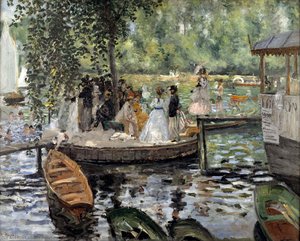
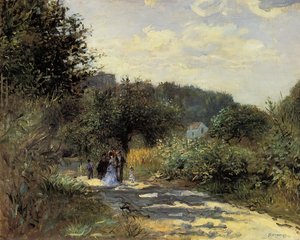
Related Works: For those captivated by Renoir’s evocative style, we also offer reproductions of “The Boating Party Lunch” and “Landscape near Louveciennes,” as well as works by fellow Impressionist masters such as Camille Pissarro and Paul Cézanne. View the Reproduction | The Boating Party Lunch | Landscape near Louveciennes | Three Pears
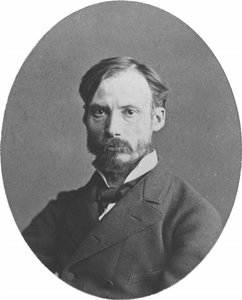
1841 - 1919 , Francia
Descubre las 25 obras maestras de Renoir, el rey del impresionismo. Explora su técnica, historia y significado en cada pintura. Encuentra reproducciones de arte de alta calidad para decorar tu hogar con BuyPopArt.com.

Descubre 25 obras maestras de la National Gallery, Londres. Explora la historia y el significado de Van Gogh, Monet, Leonardo da Vinci y más. Encuentra reproducciones de arte exclusivas para decorar tu hogar con estilo en BuyPopArt.com.

Descubre los 10 cuadros impresionistas más influyentes de Monet, Renoir y Degas. Explora la historia, técnica y belleza de este movimiento artístico. Reproducciones de arte en BuyPopArt.com para decorar tu hogar con estilo.
Descubre las 25 obras maestras del National Gallery of Art, Washington. Explora la historia de Cézanne, Matisse, Picasso y más. Encuentra reproducciones de arte exclusivas e ideas para decorar tu hogar con lienzos inolvidables en BuyPopArt.com.

Descubre los 10 cuadros impresionistas más influyentes de Monet, Renoir y Degas. Explora la historia, técnica y colores vibrantes del impresionismo. Encuentra reproducciones de arte exclusivas en BuyPopArt.com.


Manténgase al día con las últimas noticias de arte, ofertas exclusivas e ideas de decoración.
Cuéntanos sobre tu proyecto y nuestros expertos en arte te ofrecerán 3 sugerencias de obras personalizadas.
Dejamos que nosotros seleccionemos 3 opciones exclusivas para ti – ¡Gratis!


 Vista previa
 Compartir
 Compartir
 Ver detalles

 Descargar
 Ver similares
 Radiografía
 Presentación de diapositivas

 Leer más







 La opción de vidrio solo está disponible en tamaños inferiores a 110 cm.