AkrüülkainalSeinakunstPost-Impressionism
 1888
1888 30.0 x 50.0 cm
Meie kunstnike poolt tellimusel valmistatud käsitsi maalitud õli-kainaste teos teie soovitud suuruses ja raamis. ( Lülita trükile Vaata pilti)





























Vali meie eelmääratud suurused, mis vastavad teose algupärastele proportsioonidele.

Sa võite sisestada oma mõõtmed konkreetse raami või ruumi sobivuse tagamiseks. Kui teie valitud suurus ei vasta originaalpildi proportsioonidele, siis kärvime kunstiteost või laiendame maali täiendavate käsitsi maalitud elementidega. Enne tootmise algust saadetakse teile heakskiitmiseks digitaalne eelvaade.
Palun pidage meeles, et ekraanil kuvatav eelvaade ei kajasta tegelikku kärpimist või laiendamist. Ainult eelvaade näitab täpselt lõplikku kompositsiooni.
Kuigi on saadaval kohandatud suurused, soovitame originaalproportsioonide säilimiseks valida mõõdud eelmääratletud nimekirjast.
Maailmline tarne 3–4 nädala jooksul tavalise 5 nädala asemel. (8 august). Kvaliteedis kompromisse ei tehta.


"The Mill of Alphonse Daudet at Fontevieille" - Müüri Alphonse Daudeti Fontevieilles
Reproduktsiooni suurus
Vincent Willem van Gogh's "The Mill of Alphonse Daudet at Fontevieille," painted in 1888, transcends mere depiction; it embodies the very essence of Post-Impressionist artistic vision. Measuring 30 x 50 cm and executed with meticulous ink strokes, this landscape captures not just a rural scene but also a profound exploration of emotion and memory—a characteristic hallmark of Van Gogh’s oeuvre.
The painting firmly establishes itself within the Post-Impressionist movement, born from a deliberate rejection of Impressionism’s focus on fleeting light and optical sensations. Artists like Monet and Renoir sought to capture the ephemeral beauty of nature as perceived by the eye, prioritizing atmospheric effects over precise representation. Van Gogh, however, prioritized conveying inner feelings rather than objective observation—a pivotal shift that would reshape the trajectory of modern art. He aimed to distill the experience of witnessing a landscape into its core emotional truth.
Fontevieille, nestled in the Luberon region of Provence, France, served as inspiration for this striking composition. The scene unfolds with an expansive field dominated by dense greenery—trees and bushes rendered with energetic brushstrokes that pulsate with life. Scattered throughout are figures engaged in agricultural labor, adding a human element to the tranquil panorama. Dominating the background is an ancient millstone structure, weathered by time yet retaining a palpable sense of history and solidity.
Van Gogh's choice of ink as his medium is crucial to understanding the painting’s artistic significance. Unlike oil paints, which blend seamlessly to create smooth surfaces, ink offers a remarkable textural quality – visible brushstrokes that convey immediacy and spontaneity. This technique allows for an unparalleled level of expressive detail, mirroring the artist’s turbulent inner state. The dark hues of the millstone and surrounding foliage contrast sharply with patches of brighter greens, creating visual tension and reinforcing the painting's emotional intensity.
"The Mill of Alphonse Daudet at Fontevieille” stands alongside other masterpieces by Vincent van Gogh and Paul Gauguin, artists who similarly wrestled with capturing subjective experience through color and form. Gauguin’s “Portrait of a Little Boy,” housed in the Musée-Fondation Bemberg in France, exemplifies a similar preoccupation with conveying emotion and symbolism—a stylistic kinship that underscores the broader artistic currents of the era. This painting serves as a testament to Van Gogh's enduring influence on subsequent generations of artists, cementing his place as one of the most transformative figures in art history.
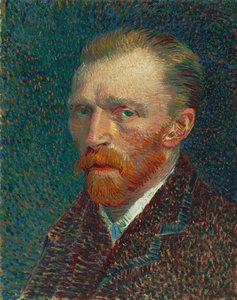
1853 - 1890 , Holland

Explore the profound evolution of art from Impressionism to Post-Impressionism. Discover how masters like Van Gogh revolutionized color and emotion, shaping modern art history through structural innovation and expressive technique.


Püsige kursis viimaste kunstiuudistega, eksklusiivsete pakkumistega ja sisustamisideetega.
Kirjeldage meile oma projekti ja meie kunstieksperdid pakuvad teile 3 isikupärast kunstiettepanekut.
Laske meil koostada just teile mõeldud 3 valikut – tasuta!


 Eelvaade
 Saada
Saada Jaga
Jaga
 Teave teose kohta

 Laadi alla
 Sarnased teosed
 Röntgenuuring
 Slaidietendus
 Loe lähemalt







 Klaasivalik on saadaval ainult suuruses kuni 110 cm