

Meie kunstnike poolt tellimusel valmistatud käsitsi maalitud õli-kainaste teos teie soovitud suuruses ja raamis. ( Lülita trükile Vaata pilti)





























Vali meie eelmääratud suurused, mis vastavad teose algupärastele proportsioonidele.

Sa võite sisestada oma mõõtmed konkreetse raami või ruumi sobivuse tagamiseks. Kui teie valitud suurus ei vasta originaalpildi proportsioonidele, siis kärvime kunstiteost või laiendame maali täiendavate käsitsi maalitud elementidega. Enne tootmise algust saadetakse teile heakskiitmiseks digitaalne eelvaade.
Palun pidage meeles, et ekraanil kuvatav eelvaade ei kajasta tegelikku kärpimist või laiendamist. Ainult eelvaade näitab täpselt lõplikku kompositsiooni.
Kuigi on saadaval kohandatud suurused, soovitame originaalproportsioonide säilimiseks valida mõõdud eelmääratletud nimekirjast.
Maailmline tarne 3–4 nädala jooksul tavalise 5 nädala asemel. (5 august). Kvaliteedis kompromisse ei tehta.


Püha Jehohanna Kristuse Pühitsemine
Reproduktsiooni suurus
In the vibrant, shifting landscape of the fifteenth century, few artists embodied the transition from the medieval to the modern as gracefully as Pietro Alemanno. Born around 1430 in the serene surroundings of Göttweich, Austria, Alemanno’s life was a journey across borders and artistic philosophies. He emerged as a pivotal figure who bridged the gap between the lingering, ornate traditions of the Late Gothic style and the burgeoning, humanistic dynamism of the Italian Renaissance. While history often casts him in the shadow of giants like Piero della Francesca or Fra Angelico, a closer look at his oeuvre reveals an artist of profound independence and technical mastery, capable of weaving together the spiritual gravity of Northern Europe with the luminous innovations of the Italian peninsula.
The early chapters of Alemanno’s life remain shrouded in the mists of time, yet his artistic lineage is clearly traced through his connection to the masters of the Marches. Scholarly tradition long suggested he was a mere pupil or follower of the renowned Carlo Crivelli, a Venetian master celebrated for his blend of Gothic elegance and Renaissance realism. However, recent historical rediscoveries have painted a much more compelling portrait of an accomplished professional. Evidence suggests that Alemanno’s presence in the Marches region predates even that of Crivelli, positioning him not as a student seeking guidance, but as an established master capable of securing significant and complex commissions almost immediately upon his arrival in Italy.
Alemanno’s work is a breathtaking synthesis of textures, light, and devotion. His stylistic evolution is most strikingly visible in his ability to integrate the meticulous, almost tactile detail characteristic of Gothic art with the new, sophisticated command of perspective emerging from the Renaissance. In his monumental Polyptych, commissioned for San Pietro Martire in Venice, one can witness this beautiful tension. The architectural framework—composed of elegant arches and columns—does not merely serve as a decorative border; it functions as a window into a sacred space, using deliberate spatial arrangement to guide the viewer’s eye toward the central figures of the Virgin and Child.
His mastery extended beyond mere structure to the very soul of his subjects. Alemanno possessed an unwavering devotion to Christian iconography, imbuing his saints and divine figures with a profound sensitivity that resonated deeply with the faithful of his era. His technique involved a meticulous approach to pigment preparation and compositional planning, allowing him to create surfaces that felt both ethereal and tangibly real. Whether through the soft glow of a Madonna’s countenance or the intricate, jewel-like details of an altarpiece, his work sought to achieve a visual harmony that reflected the divine order.
The breadth of Alemanno's contributions can be seen in the diverse range of his commissions, from grand frescoes to intimate devotional panels. His ability to adapt to different mediums and regional tastes solidified his reputation as a leading personality in the Northern-inspired figure painting that flourished in the Marches during the late 15th century. Some of his most notable milestones include:
Ultimately, Pietro Alemanno’s significance lies in his role as a cultural conduit. He was an artist who moved between the Germanic roots of his birth and the Italian heart of the Renaissance, carrying with him a unique aesthetic language that honored the past while embracing the future. Though he passed away in Ascoli Piceno around 1497 or 1498, his legacy survives in the quiet majesty of his altarpieces, which continue to captivate art historians and devotees alike with their enduring spiritual power and technical brilliance.

1430 - 1497 , Austria

Sukeldu varase renessansi maailma! Avasta 10 meistriteost – Leonardo, Michelangelo jt – mis muutis kunsti ajatuiks. Giotti värvid ja Botticelli ilu ootavad sind. Leia inspiratsiooni interjööriks BuyPopArt.com-ist!
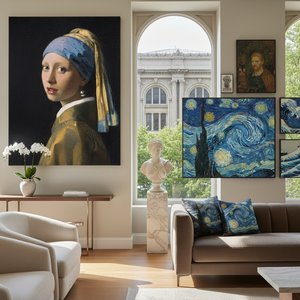
Avastage Metropolitani muuseumi 25 kõige ikoonilisemat kunstiteost! Sukeldume maalikunstnike maailma, impressionismi võlu ja ajalooliste värvikombinatsioonide sisse. Leidke täiuslik seina kaunistus BuyPopArt'is – kvaliteetsed reproduktsioonid ja sisustus ideed. Avastage kogu kollektsioon online!

Avastage Sandro Botticelli 25 parimat teost! Sukeldume Renessansi ilu, müütide ja Firenze suurmeistri ajatusse maailma. Kvaliteetsed reproduktsioonid ja kunst interjööris – BuyPopArt.com-is. Avasta kõik meistriteosed veebis!

Journey back to the dawn of Renaissance art! Explore 10 iconic Proto-Renaissance masterpieces by Giotto, Cimabue & Duccio. Discover their stories, techniques & lasting impact. Find museum-quality reproductions for your home at BuyPopArt.com
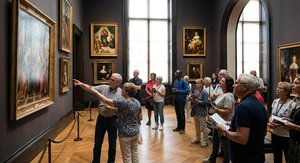
Avastage Alte Pinakothek Müncheni 25 suurimat meistriteost! Sukeldume renessansi, baroki ja klassikalise kunsti maailma. Leonardo da Vinci, Rubens ja teised – leidke inspiratsiooni interjööri kujunduseks BuyPopArt.com-is. Vaadake kollektsiooni!


Püsige kursis viimaste kunstiuudistega, eksklusiivsete pakkumistega ja sisustamisideetega.
Kirjeldage meile oma projekti ja meie kunstieksperdid pakuvad teile 3 isikupärast kunstiettepanekut.
Laske meil koostada just teile mõeldud 3 valikut – tasuta!


 Eelvaade
 Saada
Saada Jaga
Jaga
 Teave teose kohta

 Laadi alla
 Sarnased teosed
 Röntgenuuring
 Slaidietendus

 Loe lähemalt







 Klaasivalik on saadaval ainult suuruses kuni 110 cm


