

 Õlimaal kangaruumilSeinakunstNorthern Renaissance
 1539Renessanss
 48.0 x 65.0 cm
Meie kunstnike poolt tellimusel valmistatud käsitsi maalitud õli-kainaste teos teie soovitud suuruses ja raamis. ( Osta print Osta pilt)





























Vali meie eelmääratud suurused, mis vastavad teose algupärastele proportsioonidele.

Sa võite sisestada oma mõõtmed konkreetse raami või ruumi sobivuse tagamiseks. Kui teie valitud suurus ei vasta originaalpildi proportsioonidele, siis kärvime kunstiteost või laiendame maali täiendavate käsitsi maalitud elementidega. Enne tootmise algust saadetakse teile heakskiitmiseks digitaalne eelvaade.
Palun pidage meeles, et ekraanil kuvatav eelvaade ei kajasta tegelikku kärpimist või laiendamist. Ainult eelvaade näitab täpselt lõplikku kompositsiooni.
Kuigi on saadaval kohandatud suurused, soovitame originaalproportsioonide säilimiseks valida mõõdud eelmääratletud nimekirjast.
Maailmline tarne 3–4 nädala jooksul tavalise 5 nädala asemel. (13 august). Kvaliteedis kompromisse ei tehta.


Portree Anne Cleves: Ühine Põhja-Renaissance Kunstiloom Hans Holbein noorema käsutusel – suurepärane tükk Põhja-Renaissance kunstile, mis avaldab Tudor ajalugu ja kunstilise briljantsuse
Reproduktsiooni suurus
Hans Holbein the Younger’s “Portrait of Anne of Cleves,” painted in 1539, is far more than a simple likeness; it's a masterful exploration of power, perception, and the subtle complexities of a politically driven marriage. This painting, measuring a modest 48 x 65 centimeters, resides within the hallowed halls of the Louvre Museum, having recently undergone meticulous conservation efforts that have revealed the vibrant hues hidden beneath layers of grime – a testament to Holbein’s enduring skill and the painting's remarkable survival through centuries. It stands as a poignant reminder of a brief union between Henry VIII and Anne, a woman often unfairly relegated to the footnotes of English history, yet whose portrait now commands attention for its artistic merit and historical resonance.
Holbein’s genius lies not merely in his technical prowess – the precise rendering of fabric, the delicate modeling of flesh, or the subtle play of light and shadow – but in his ability to imbue a subject with an aura of dignified composure. Anne of Cleves, depicted here, is presented with remarkable poise. Her posture is upright, her gaze direct, and her hands clasped gently at her waist, forming a shape that subtly echoes the profile of Holbein himself or perhaps even his young son, Henry – a deliberate inclusion that has fueled scholarly debate for decades. This clever visual echo suggests a calculated attempt by the artist to elevate Anne’s status, transforming her from a perceived outsider into an integral part of the Tudor court's artistic narrative.
The portrait emerged during a tumultuous period in English history – the reign of Henry VIII and his relentless pursuit of legitimacy. Anne of Cleves was the fourth wife chosen by the king, following a series of marriages aimed at securing an heir and bolstering England’s position on the European stage. The marriage itself proved short-lived; Henry, famously dissatisfied with Anne upon meeting her in person, swiftly dissolved the union, citing her lack of beauty as justification. Despite this unhappy outcome, the painting remains a significant artifact, offering a rare glimpse into the political machinations and artistic sensibilities of the Tudor court. It’s a fascinating study in how art could be used to shape public perception – even if that perception was ultimately fleeting.
Holbein's execution is quintessential Northern Renaissance, characterized by its meticulous realism and an almost obsessive attention to detail. The painting is executed in oil on canvas, a relatively new medium at the time, allowing for rich colors and subtle gradations of tone. Note particularly the rendering of Anne’s elaborate gown – a testament to Holbein's skill in depicting luxurious fabrics and their intricate folds. The use of parchment as a background element adds an intriguing layer of symbolism; it suggests that the portrait was initially conceived in Düren, where Holbein was stationed to capture Anne’s likeness before bringing her to England. This detail hints at the artist’s careful planning and his desire to create a truly accurate representation.
Beyond its technical brilliance, “Portrait of Anne of Cleves” is rich in symbolic meaning. The composition itself – the direct gaze, the restrained elegance – speaks volumes about Anne’s character. However, it’s the subtle details that truly captivate art historians. As mentioned earlier, the hands forming a face reminiscent of Holbein or his son are a prime example. The careful arrangement of her jewelry and the positioning of her garments also contribute to a complex visual narrative. Scholars have proposed various interpretations – some suggesting a veiled critique of Henry’s hasty decision, while others emphasize Anne’s inherent dignity and resilience in the face of adversity. The painting invites repeated viewing, revealing new layers of meaning with each encounter.
BuyPopArt.com offers high-quality, handmade oil painting reproductions of famous artworks like Portrait of Anne of Cleves. Visit our website to explore more masterpieces and learn about the artists who created them.
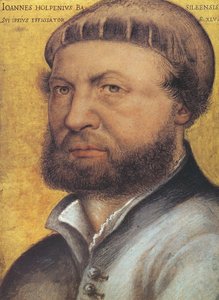
1497 - 1543 , Saksamaa

Explore the life & art of Hans Holbein the Younger, a Renaissance master renowned for his strikingly realistic portraits and psychological insight. Discover iconic works like 'The Ambassadors' and delve into his lasting legacy.

Explore the breathtaking precision of Hans Holbein the Younger. From Tudor royal portraits to intricate Northern Renaissance details, discover the mastery behind his legendary works and learn how to bring this historical grandeur into your collection with museum-quality reproductions.

Explore the opulent world of Hans Makart, a pivotal figure in Austrian art history. Discover his influence on Klimt & the Vienna Secession, signature style, and investment potential. Expert insights for collectors.

Avasta Põhja Renessansi 10 ikoonilist meistriteost! Van Eyck, Dürer ja Holbein – nende teoste lugu, kunstnikud ja värvid. Leia inspiratsiooni sisustamiseks ning kaunista oma kodu renessanssi klassikaga. Uuri täielik kollektsioon BuyPopArt.com-is!

Explore the captivating world of Anne-Louis Girodet, a pivotal figure bridging Neoclassicism & Romanticism. Discover his masterpieces and unique artistic vision with BuyPopArt.


Püsige kursis viimaste kunstiuudistega, eksklusiivsete pakkumistega ja sisustamisideetega.
Kirjeldage meile oma projekti ja meie kunstieksperdid pakuvad teile 3 isikupärast kunstiettepanekut.
Laske meil koostada just teile mõeldud 3 valikut – tasuta!


 Eelvaade
 Saada
Saada Jaga
Jaga
 Teave teose kohta

 Laadi alla
 Sarnased teosed
 Röntgenuuring
 Slaidietendus
 Loe lähemalt







 Klaasivalik on saadaval ainult suuruses kuni 110 cm




![Jean de Dinteville'i ja Georges de Selve kaheportree (tuntud ka nimega Suurlased) [detail]](/media/artworks/images/thumbnails/23/11/2311efb8202f4a2ea763c4d4a9227550.jpg)


