Õlimaal kangaruumilSeinakunstPost-Impressionism
 1895Modernism
 73.0 x 92.0 cm
Meie kunstnike poolt tellimusel valmistatud käsitsi maalitud õli-kainaste teos teie soovitud suuruses ja raamis. ( Lülita trükile Vaata pilti)





























Vali meie eelmääratud suurused, mis vastavad teose algupärastele proportsioonidele.

Sa võite sisestada oma mõõtmed konkreetse raami või ruumi sobivuse tagamiseks. Kui teie valitud suurus ei vasta originaalpildi proportsioonidele, siis kärvime kunstiteost või laiendame maali täiendavate käsitsi maalitud elementidega. Enne tootmise algust saadetakse teile heakskiitmiseks digitaalne eelvaade.
Palun pidage meeles, et ekraanil kuvatav eelvaade ei kajasta tegelikku kärpimist või laiendamist. Ainult eelvaade näitab täpselt lõplikku kompositsiooni.
Kuigi on saadaval kohandatud suurused, soovitame originaalproportsioonide säilimiseks valida mõõdud eelmääratletud nimekirjast.
Maailmline tarne 3–4 nädala jooksul tavalise 5 nädala asemel. (11 august). Kvaliteedis kompromisse ei tehta.


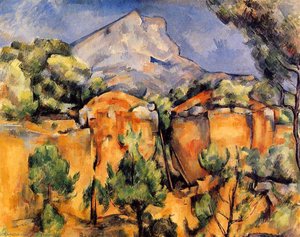
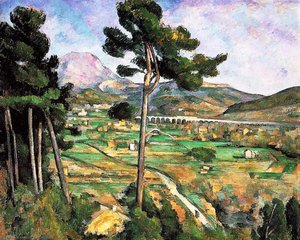
Mont Sainte-Victoire: Paul Cézanne’s Ülemine Maastik
Reproduktsiooni suurus
The Geometry of Perception: Cézanne wasn't interested in replicating what the eye sees; he sought to represent how the mind *understands* sight. He meticulously analyzed Mont Sainte-Victoire, breaking it down into its fundamental shapes—rectangles, cylinders, and cones—and then rebuilding it on the canvas with a deliberate, almost architectural precision. This is evident in the simplified forms of the mountain itself, reduced to their essential geometric components. These aren’t mere stylistic choices; they embody Cézanne's belief that visual experience is fundamentally governed by mathematical principles.
A Fragmented Light: The painting’s fragmented quality isn’t accidental. Cézanne believed that light wasn’t a uniform entity but rather existed as a collection of individual planes and colors. He employed broken brushstrokes—often applied in contrasting hues—to suggest the way sunlight interacts with surfaces, creating a shimmering, almost iridescent effect. This technique imbues the scene with a sense of movement and vitality. Imagine standing before this canvas – you wouldn’t just see a mountain; you would *feel* its luminosity, its dynamism.
The Foreground’s Depth: Notice the trees in the foreground – not rendered as individual leaves but rather as dark, solid masses that anchor the composition and create a sense of depth. These aren't merely decorative elements; they are crucial to Cézanne’s strategy for conveying spatial relationships within the painting. They serve as stepping stones into Cézanne’s vision of Mont Sainte-Victoire—a deliberate attempt to capture not just what is visible but also how it *feels* to be present in that landscape.
Post-Impressionism’s Roots: *Mont Sainte-Victoire* stands as a cornerstone of Post-Impressionism, a movement characterized by its rejection of strict Impressionist conventions and its emphasis on subjective expression and formal experimentation. Cézanne's work moved beyond the fleeting effects of light and color to explore the underlying structure of objects and the essential qualities of form. This shift paved the way for Cubism’s deconstruction of perspective and Abstraction’s focus on pure visual elements.
The painting's current location within the Philadelphia Museum of Art is significant, representing one of ten views of Mont Sainte-Victoire dispersed after Cézanne’s death. Its acquisition in 1907 by Ambroise Vollard and the Galerie Bernheim-Jeune marked a turning point in the artist’s recognition, solidifying his place within the art world. The story of its dispersal—from Cézanne's studio to various collectors—adds another layer of intrigue to this already compelling artwork.
Provenance: The painting’s journey from Aix-en-Provence to Philadelphia reflects a growing appreciation for Cézanne’s innovative approach to landscape painting.
Ambroise Vollard’s Role: Vollard, a prominent art dealer and collector, played a crucial role in promoting Cézanne’s work during his lifetime, recognizing the artist’s unique talent and vision.
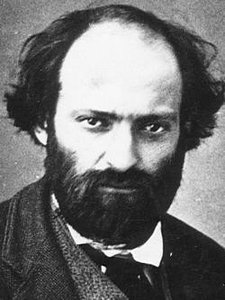
1839 - 1906 , Prantsusmaa

Explore the profound evolution of art from Impressionism to Post-Impressionism. Discover how masters like Van Gogh revolutionized color and emotion, shaping modern art history through structural innovation and expressive technique.


Püsige kursis viimaste kunstiuudistega, eksklusiivsete pakkumistega ja sisustamisideetega.
Kirjeldage meile oma projekti ja meie kunstieksperdid pakuvad teile 3 isikupärast kunstiettepanekut.
Laske meil koostada just teile mõeldud 3 valikut – tasuta!


 Eelvaade
 Saada
Saada Jaga
Jaga
 Teave teose kohta

 Laadi alla
 Sarnased teosed
 Röntgenuuring
 Slaidietendus
 Loe lähemalt







 Klaasivalik on saadaval ainult suuruses kuni 110 cm